
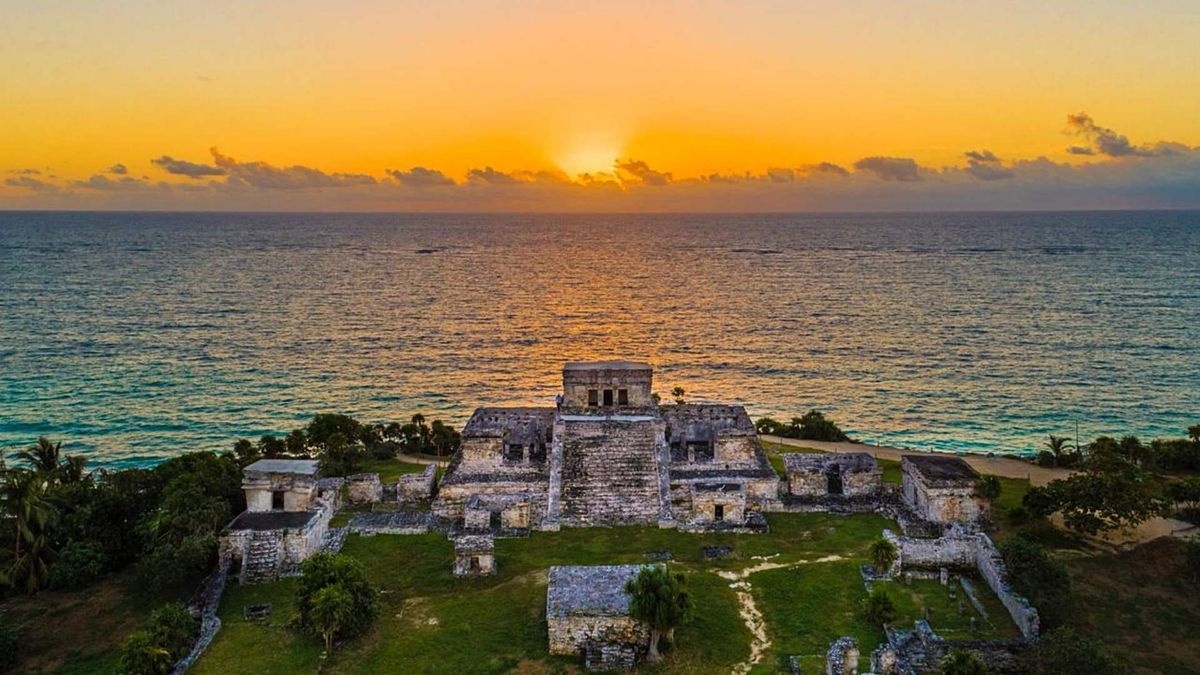
For a few hours each morning, before the heat reaches the sand, Tulum looks almost untouched. The Caribbean stretches in calm blue, the breeze feels clean, and the shoreline seems ready for another day of visitors. Then the reality of 2025 appears. Piles of sargassum interrupt the postcard image, and municipal crews arrive with shovels, wheelbarrows, and the tired posture of people who know tomorrow will look very similar.
In June alone, local authorities collected 1,900 tons of seaweed, more than the total amount removed through all of 2024. For workers on the beach and business owners in town, it is not just a statistic. It is proof that this has been the heaviest arrival of sargassum in Tulum since 2018, and a reminder of how fragile Tulum tourism can be when nature changes the script.
Tulum tourism under pressure from shifting numbers
Behind the beachfront photos and influencer posts, hotel spreadsheets tell their own story. During the summer, hotel occupancy in Tulum barely passed 53 percent. By September, it slid to 48 percent, a level that left some boutique properties with long, quiet corridors and empty lounge chairs.
David Ortiz Mena, president of the local Hotel Association, tries to keep one eye on risk and one on opportunity. “Tulum is still a great destination. The bad stands out a lot and the good is hard to communicate,” he says, in a comment that seems to apply not only to booking trends but to the town’s entire global image.
Those numbers began to change toward the end of October. Occupancy crept up to 59 percent, then 63 percent, and finally reached 69 percent. The pattern suggests that Tulum might be learning to breathe twice a year, with a second wave of visitors who are more price sensitive, more flexible, and less attached to traditional holiday calendars along the Riviera Maya.
When U.S. visitors pull back, the impact is immediate
The visitor who is missing from many hotel lists has a clear profile and a familiar passport. Around 60 percent of Tulum’s tourists come from the United States. When that traveler hesitates, the entire local economy feels it.
This year, many Americans faced inflation, uncertain interest rates, and a 43-day government shutdown that left thousands without paychecks. For a segment of potential visitors, trips to Quintana Roo suddenly looked like a luxury that could be postponed.
“El ciudadano estadounidense cuida el recurso, no moves until they know what is coming,” says councilor Eliazar Mas Kinil. His comment captures a broader reality: U.S. travelers are recalculating where and when to spend, and destinations in Mexico must compete not just with each other, but with domestic vacations inside the United States and other international options.
A single sentence captures the mood that many hoteliers describe in private: “When U.S. travelers tighten their budgets, Tulum hears it in the silence of empty rooms.”
A killing, a travel advisory, and the weight of perception
In March, a single gunshot cut through the image of Tulum as a town of permanent calm. José Roberto Rodríguez Bautista, the municipal secretary of Public Security, was killed. The news moved quickly through WhatsApp groups, hotel corridors, and travel agency chats. The facts were local, but the perception risk was international.
The U.S. State Department responded by keeping Quintana Roo at Level 2 in its travel advisory system. The message to U.S. citizens was clear: you may travel, but use extra caution. Avoid poorly lit areas, be careful at night, stay within tourist zones. The advisory is not visible on the beach, yet many visitors say they feel it in small behaviors: the way some tourists look over their shoulders, how quickly they put away their phones while walking, or their preference for staying in tightly managed hotel compounds.
Security specialists in Mexico note that perception is often as powerful as statistics. A single high-profile incident, amplified online, can outweigh months of uneventful days in Tulum’s hotels, restaurants, and archaeological sites.
From post-pandemic boom to hard lessons on regulation
After the pandemic, Tulum experienced an economic wave that some locals compare to a modern gold rush. Investment surged into the town. New flights connected the region. The Tren Maya promised easier access across the Yucatán Peninsula. A new airport opened. Hostels, boutique hotels, beach clubs, and restaurants multiplied. The archaeological zone drew crowds not just by day, but through new nighttime experiences.
What did not arrive at the same speed, according to several experts, was regulation. Environmental rules lagged behind construction. Zoning conflicts surfaced. Infrastructure gaps, from wastewater management to traffic planning, became more visible when the town filled to capacity.
Specialist Hazael Cerón summarizes the missed opportunity in a single sentence: “We saw the basket of golden eggs and tried to squeeze it.” The phrase speaks to a wider pattern seen in fast-growing destinations in Mexico and beyond. When growth comes faster than rules, local authorities are left trying to fix problems after they have already reached the headlines.
Prices, access, and the risk of testing visitor patience
On the ground, the consequences of that imbalance can feel surprisingly concrete. Visitors report paying as much as 200 pesos for a coconut. Taxi fares fluctuate with little explanation and, at times, with no clear limit. Access to some stretches of beach has become more complicated, justified under environmental or administrative arguments that tourists often do not fully understand.
Councilor Mas Kinil acknowledges that something has to change. “We need to reflect, we must offer better service to the tourist so they come back,” he says. His comments refer to clearer rules, better communication, and a more consistent narrative about what is protected, what is public, and what is private.
One example is Jaguar Park, a key project in Tulum that mixes conservation, tourism, and infrastructure. Authorities argue that certain restrictions are necessary to protect ecosystems and cultural heritage. Some visitors, however, interpret those limits as a form of beachfront privatization. The gap between intention and perception is where frustration grows.
A micro-story heard more frequently in recent seasons involves a couple who arrive in Tulum expecting open beaches and simple costs, then leave feeling that every step requires a fee, a reservation, or a negotiation. Those anecdotes, shared on social media, can influence more potential visitors than any official campaign.
A future shaped by events beyond Tulum’s borders
Even as Tulum confronts sargassum, price concerns, and safety questions, a new opportunity is forming on the horizon. In an upcoming summer, North America will host a major international sports tournament that is expected to move hundreds of thousands of people through Mexico, the United States, and Canada. Tulum will not host any matches, but it could become a base for rest and leisure between games for fans traveling across the region.
The town now offers around 10,800 hotel rooms, from twenty-dollar hostel beds to luxury suites facing the Caribbean. Ortiz Mena believes that the Mexican Caribbean could receive an additional one million visitors during those weeks. If even a fraction of them choose Tulum, the impact on local businesses could be significant.
In that scenario, Tulum would receive backpackers, families, influencers, surfers, honeymooners, and repeat visitors, all trying to reconcile two images: the Tulum of open beaches and warm nights, and the Tulum of sargassum barriers, premium prices, and stricter rules.
Choosing what kind of destination Tulum wants to be
Tulum stands at a point where the next chapter depends on decisions that have not yet been made. Local authorities, business leaders, and residents face a series of questions that are simple to phrase but harder to answer. Will this be a destination that plans or one that reacts? A preserved coastal town or an exhausted resource? A place that protects its ecosystems or one that trades them for short-term income?
For now, dawn remains beautiful. Tourists still arrive. Workers continue to clear sargassum from the shore. Hotel owners keep refreshing their booking systems, watching for signs of recovery or decline. The Mexican Caribbean, and Quintana Roo in particular, cannot avoid these choices much longer.
“Tulum is at a point where every decision feels like a vote on its future.”
In that sense, Tulum tourism is not only about rooms, flights, and rates. It is also about how a small city in Mexico manages the tension between global demand and local responsibility. The sea that sustains this story, with its familiar turquoise color breaking on the shore, is a reminder that beauty can be generous, but never unconditional.
In the end, the main question is whether Tulum can align its regulations, prices, security, and environmental policies fast enough to match the expectations of visitors who still dream of this corner of the Riviera Maya.
The future of Tulum tourism will depend on how honestly the town confronts its own contradictions, and how quickly it translates reflection into action. We’d love to hear your thoughts. Join the conversation on The Tulum Times’ social media.
How do you think Tulum should balance growth, affordability, and environmental protection in the coming years?