
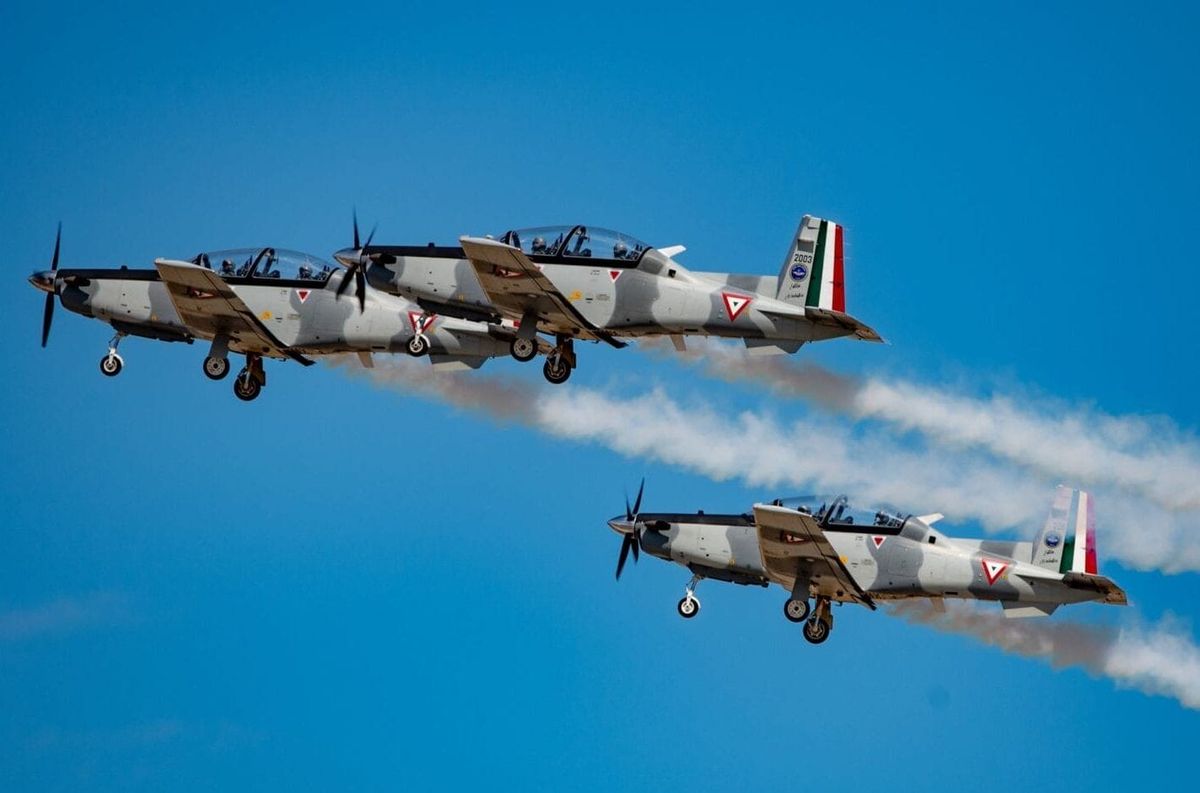
Tulum is preparing for a large-scale showcase as the Air Show Tulum 2026 approaches, an event scheduled for April 23 to 26 at Military Air Base Number 20. The announcement has already prompted wide interest because the gathering positions the region as a stage for aviation, technology, and international cooperation. It also signals a broader shift in how Quintana Roo seeks to present itself beyond tourism.
A regional government eager to elevate its presence
The confirmation came from Quintana Roo Governor Mara Lezama during her program La Voz del Pueblo. She highlighted how the Air Show Tulum 2026 could support the state in its effort to gain visibility in innovation and development. Her remarks framed the event as part of a long-term plan in which Tulum, the Riviera Maya, and Mexico position themselves in aerospace conversations that often gravitate toward industrial corridors in the center and north of the country.
The show will serve as the promotional launch for the 2027 edition of the Feria Aeroespacial México, also known as FAMEX. That gathering ranks among Latin America’s most influential meetings for aerospace executives, research teams, and government agencies. By hosting the preliminary showcase in Tulum, organizers appear to be testing how a coastal destination can complement the traditional settings where these industry events usually take place.
A producer from a local aviation school described the mood with a simple phrase suited for social media: “People want to see how far Tulum can go when the conversation turns to technology.”

How the air show aims to shape expectations
Official information indicates that the four-day event will bring together specialists, companies, and authorities across the aviation sector. Activities will include aerial demonstrations, a static aircraft exhibition, and a large commercial area where companies from civil, military, and technological branches will participate. Organizers say the mix of displays and business spaces has been designed to appeal to professionals and general audiences, which might help the event gain traction with local residents as well as visitors.
The program will also include technical conferences, a business forum, and an International Congress on Air Safety. These additions give the event a hybrid character, mixing entertainment with strategic discussions that often influence investment decisions. It appears that both the state government and the Secretaría de la Defensa Nacional see the air show as a chance to strengthen commercial links and reinforce Mexico’s position in global aviation networks.
A micro-story emerging from early planning meetings involves a group of young engineers from Cancún who visited the air base during a preliminary inspection day. They asked whether the event would include mentoring sessions, hinting at the interest among students who see the aerospace sector as a path to upward mobility. Their enthusiasm was noted by organizers, who said they are exploring ways to add educational components.
Partnership across institutions shapes the event’s identity
A central element of the announcement has been the collaboration between the state government, military authorities, and the FAMEX organization. Governor Lezama emphasized that this cooperation is intended to guarantee a high standard of execution. The state has been trying to diversify its economic strategy, and officials view the Air Show Tulum 2026 as a tool that might attract investment in sectors not typically associated with Quintana Roo.
This type of partnership comes at a moment when Tulum is undergoing significant changes. The new international airport, the ongoing transformation of transport routes, and debates about sustainable growth have placed the municipality at the center of regional planning. The air show could fit into that narrative by demonstrating how aerospace events might coexist with the tourism economy.
An editorial reflection is unavoidable here. Events like this often create high expectations, yet the real challenge comes after the crowd leaves, when decision-makers must align investment paths with the promises made. That tension between aspiration and long-term planning is present in many regions of Mexico that want to connect tourism with technology.
Air Show Tulum 2026 as a strategic experiment for the Riviera Maya
Selecting Tulum as the site for this showcase might surprise those who associate aerospace events with industrial zones. Yet planners appear to be betting on the region’s growing infrastructure and its ability to attract a global audience. The Riviera Maya already draws millions of visitors each year, and officials believe some of that flow could overlap with professional interest in aviation and technology.
There is also a logistical angle. Military Air Base Number 20 offers controlled airspace, secure perimeters, and operational capacity that make it suitable for aerial demonstrations. The base has been involved in previous exercises, though not on this scale. Hosting the event there reinforces the message that Mexico’s military and civil sectors are working together on international outreach.
Meanwhile, aerospace companies looking to expand their presence in Mexico might use the event to study market conditions in the southeast. Some firms are exploring maintenance facilities, training centers, or supply-chain routes tied to new airport operations. Even if no major announcements occur during the show, these conversations could influence regional strategy in the coming years.
Anticipation from local actors grows as the date approaches
In Tulum, officials and business owners are already speculating about the event’s impact. Hotels near the air base corridor expect higher occupancy. Transport companies are reviewing possible shuttle routes to manage visitor flow. Some tourism operators see an opportunity to promote activities outside the traditional beach circuit.

The Tulum Times has monitored early reactions and found that residents welcome the idea of an event that broadens the municipality’s profile. At the same time, some community voices have raised questions about traffic, security measures, and environmental pressures. These concerns will likely shape public debate as April 2026 approaches.
But the possibility of new investment has generated cautious optimism. Stakeholders from Quintana Roo understand that bringing an international audience to observe aviation technology could encourage foreign companies to consider longer-term projects in Mexico.
What is at stake for Quintana Roo and Mexico
Observers note that success for the Air Show Tulum 2026 could send a signal that the region is ready to participate in specialized industries. This does not imply a sudden shift away from tourism, but rather a gradual addition of sectors that can stabilize the local economy. For Mexico, the event aligns with national efforts to strengthen aerospace development across multiple states.
If the gathering attracts the expected mix of industry leaders, students, and general audiences, it might help establish Tulum as a place where technological events can coexist with cultural and environmental priorities. The balance between growth and preservation remains delicate in Quintana Roo, which is why many will watch closely how the event is executed.
The Air Show Tulum 2026 will test whether the region can merge its tourism identity with ambitions in aviation and technology. The outcome could shape future decisions in Quintana Roo, where authorities aim to present a broader economic vision for the years ahead. We’d love to hear your thoughts. Join the conversation on The Tulum Times’ social media.
What opportunities or challenges do you think this event could bring to Tulum?