

In the heart of Mexico’s Riviera Maya, a quiet revival is taking shape. Travelers arrive seeking not only turquoise beaches and yoga retreats, but also something older, rituals that reach back to the roots of Mesoamerican civilization. The temazcal, the cacao ceremony, and the limpia energética are among the most enduring traditions that bridge spiritual healing and cultural memory. Each one reflects a deep relationship between body, earth, and community, a language of wellness that has survived centuries.
As the wellness movement continues to redefine travel, these ancestral practices offer both an antidote to modern stress and a link to indigenous wisdom. Their growing presence in Tulum’s retreats and holistic centers reveals a question that extends beyond tourism: can ancient ritual coexist with contemporary spirituality without losing authenticity?
The living fire of the Temazcal
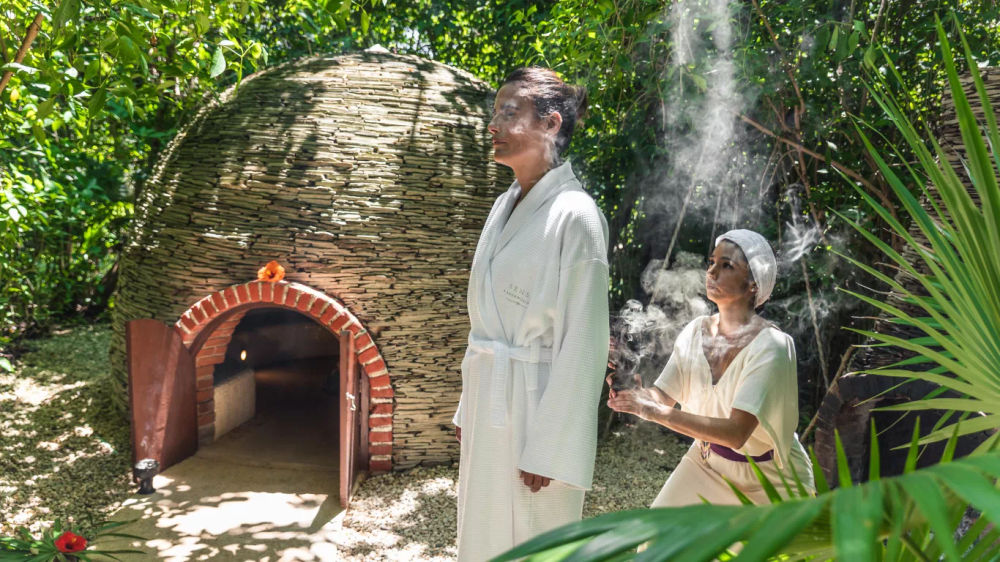
The word temazcal comes from the Náhuatl temāzcalli, meaning “house of steam.” For the Mexica and the Maya, this domed structure, heated by volcanic stones and infused with aromatic herbs, was more than a bath. It was a sacred womb, a place to cleanse body and soul, and a metaphor for rebirth. Warriors entered to purify after battle; women before childbirth; communities to renew collective energy.
Inside the darkness of the dome, heat and vapor blur the line between physical endurance and spiritual release. The stones, called “abuelitas,” are honored for their ancient energy, as guides pour water over them to summon thick waves of steam. The ritual blends chanting, silence, and the pulse of the drum, elements that connect participants to the four directions and to the earth itself.

Health enthusiasts may describe it as a form of sauna therapy, but for practitioners it is something deeper: an encounter with one’s inner landscape. “When you leave the temazcal, you are not the same person who entered,” a local guide in Tulum told The Tulum Times. It is both a purification and a reminder of continuity, where the physical and symbolic melt into one experience.
The ceremony of cacao and the medicine of the heart
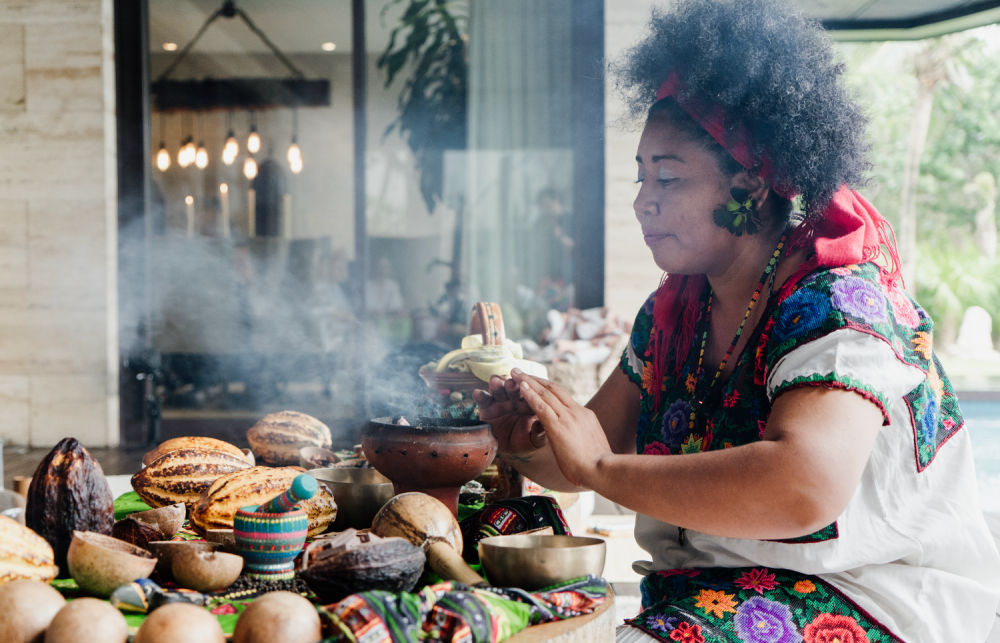
If the temazcal represents rebirth, the cacao ceremony speaks of connection, to others, to nature, and to emotion. Long before cacao became the world’s favorite chocolate, it was known among the Olmecs, Maya, and Mexica as a sacred drink. The Popol Vuh, the ancient Maya text, refers to kakaw as a gift from the gods, used in offerings and rituals of gratitude.
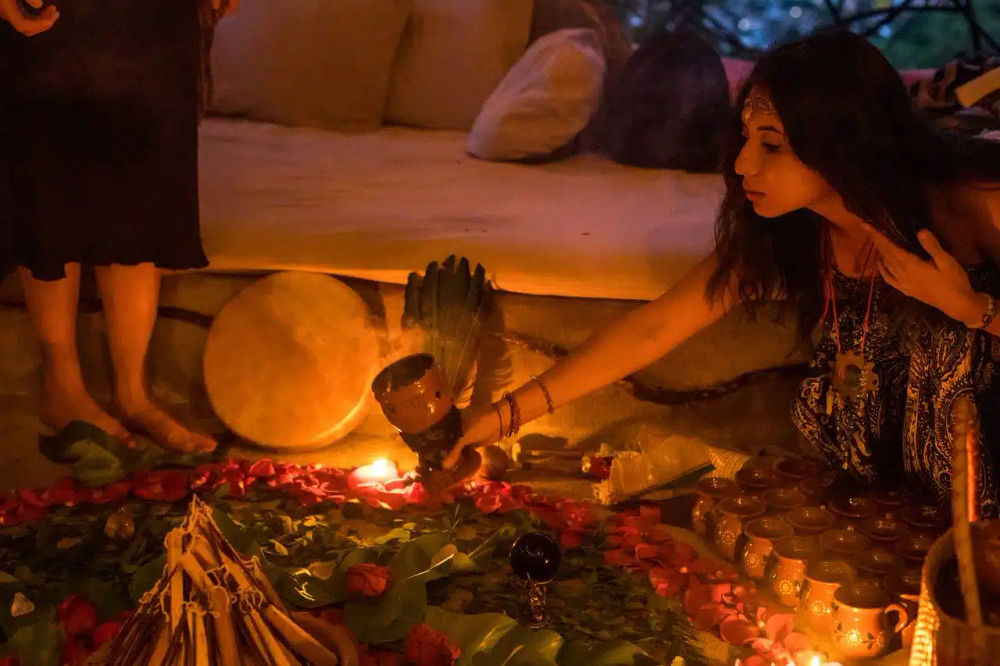
Today, ceremonial cacao, pure, unprocessed, and intentionally prepared, has found new resonance in Tulum’s wellness spaces. Participants gather in circles, guided by facilitators who blend traditional teachings with meditation, sound therapy, and music. The thick, bitter drink is sipped slowly, often after setting a personal intention. Within minutes, theobromine and flavonoids in the cacao induce a subtle euphoria, a gentle opening of the heart.

Modern practitioners describe the effect as “emotional clarity.” For some, it’s an entryway to mindfulness; for others, a spiritual communion. Yet what stands out is how this ritual translates an ancient agricultural product into a contemporary language of healing, one that honors its origin while speaking to global seekers.
As one facilitator put it during a retreat near Cobá, “Cacao doesn’t take you away from yourself; it brings you home.” That quiet statement, shared widely on social media, captures why the ritual continues to gain followers across continents.
Energetic cleansings and the culture of renewal
Less publicized but equally rooted in tradition, the limpia energética, or energy cleansing, embodies a syncretic mix of indigenous, popular, and religious practices. Often performed with a raw egg, herbs, or incense, the ritual is believed to absorb “heavy” or stagnant energy from the body. Afterward, the egg is cracked into water, and its shapes are interpreted as signs of imbalance or emotional weight.
Critics may dismiss it as superstition, yet within Mexican households, the limpia carries social and emotional weight. It is often a first response to anxiety, grief, or exhaustion. In Tulum, some holistic practitioners have integrated the ritual into wellness programs as a symbolic act of release, an embodied metaphor for letting go.
Although there is no scientific basis for its energetic claims, anthropologists view the limpia as a form of psychological support embedded in community tradition. It reflects how ancient cultures externalized emotional care through symbolic gestures, a kind of folk therapy that predates Western psychology.
Between heritage and wellness marketing
The popularity of these rituals in Quintana Roo raises complex questions about authenticity and cultural respect. Wellness tourism has turned ancient practices into global commodities, with prices that sometimes distance locals from their own traditions. While many facilitators are respectful and well-trained, others offer diluted versions of sacred rituals for quick profit.
Cultural advocates in the region emphasize that participation must come with context and humility. “These are not shows or spa treatments,” says a cultural researcher from Playa del Carmen. “They are living expressions of identity and community.” For travelers, the distinction lies in intention, approaching the ritual not as consumption, but as cultural encounter.
The balance between respect and reinvention is delicate. Yet in places like Tulum, where global visitors meet indigenous heritage daily, that tension also creates dialogue. The rediscovery of ancestral wellness might be one of the few global trends that invites introspection rather than distraction.
A mosaic of body, spirit, and place
What unites the temazcal, the cacao ceremony, and the limpia is not only their shared Mesoamerican lineage, but their vision of wellness as community-centered and spiritually grounded. In these rituals, purification is inseparable from belonging; healing is collective before it is personal.
In a time when wellness often equates to self-optimization, these traditions remind us that balance once meant harmony with the earth, not mastery over it. They offer a slower, more relational understanding of wellbeing, one that seems especially relevant in a world of constant acceleration.
As the Riviera Maya continues to evolve as a global destination, these ancient practices stand as quiet counterpoints to luxury tourism. They reveal that the roots of wellness were here long before the retreats, and that their preservation depends not only on tourism, but on respect for the knowledge keepers who maintain them.
The dialogue between ancient and modern continues, in every breath of steam inside a temazcal, in every sip of cacao, in every whispered prayer of a limpia.
The deeper connection behind modern wellness
The revival of ancestral rituals in Tulum could signal more than a trend; it might represent a cultural realignment. Travelers are not only seeking relaxation but meaning, community, and belonging. In that sense, these ancient ceremonies might hold an unexpected lesson: that well-being, at its core, is a shared story.
The question now is how to keep that story authentic as it travels the world.
The Tulum Times continues to explore how indigenous heritage and global wellness intersect across the Riviera Maya, shaping both identity and industry.
The legacy of the temazcal, and its sister rituals, reminds us that the oldest forms of healing are often the most human.
We’d love to hear your thoughts. Join the conversation on The Tulum Times’ social media.
Could ancestral wellness become a new model for sustainable tourism in the Riviera Maya?