
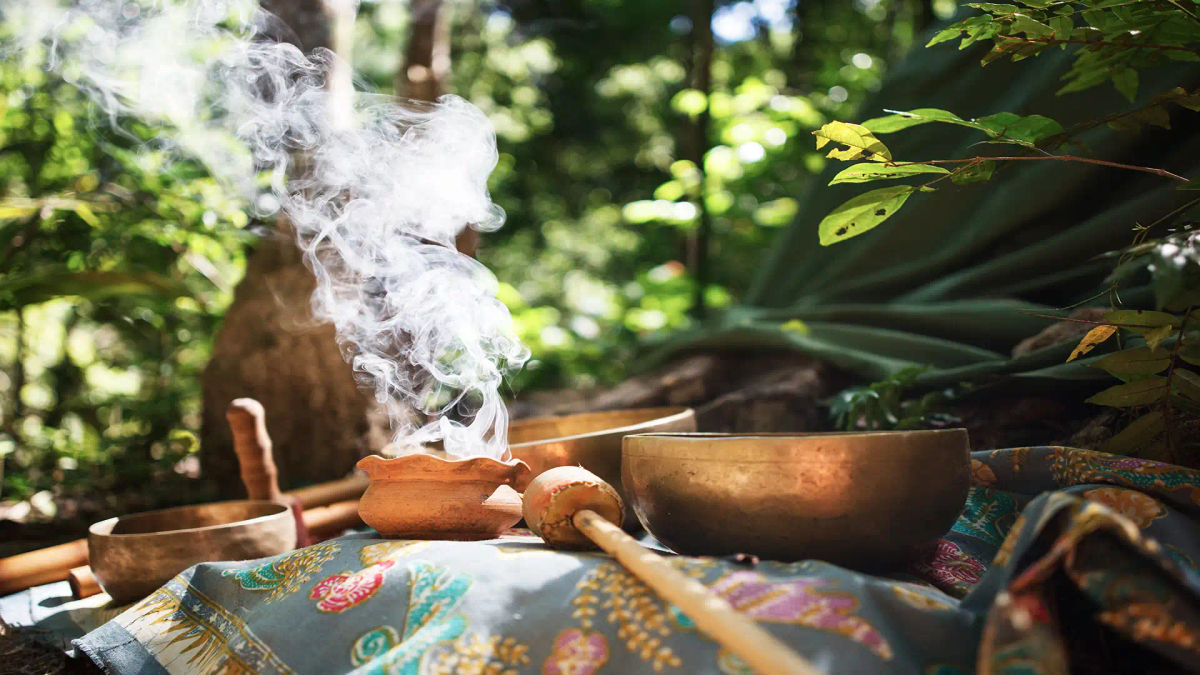
It begins with smoke. Not from firewood or kitchen hearths, but from burning copal, resin from a sacred tree, wafting into the humid air of Tulum’s jungle sanctuaries. A barefoot guide murmurs intentions. A circle of tourists, clad in linen and silence, close their eyes. They’re here to cleanse, to heal, to experience something “ancient.” At least, that’s what the brochure promised.
In recent decades, this sleepy Mexican town has transformed into a spiritual tourism mecca. But beneath the ritualized aesthetic, temazcal domes, cacao ceremonies, reiki under the stars, lies a pressing question: are these really ancient practices? Or are they spiritual performances tailored for modern sensibilities and global wallets?
The Ancestral Aesthetic: Marketed Antiquity
On the surface, Tulum’s spiritual offerings are steeped in the language of heritage. Everything is “ancestral,” “Mayan,” or “pre-Hispanic.” But dig into the specifics, how the ceremonies are structured, who conducts them, and where their teachings come from, and the myth begins to unravel.
Take the cacao ceremony, for instance. While cacao was undoubtedly sacred to ancient Mesoamerican cultures, its modern ritualization, complete with guided meditations, chanting, emotional sharing circles, and $150 ticket prices, bears little resemblance to its original use. Today’s ceremony is a pastiche: part mindfulness retreat, part theater.
The same goes for temazcal, the traditional sweat lodge used for healing and purification. While rooted in Indigenous practice, many of Tulum’s temazcals have morphed into stylized wellness pods: outfitted with LED lighting, Spotify playlists, and facilitators who learned the ritual through weekend workshops rather than cultural immersion. The ritual may feel powerful, but is it grounded?
And then there’s the language. The terminology in these modern rituals stretches far beyond the Mayan lexicon. Words like “vibrations,” “light codes,” “sacred activations,” and “galactic portals” now pepper the ceremonial space, creating a vocabulary more at home in new-age Silicon Valley than in Yucatán villages. In some sessions, references to chakras and Tibetan bowls blend seamlessly with mentions of Mayan deities, Pleiadian starseeds, and interdimensional ascension.
What results is not cultural fidelity, but a mystic collage, part Mesoamerica, part Buddhism, part sci-fi.
As one Mexican anthropologist stated off the record, “It’s spiritual cosplay. The symbols are real, but they’ve been extracted, rebranded, and resold.”
The Maya Mirage: Heritage Without Heirs
The irony is almost unbearable. Tourists flock to “Mayan rituals” while the descendants of the Maya, millions of them, are marginalized from the very economy that capitalizes on their cultural legacy.
In remote villages throughout the Yucatán, real rituals still occur. Not for Instagram. Not for $300 packages. But to honor the land, the seasons, the ancestors. These ceremonies are conducted in the Yucatec Maya language, often without translation, and follow calendars that are lunar, agricultural, and spiritual, calendars passed down, not published online.
I spoke with Doña Clara, a healer from a rural community near Valladolid. She’s been performing ceremonies since she was fifteen. “Sometimes foreigners come to my village,” she told me. “They want the experience, but not the meaning. They want photos, not prayers.”
That distinction between authenticity and spectacle defines the tension at the heart of Tulum’s wellness scene. What’s being sold is not a culture but an idea of culture, curated for consumption.
Wellness or Cultural Whitewash?
It’s tempting to say there’s no harm in a spiritual awakening. After all, many visitors arrive with open hearts, wounded pasts, and a genuine hunger for healing. But intentions alone don’t absolve impact.
In many cases, what’s happening in Tulum is a form of cultural extraction. Elements of Indigenous spirituality, sacred songs, healing herbs, ceremonial practices, are being lifted out of their context and remixed into globalized spiritual experiences. These experiences often erase the voices, languages, and knowledge systems they’re derived from.
What’s worse, this spiritual bricolage sometimes includes pseudo-scientific or fantastical elements: references to extraterrestrial contact, fifth-dimensional consciousness, and crystalline DNA upgrades are not uncommon in Tulum’s retreat circles. While these ideas may resonate with certain seekers, they bear no relationship to traditional Mayan beliefs. The result is a kind of metaphysical melting pot where the sacred becomes indistinguishable from the speculative.
UNESCO has warned against this phenomenon, calling it the “commodification of intangible heritage.” When sacred knowledge is divorced from its stewards, it risks becoming both diluted and dangerous.
Behind the Ceremonial Curtain
I met Miguel, a young Yucatec Maya man who once worked as a spiritual guide in a luxury eco-resort. “They told me what to say. They gave me a script. They wanted me to perform, not to lead,” he recalled. Eventually, he quit. “Now I teach my language. That feels more honest.”
His story echoes that of many locals caught between tradition and tourism. While some want to share their culture, others are wary of exploitation. The lack of regulation allows anyone, regardless of lineage or training, to claim the title of “shaman” or “healer.”
This spiritual free-for-all creates a vacuum where authenticity is optional, and charisma is currency.
Is Ethical Spiritual Tourism Possible?
The answer isn’t to abandon spiritual tourism altogether. At its best, it can foster meaningful cross-cultural exchange. But it requires humility by tourists, facilitators, and businesses alike.
There are Indigenous-led organizations in the Yucatán that offer authentic, respectful experiences. They prioritize community leadership, fair compensation, and education over entertainment. They don’t promise instant transformation. They ask for your attention, not your camera.
True spiritual engagement doesn’t come prepackaged. It’s slow. It’s uncomfortable. It asks more questions than it answers.
So maybe the real inquiry isn’t whether Tulum’s rituals are ancient. Maybe the better question is: who has the right to speak for the sacred?
We’d love to hear your thoughts, join the conversation on The Tulum Times’ social media.