

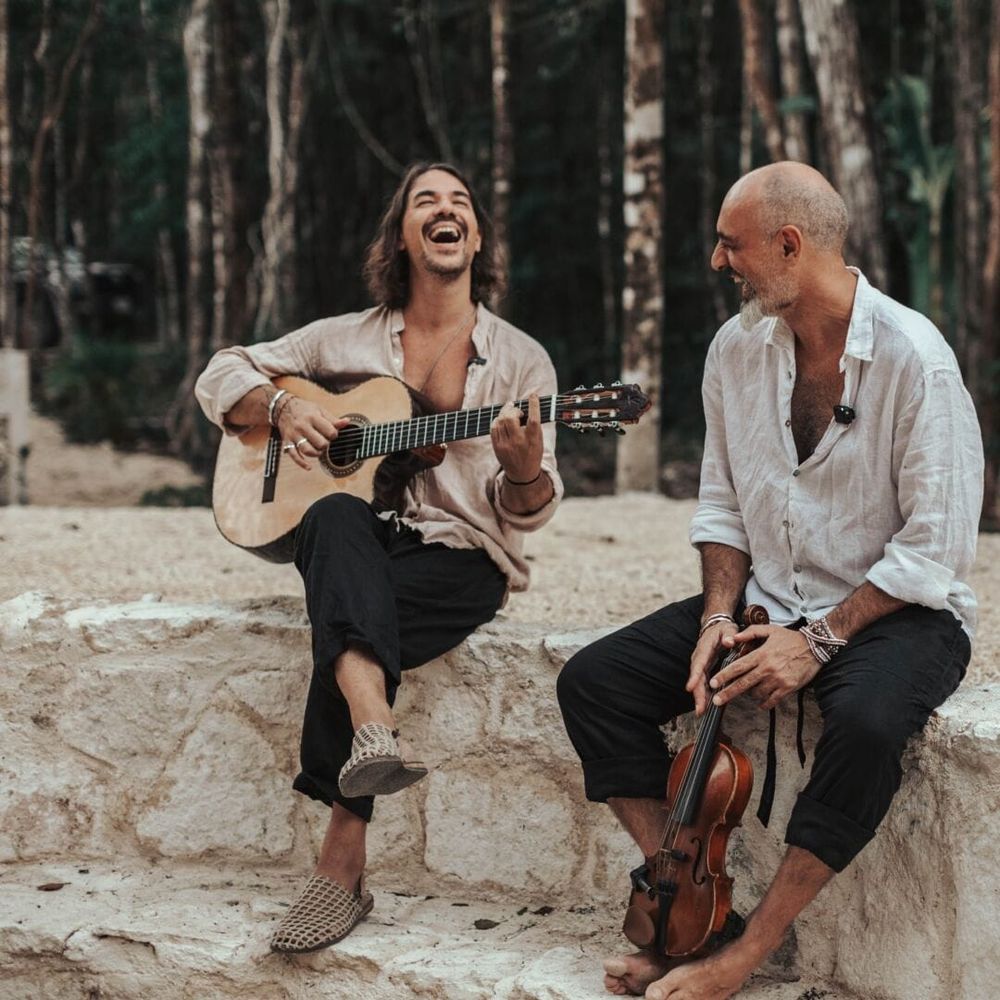
AWARË did not begin with a plan, a concept, or a defined sound. It emerged slowly, through years of shared experiences, parallel inner processes, and a growing sense that music could be something other than performance. Formed by longtime friends Matias Da Via and Bogdan Djukic, AWARË exists at the intersection of sound, silence, and collective presence.
The duo spoke openly about trust, vulnerability, and why their concerts are designed not to be watched, but lived. Their words reflect a broader movement already familiar in places like Tulum, where music often functions as ceremony, reflection, and shared inquiry rather than entertainment alone.

A friendship that became a shared language
Matias and Bogdan met around six years ago and began collaborating across different musical projects. Those early collaborations were not driven by ambition, but by a mutual sensitivity to space, energy, and listening. Over time, both sensed that something deeper was forming between them.
They describe AWARË as the natural result of that evolution. After years of working side by side, holding space for others, and exploring their own inner shifts, they felt ready to begin a journey that was entirely their own. AWARË officially took shape just over a year ago.
Since then, the project has moved quickly, though neither musician attributes that to strategy. For them, momentum followed alignment. When the intention became clear, the work began to travel on its own.
Improvisation as an act of trust
Improvisation sits at the heart of AWARË’s live work, but not as a display of virtuosity or risk. Instead, it functions as an act of trust.
Trust in oneself. Trust in the person you are creating with. And trust in the people sharing the space.
That trust, they explain, allows them to release control. When control softens, presence deepens. What unfolds on stage is not planned in advance but shaped moment by moment, through listening and response.
They acknowledge that this process requires vulnerability. Stepping on stage without fixed structures means exposing uncertainty. But they believe audiences feel that openness immediately, and often respond by meeting it with their own.
Each performance involves what they describe as subtle energetic work. At first, many people are unsure how to engage. Over time, comfort grows, and a shared rhythm begins to form, one that includes everyone in the room.

Why the circle matters
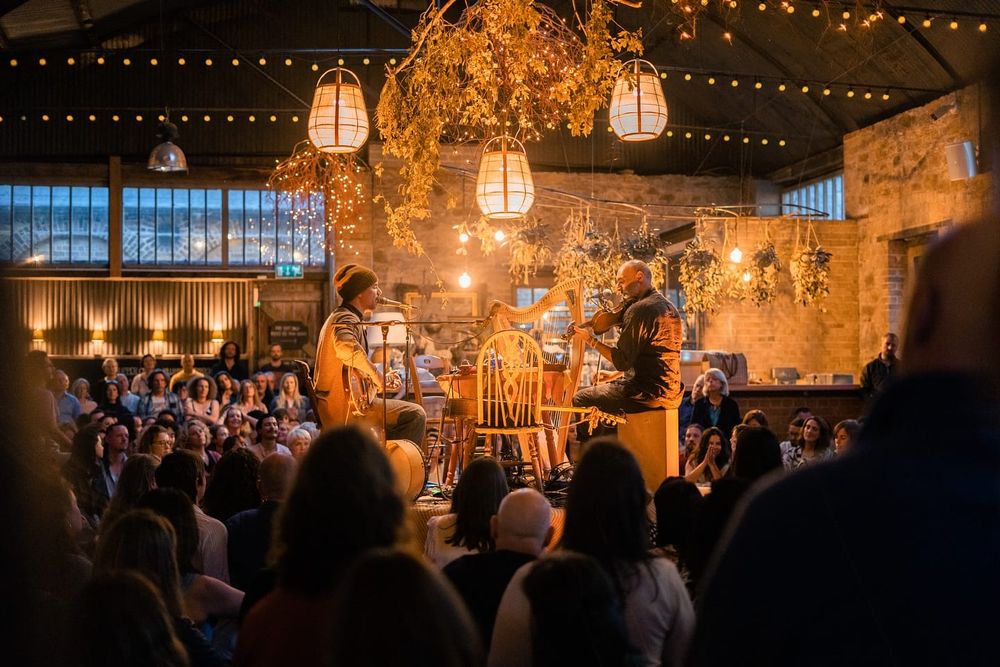
AWARË’s performances are arranged in a circle, with the musicians positioned at the center and the audience surrounding them. There is no elevated stage, no clear division between performer and observer.
They describe this choice as intuitive rather than conceptual. Circles, they note, are present in ceremonial traditions across cultures. Energy moves differently in a circle. Attention flows outward instead of forward.
In this setup, people do not only see the musicians. They see each other. They become aware of breath, stillness, and movement around them.
Matias and Bogdan do not see themselves as the focal point, but as part of a larger field. They describe their role as antennas, receiving and transmitting frequencies that only take shape through collective presence. The experience, they insist, belongs to everyone in the circle.

Letting go of the rockstar model
One of the clearest positions AWARË holds is a rejection of hierarchy in performance. Bogdan speaks plainly about this: the traditional rockstar model no longer reflects how they want to relate to music or people.
They are not rejecting skill or artistry. They are questioning separation.
A raised stage creates distance. It concentrates power and directs attention in one direction. In contrast, a circular format redistributes that power. It invites responsibility, awareness, and participation.
When people face one another instead of a stage, they inspire each other. Connection becomes horizontal rather than vertical. For AWARË, this shift is essential to creating sincerity.
Singing beyond language
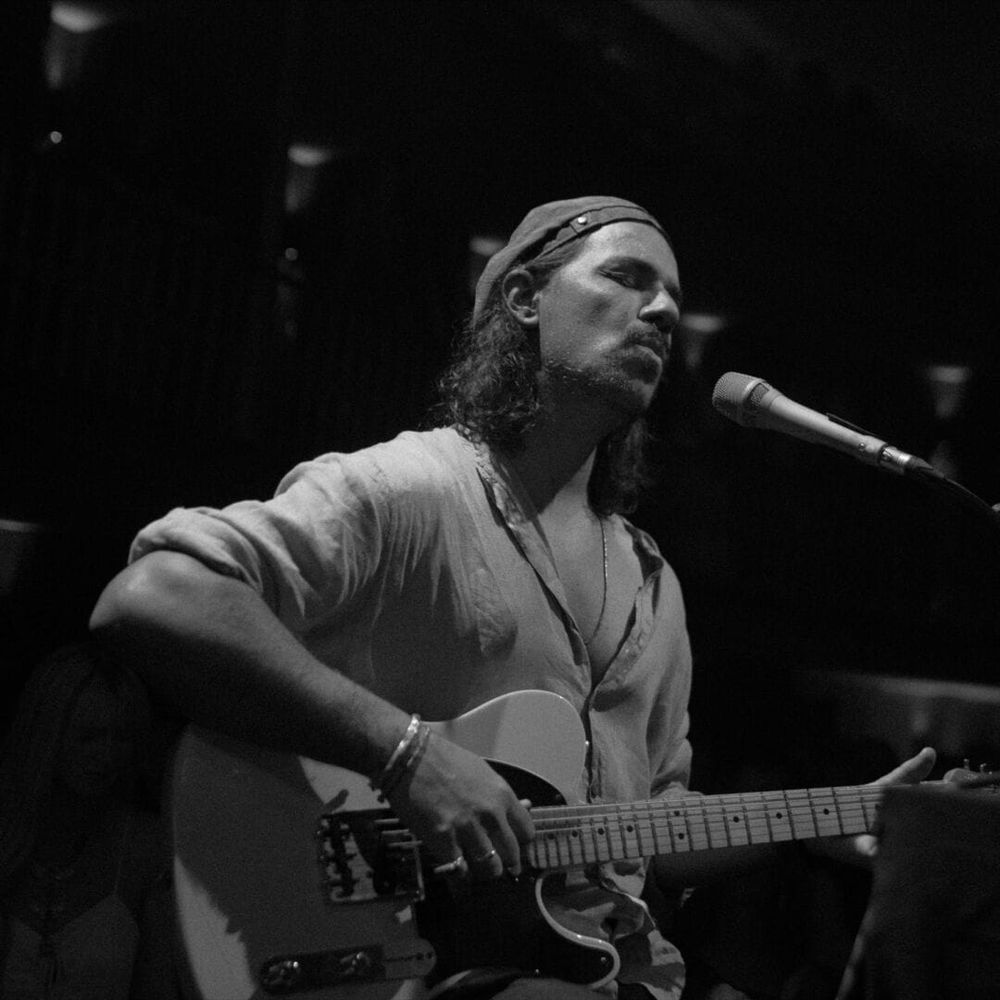
Another defining element of AWARË’s work is the absence of recognizable language in the vocals. Listeners often ask what language is being sung. The answer is none.
Matias traces this approach back to childhood, before words structured expression. Singing then was immediate, instinctive, and present. Over time, language became both a tool and a limitation.
Returning to nonverbal vocals allowed him to bypass narrative and remain in sensation. Words, he explains, activate thought. Sound without words invites feeling.
Bogdan adds that many people connect deeply with music they do not intellectually understand. Traditional African music is one example. Meaning arrives through rhythm, tone, and vibration rather than translation.
In AWARË’s music, this openness allows each listener to receive something personal. The voice becomes a mirror rather than a message.

Creating without a map
AWARË does not use setlists or fixed compositions. Often, they begin performances without knowing how the journey will unfold.
They describe stepping into rooms filled with people and choosing not to plan. When something unexpected emerges, surprise becomes part of the experience. That sense of discovery is shared by everyone present.
They acknowledge that some moments may feel unresolved or prolonged. But they see this as honest. When audiences sense authenticity, they often respond with patience and support rather than judgment.
For AWARË, allowing something to unfold naturally is more important than shaping it into something impressive.

What they hope remains after the sound fades
When asked what they hope people carry with them, both musicians return to simple intentions. An open heart. A feeling of harmony. A sense of togetherness.
They speak about living in a world shaped by separation and ego, and their desire to create spaces where those patterns soften, even briefly. Inspiration, for them, is not admiration. It is recognition. Recognizing something possible within oneself.
They recall moments when listeners approached them afterward, not to comment on technique, but to describe something that shifted internally. Those responses, they say, affirm the purpose of the work.
Advice rooted in inner work
Their guidance to other musicians is less about sound and more about self-inquiry. They encourage artists to look closely at fear, especially the fear of not being enough or not being seen.
They suggest stepping away from titles and expectations and asking simpler questions. Who am I, beyond my role? What am I trying to express, beyond approval?
Music, they believe, is always a reflection of one’s internal state. Complexity does not guarantee depth. Sometimes a single note, played honestly, carries more truth than virtuosity shaped by expectation.
Discovering the message
Both Matias and Bogdan shared that only in recent years did they feel they truly had something to bring into the world. Despite long musical paths, this was the first time they felt compelled to share from a place that felt fully aligned.
Praise for skill never brought fulfillment. What changed was the intention. Instead of pleasing, they began offering. Instead of performing, they began revealing.
That shift required vulnerability. Being fully seen on stage, without protection, allows others to feel safe doing the same.
About AWARË
Born from the creative synergy of dear friends, AWARË is a musical odyssey that transcends the conventional boundaries of sound. Through silence and stillness, intertwined harmonies, and converged instruments, AWARË creates immersive atmospheres that invite listeners to participate as co-creators.
As subtle rhythms awaken the senses, energy gradually builds into shared movement and celebration. For Matias Da Via and Bogdan Djukic, music becomes a catalyst for oneness, a space where individual experience and collective presence meet.
Their work is not fixed. It evolves as they evolve. What matters most is not what is performed, but what is felt between people.
For communities like Tulum, where music often functions as a bridge between inner work and collective life, AWARË reflects a growing desire for connection over spectacle, presence over production.
What is at stake is not the future of a genre, but the way people gather, listen, and relate through sound.
More information about upcoming events: https://www.awaremusic.art/
We’d love to hear your thoughts. Join the conversation on The Tulum Times’ social media.
How do you experience music when it invites you to be part of it rather than observe it?