
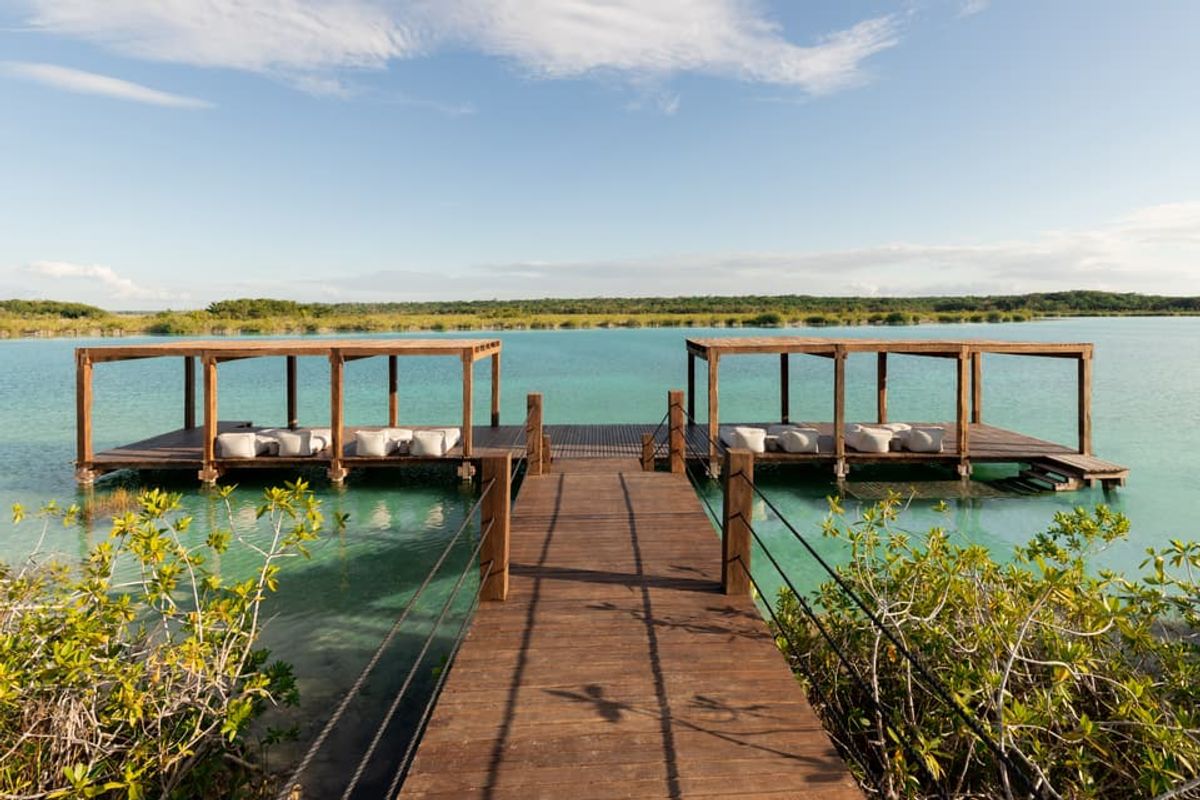
Nestled along the southern edge of Mexico’s Yucatán Peninsula, Bacalar has quietly emerged as a sanctuary for travelers seeking serenity beyond the well-trodden tourist paths. With a population of just over 13,000, this lakeside pueblo mágico (magic town) is anchored by its crown jewel: the Laguna de los Siete Colores, a 26-mile-long freshwater lagoon celebrated for its seven distinct shades of blue. Recent data from Mexico’s Ministry of Tourism reveals that Bacalar saw a 35% increase in visitors between 2022 and 2023, yet it retains an air of unhurried authenticity, a delicate balance that locals are determined to preserve.
A Living Canvas of History and Water
Bacalar’s story stretches back centuries, woven into the fabric of Mayan civilization and Spanish colonial ambition. The Fortress of San Felipe, a 17th-century stone bastion built to deter pirates, now stands as a museum overlooking the lagoon. “Every sunset here feels like a brushstroke on an ever-changing painting,” remarked Ana Martínez, a guide whose family has lived in Bacalar for three generations. Her tours often include stops at nearby Cenote Azul, a 300-foot-deep natural sinkhole whose cobalt waters contrast dramatically with the lagoon’s softer hues.
Sustainability as a Way of Life
As tourism grows, Bacalar’s community has embraced innovative measures to protect its fragile ecosystem. In 2021, local authorities banned sunscreen containing oxybenzone in the lagoon, a move that helped reduce chemical pollution by 40% within two years. Many hotels, like the solar-powered Hotel Aires Bacalar, now use biodegradable toiletries and rainwater harvesting systems. “We don’t just host guests, we invite them to become stewards,” said owner Luis Rivera, noting that visitors often join weekly beach cleanups organized by residents.
Flavors Rooted in Tradition
The town’s culinary scene mirrors its ecological ethos. At El Manatí, a family-run eatery, dishes like pan de cazón (shark casserole) and cochinita pibil are prepared using ancestral techniques and hyperlocal ingredients. Chef Marisol Gómez sources heirloom corn from Maya villages in Quintana Roo, explaining, “Our food tells the story of this land, spicy, vibrant, and resilient.” For a sweet finale, the tamarind margaritas at lakeside bars, garnished with chili salt, have become a rite of passage for newcomers.
Adventure Beyond the Shoreline
While the lagoon captivates most visitors, Bacalar’s hinterlands offer equally compelling discoveries. Kayak through the Pirates’ Canal, a narrow waterway once used by buccaneers, or cycle along dirt roads flanked by ramón trees. Birdwatchers flock to the Río Hondo biosphere reserve, home to 350 avian species, including the endangered jabiru stork. “People think Bacalar is just a pretty lake,” laughed tour operator Javier Morales, “but its soul lies in the stories whispered by the wind in the mangroves.”
A Community Writing Its Future
Bacalar’s evolution from sleepy village to conscious travel destination hasn’t been without challenges. Last year, community leaders launched a campaign limiting motorized boats on the lagoon, ensuring quieter mornings where the only sounds are paddles dipping into water. Artisans like potter Rosalía Méndez have found new audiences through pop-up markets, selling hand-painted ceramics inspired by pre-Hispanic motifs. “Progress here isn’t about becoming bigger,” Méndez reflected, “but about growing deeper roots.”
As daylight fades over the lagoon, casting amber light on wooden docks, it’s clear that Bacalar offers more than photogenic vistas. It invites a slower, more intentional kind of exploration, one where every ripple tells a story, and every visitor leaves a trace of their journey in the community’s unfolding narrative. Have you experienced Bacalar’s magic? Share your thoughts with us on social media, we’d love to hear how this hidden gem touched your travels.