
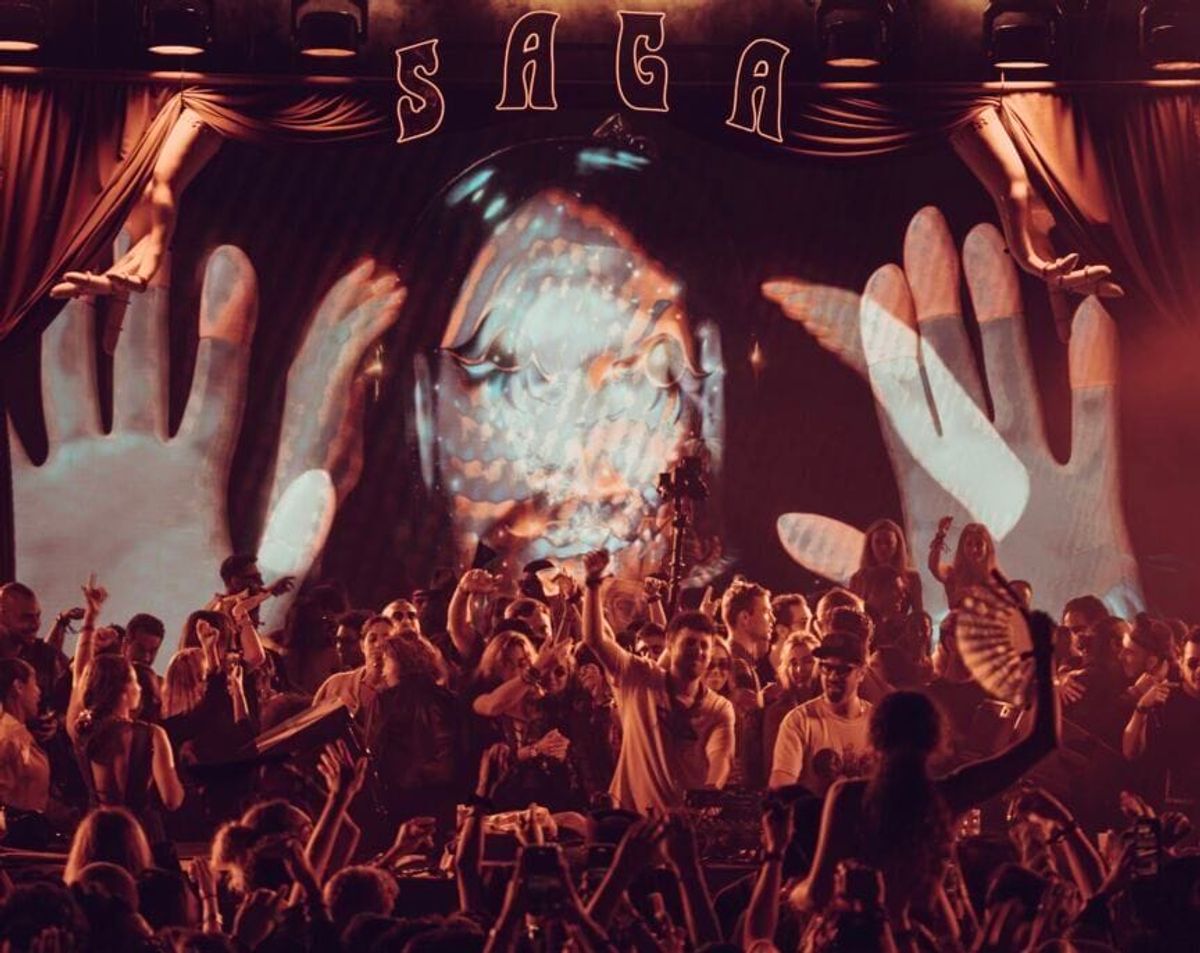
The electronic music season in Tulum rarely eases in gently, and early January in the Riviera Maya often signals not recovery from the holidays but acceleration. On January 7, Bedouin return to Zamna Tulum with their SAGA showcase, presented by IKTAN, a date that has become a fixed reference point for the global circuit that follows underground electronic music through Mexico each winter.
The Brooklyn-based duo, long associated with Tulum and now considered local residents by many in the scene, headline a lineup that includes Shimza, Notre Dame, Robin M, and Nandu. The event, organized by IKTAN, takes place inside the Zamna jungle venue, where large-scale electronic gatherings have reshaped Quintana Roo’s cultural calendar over the past decade.
For many attendees, SAGA is less about novelty than continuity. It marks another chapter in a long-running relationship between artists, place, and audience, one that continues to shape how Tulum is positioned within global electronic and club culture.

Why January 7 matters in the Zamna calendar
January has become the densest month of electronic music programming in Tulum, with international visitors, promoters, and artists converging on the jungle outside town. Zamna Tulum, located south of the hotel zone and away from the coast, anchors much of this activity. Its events now attract tens of thousands of visitors over the course of the season.
Within that crowded schedule, January 7 sits at a crossroads. It follows the New Year surge and precedes some of the largest branded showcases of the month. For Bedouin, it is a strategic and symbolic slot, positioning SAGA not as an opening act but as a moment of consolidation.
The duo’s return also reflects how Zamna has evolved from a seasonal experiment into a permanent reference point on the international festival map. What happens on a single night in Tulum now reverberates through bookings, releases, and touring schedules far beyond Mexico.

Bedouin’s long relationship with Tulum
Bedouin, composed of Rami Abousabe and Tamer Malki, have been present in Tulum for years, both as performers and residents. Their sound, which blends deep house, melodic techno, and Middle Eastern influences, has often been described as well-suited to outdoor, long-form sets rather than peak-hour club moments.
That alignment helped establish SAGA as more than a party series. It became a format built around extended musical narratives, gradual pacing, and immersive production. In Tulum, where events frequently stretch deep into the morning, that approach found a receptive audience.
Their Human By Default label has also served as a pipeline for artists now appearing on the January 7 lineup. Notre Dame, Robin M, and Nandu have all released music connected to the duo’s broader creative orbit, reinforcing the sense that SAGA functions as a curated ecosystem rather than a one-off booking.

A lineup shaped by global and local currents
The inclusion of Shimza brings a different dimension to the night. The South African artist has built an international reputation while remaining closely tied to scenes in Johannesburg and Cape Town. His presence underscores the increasingly global nature of Zamna’s programming, where Africa, Europe, and the Americas intersect in the jungle of Quintana Roo.
Notre Dame, Robin M, and Nandu represent a younger generation within melodic and deep electronic music. Their inclusion suggests a deliberate balance between established names and emerging voices, a pattern that has characterized SAGA events worldwide.
This structure mirrors broader trends in electronic music, where curation and narrative often matter as much as individual headliners. Audiences arriving in Tulum are not simply chasing famous names; many are seeking coherence across an entire night.

Zamna’s growth and its implications
Zamna’s 2026 season is described by organizers as its most expansive yet, with a schedule that includes artists such as David Guetta on January 2, Keinemusik on January 6, and Mayan Warrior on January 9. Additional performances from Thundercat, Maceo Plex, and Erez, along with the multi-day Gates of Agartha experience later in the month, extend the scope beyond conventional club events.
Alongside music, Zamna has increasingly emphasized experiential elements, from large-scale stage design to wellness-oriented lodging options nearby. Organizers have also highlighted a renewed focus on ecological and cultural considerations, an area that remains under scrutiny as events grow in size and frequency.
The expansion raises questions that extend beyond music. Infrastructure, environmental impact, and the relationship between tourism-driven nightlife and local communities continue to shape debates in Tulum and across the Riviera Maya.

Music, tourism, and pressure on place
For Quintana Roo, January’s electronic music season delivers clear economic benefits. Hotels fill, transportation services surge, and international visibility increases. At the same time, the concentration of large events places pressure on roads, water resources, and surrounding ecosystems.
Zamna’s jungle setting has become part of its identity, but that proximity to sensitive environments also draws attention from environmental groups and local residents. While promoters emphasize mitigation efforts, the long-term balance between growth and sustainability remains unresolved.
Events like Bedouin SAGA sit within that tension. They attract a global audience seeking meaning and connection, yet they also contribute to the cumulative footprint of mass tourism in southern Mexico.
One long-time attendee, reflecting on past seasons, summarized the appeal succinctly: “You come for the music, but you stay because the night feels like it belongs to the place.”

How SAGA fits into a crowded season
Against a calendar filled with blockbuster names and competing concepts, SAGA distinguishes itself through restraint. Rather than aiming for spectacle alone, it emphasizes flow, atmosphere, and continuity. That approach may explain why the event continues to draw loyal followers year after year.
In a season where multiple nights blur together, SAGA often stands out in memory. Not because it is louder or bigger, but because it unfolds at its own pace.
For The Tulum Times, the January 7 showcase illustrates how Tulum’s electronic music scene has matured. It is no longer defined solely by novelty or exclusivity, but by recurring rituals that anchor an otherwise transient population.

A night that reflects a broader shift
As electronic music festivals worldwide grapple with scale, identity, and sustainability, Tulum offers a concentrated case study. Bedouin’s return to Zamna Tulum reflects both the strengths and contradictions of that model.
The night promises a carefully curated musical journey in a setting that has become iconic. It also sits within a broader conversation about what Tulum is becoming, and what it risks losing, as global attention intensifies.

The speakers will eventually fall silent. The jungle will reset. But the questions raised by nights like January 7 tend to linger longer than the bass.
As Bedouin bring SAGA back to Zamna Tulum, the event once again highlights how music, tourism, and place intersect in modern Tulum. For fans, it is a defining date of the season. For the region, it is another reminder that global culture now arrives here at full volume. And for the future of events in Quintana Roo, Bedouin SAGA Zamna Tulum represents both an achievement and a test.
For those planning to attend, tickets and additional information for Bedouin presents SAGA at Zamna Tulum on January 7 are available through the official Zamna Festival platform. Full event details, access options, and updates can be found at https://zamnafestival.com/events/bedouin-pres-saga-tulum.
We’d love to hear your thoughts. Join the conversation on The Tulum Times’ social media.
Can Tulum continue to host world-class electronic music without losing the balance that made it distinctive?