

In a world where tourism giants are stumbling, Cancun is still sprinting. Last month, Cancun International Airport welcomed 1,402,782 international passengers, a figure just 0.8% below its all-time record for August. On the surface, it may look like a slight drop. But in the broader context? It’s nothing short of remarkable.
At a time when other destinations in North America are watching their post-pandemic booms cool off, Cancun’s numbers remain red-hot, with over 13.7 million international arrivals logged so far in 2025. And that’s with the Mexican peso gaining strength, a new rival airport in Tulum, and global travel patterns beginning to normalize. So what’s keeping Cancun at cruising altitude while others are coming back to earth?
Let’s unpack it.
Cancun’s Unmatched Connectivity
Forget layovers. For most travelers eyeing Mexico’s Caribbean coast, Cancun International is the bullseye. With direct flights from Sacramento to Stockholm, the airport has quietly become one of the most connected leisure hubs on the planet. The frequency and sheer number of routes aren’t just convenient, they’re strategic.
“It’s just easier to get to Cancun,” one repeat traveler from Toronto told us. “I can leave in the morning and be on the beach before lunch.”
That ease of access feeds a relentless stream of visitors, keeping Cancun’s tourism engine roaring even when other destinations falter. Airlines fight for gate space, which keeps ticket prices competitive, while the airport’s size and efficiency ensure that the volume doesn’t translate into chaos.
Cancun for Every Wallet
Some destinations box themselves in. Not Cancun.
Whether you’re sipping champagne in Playa Mujeres, backpacking through Downtown Cancun, or tucking into tamales at a family-run spot in Puerto Morelos, there’s something here for every type of traveler, and every type of budget.
From ultra-luxury boutique resorts to budget Airbnbs, the Cancun metro tourism ecosystem has evolved into a tiered paradise. This isn’t just inclusive in the “all-inclusive” sense, it’s economically democratic. That’s a rare feat.
And it pays dividends. Families on tight budgets, honeymooners with five-figure plans, and solo digital nomads can all exist side-by-side on this stretch of the Riviera Maya, and they often do.
Cancun’s All-Inclusive Juggernaut Keeps Winning
While other tourism models are adapting, Cancun perfected its pitch years ago: show up, pay once, and don’t worry about anything else. And in 2025, with inflation biting into discretionary budgets, that model feels tailor-made for the moment.
What began as a convenience has become a selling point. World-class meals, premium drinks, and seamless service, all rolled into one upfront fee, offer something most vacations can’t: predictability. And in uncertain economic times, predictability is power.
“The best thing about Cancun is knowing exactly what you’re going to get, and that it’ll be better than you expected,” said a frequent traveler from Chicago.
Building Toward the Future, Not Just the Season
You can feel it in the air, and in the cement. Cancun is in a constant state of reinvention. New resorts, like the buzz-worthy AVA, continue to reshape the skyline. Infrastructure projects like the Tren Maya and the Nichupté Bridge promise not just better access, but a bolder vision for how the region moves, grows, and competes.
This isn’t growth for growth’s sake. It’s strategic. It reflects a region that’s doubling down on its role as a global tourism powerhouse and investing accordingly.
What About Tulum’s New Airport?
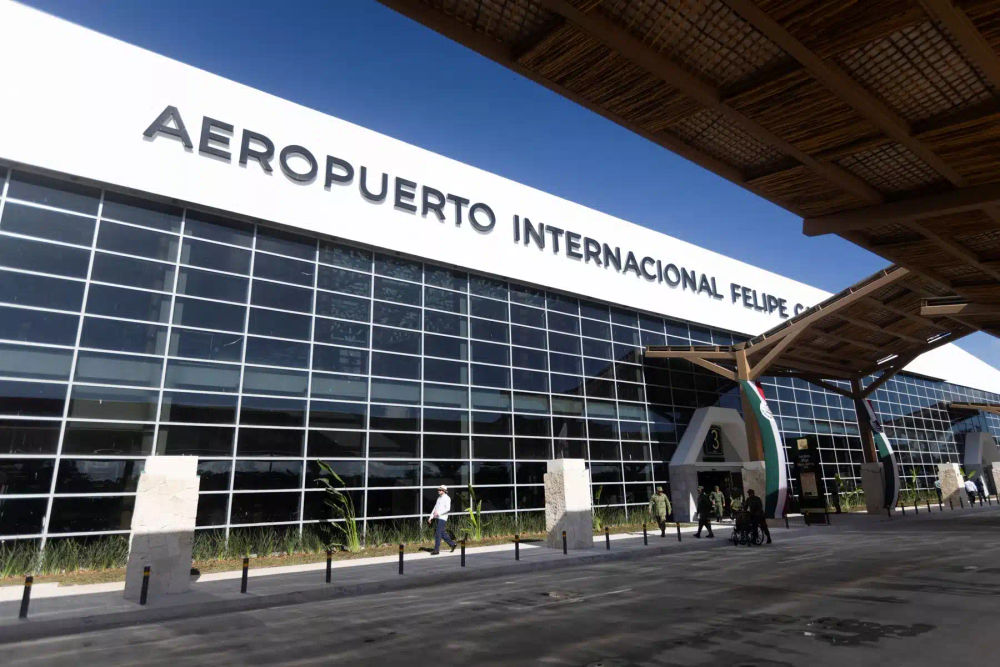
When the Felipe Carrillo Puerto International Airport (TQO) opened in Tulum, some predicted a traffic split that could hurt Cancun. But a year later, the evidence says otherwise.
The new hub hasn’t cannibalized Cancun. It complements it.
For travelers targeting southern Quintana Roo, Tulum’s airport provides direct access and cuts out the highway haul. But for those heading to Cancun proper, Playa del Carmen, or points north, CUN remains the alpha, bigger, busier, and still the go-to gateway.
Together, the two airports are expanding the Riviera Maya’s reach, not competing for scraps. And that’s a win for the entire region.
Not a Slump, A Stabilization
Yes, the August numbers dipped, barely. But viewed in context, this isn’t a decline. It’s a leveling off at sky-high altitude. Cancun isn’t chasing growth at any cost. It’s locking in sustainable, near-record traffic, even as global markets pull back.
That’s not just resilience. It’s dominance.
As The Tulum Times continues to track tourism trends across Quintana Roo, one thing is clear: Cancun isn’t losing its edge. It’s sharpening it.
What’s at Stake, and What Comes Next?
Cancun’s success has ripple effects across the region. Tulum, Playa del Carmen, and Isla Mujeres all benefit from the momentum of the north’s tourism magnet. But with infrastructure strains, environmental pressures, and new global competitors, Cancun’s formula will face new tests.
How will it adapt? How will Tulum’s rise shift regional dynamics? And what role will local communities play as the region redefines what sustainable tourism really looks like?
One thing’s for sure, Cancun’s story is still being written.
We’d love to hear your thoughts. Join the conversation on The Tulum Times’ social media.
What’s your experience flying into Cancun or Tulum? Which airport do you prefer, and why?