
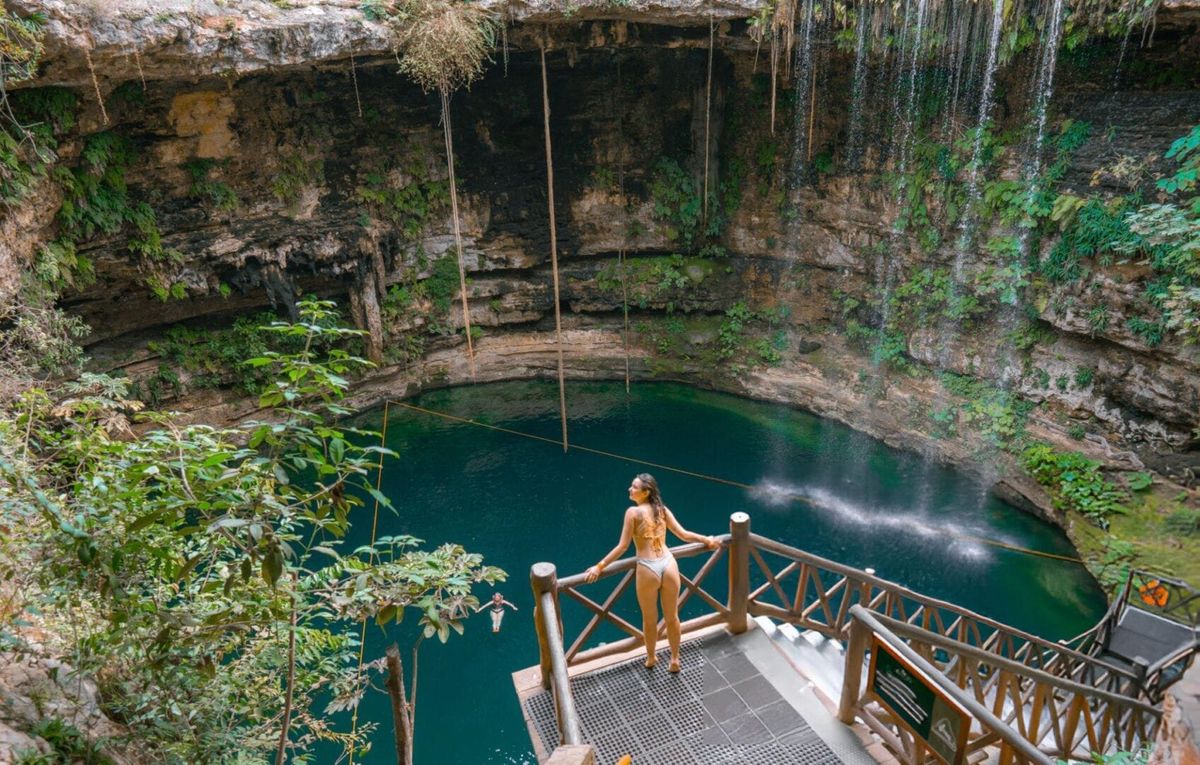
There’s a quiet revolution rippling beneath the turquoise waves of the Riviera Maya, this time, not on the surface but deep underground, where ancient waters sleep in the limestone veins of the Yucatán Peninsula.
From the pulsing heart of Playa del Carmen, a new vision is emerging. A vision that dares to look beyond the beach bars and all-inclusive resorts. One that might just change the face of Mexican tourism altogether.
Estefanía Hernández, Secretary of Tourism for Playa del Carmen, has announced the launch of Mexico’s first Cenote Corridor, a bold, inter-destination strategy aimed at transforming how the region is seen, sold, and ultimately, sustained.
“We’re building an alternative model,” Hernández said. “One that diversifies tourism, attracts new market segments, and showcases our natural wealth.”
It’s a move that signals more than branding. It signals a shift in values.
A Corridor That Runs Beneath the Surface
The proposed Cenote Corridor is more than a marketing gimmick. It’s an invitation to reimagine the Riviera Maya through its most primal element: water. But not just any water, the sacred, often hidden pools that have sustained Maya civilization for centuries and captivated modern travelers in search of raw, natural beauty.
This corridor won’t be confined to a single location. Instead, it weaves together key destinations across Quintana Roo and Yucatán, including Tulum, Felipe Carrillo Puerto, Puerto Morelos, Cozumel, Mérida, and Valladolid.
Each brings its own constellation of cenotes, some pristine and unexplored, others already bustling with tourists and Instagram filters. But under this new initiative, the goal is cohesion: shared standards, shared conservation plans, and a shared narrative that puts sustainability at the center.
“Yes, our beaches bring millions,” Hernández acknowledged, “but cenotes are unique. They could become our strongest differentiator.”

What the Corridor Aims to Do
At its core, the Cenote Corridor seeks to redefine the tourist experience in the Mexican Caribbean by focusing on eco-tourism, cultural heritage, and environmental responsibility.
And it’s not just lip service.
The initiative includes the development of infrastructure and safety protocols, as well as a certification program for participating cenotes. The criteria are under review, but early signs point to minimum environmental standards, tourism readiness, and long-term conservation strategies.
Hernández emphasized that this is not a solo mission. The project involves state environmental agencies, NGOs like Cenotes Urbanos and Centinelas del Agua, and a cross-jurisdictional legal review to create unified guidelines.
“We’re not just promoting nature,” she said. “We’re protecting it, standardizing it, and making sure it lasts.”

The Hidden Crisis Lurking Beneath Tulum
But here’s the tension no one can ignore.
While Playa del Carmen plans its corridor and Cozumel polishes its offer, Tulum is quietly drowning in its own luxury. A confidential scientific report leaked in July by a respected oceanographic institute revealed that many of Tulum’s cenotes are contaminated by sewage from upscale hotels and unchecked real estate development.
It’s a gut-punch revelation that puts the entire region’s sustainability claims under scrutiny. How can cenotes become eco-tourism gems if they’re being slowly poisoned?
This is where the project’s success, or failure, will be decided. Not in brochures or speeches, but in septic systems and zoning laws. Whether developers are reined in or given free rein. Whether the Cenote Corridor becomes a true model of regenerative tourism, or just another greenwashed campaign.

A Glimpse of What’s Possible
Imagine this: a backpacker arrives in Mérida, rents a bike, and begins a multi-day journey through the Cenote Corridor. They stop at Valladolid to swim in a crystal-blue sinkhole guarded by community elders. Later, they reach Tulum, but instead of bypassing town for the beach, they’re drawn into a certified eco-tour with Maya guides who share their ancestral ties to the land.
Now multiply that story by 100, by 1,000, by a generation.
That’s the vision, a human-centered, locally rooted, environmentally aware travel experience that could outlast the trend cycles of tropical Instagrammability.
And yes, it might bring in more conscientious tourists, but it could also bring jobs, pride, and a sense of shared stewardship to communities long left on the sidelines of mass tourism.

Why This Matters Now
The Mexican Caribbean is at a crossroads.
The beaches will always be here. But the cenotes, delicate as they are, might not.
Tulum’s ecological struggles serve as a cautionary tale, but they also underscore the urgency, and the opportunity, of this moment. The Cenote Corridor could be the last chance to get it right before underground contamination, overdevelopment, and cultural erasure make the dream impossible.
As The Tulum Times continues to spotlight the region’s evolving identity, one thing is clear: this corridor isn’t just about tourism, it’s about legacy.
“If we don’t protect what makes us different, we’ll become just another beach destination,” one local guide said, echoing a sentiment shared by many.

What’s Next for the Cenote Corridor?
There’s still much to confirm.
The criteria for inclusion are being defined. Certification processes need funding and oversight. And the elephant in the room, regulating the luxury developments encroaching on fragile ecosystems, remains a political and legal challenge.
But the ambition is there. The inter-municipal cooperation, while rare, appears genuine. And for now, there is hope that Playa del Carmen’s vision could become a blueprint for the entire peninsula.
If it works, it could set a precedent not just for Mexico, but for all destinations grappling with the contradictions of tourism and conservation.
Will the Cenotes Save Us or Will We Ruin Them First?
This isn’t just about creating a new tour package. It’s about deciding what kind of region the Riviera Maya wants to be.
One defined by fast profits and slow decay? Or one that dares to protect its most sacred, most fragile treasures?
We’d love to hear your thoughts. Join the conversation on The Tulum Times’ social media.
Is the Cenote Corridor the future of Mexican eco-tourism, or too little, too late?