

Checkpoint Ciao Osteria officially opens today on Tulum Beach, marking the arrival of a new Italian dining concept rooted in Mediterranean tradition and shaped by collaboration with Chef Marco Sforza of Saporium in Florence.
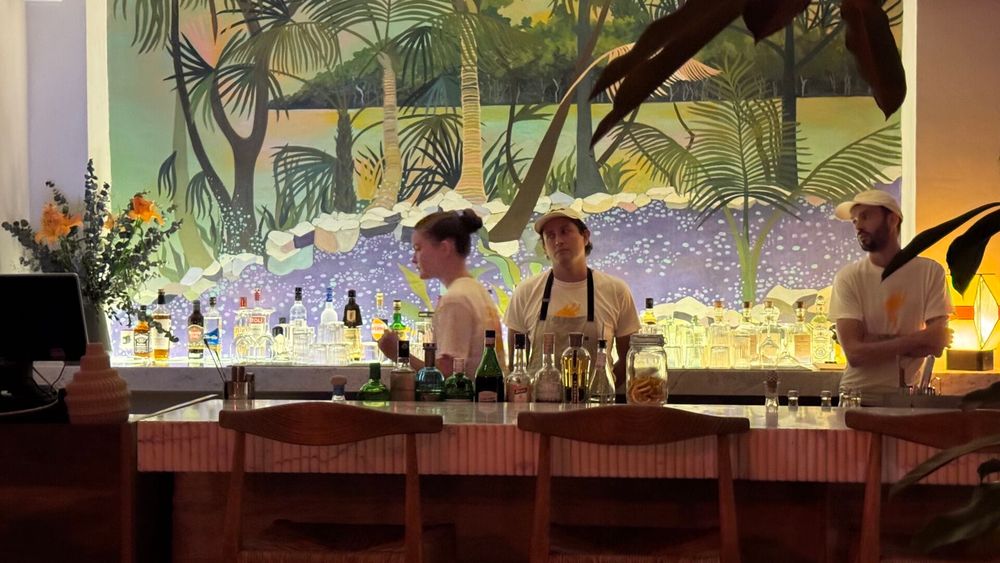
Located at kilometer 7.5 of the Tulum-Boca Paila road, the restaurant introduces a contemporary osteria inspired by the masseria farmhouses of Puglia. Its design emphasizes classical forms, curved structures, and natural materials that reference rural Italian architecture while integrating into the environment of the Mexican Caribbean.
The opening signals a new addition to Tulum’s culinary scene, blending Italian techniques with regional ingredients and local influences.
A concept shaped by Italian rural tradition
The founders describe Checkpoint Ciao Osteria as a place built around the original meaning of an osteria in Italy: a house of wine and food where conversation and shared meals define the experience. The space draws from the architectural language of southern Italy, particularly Puglia’s agricultural homes, using restrained aesthetics rather than ornamental design.
Wood-fired ovens and fermentation processes play a central role in the kitchen, reflecting a focus on traditional preparation methods adapted to contemporary service. These elements are combined with ingredients sourced from the surrounding region, creating a dialogue between Mediterranean culinary heritage and the flavors of the Riviera Maya.

Chef Marco Sforza’s culinary background
The culinary direction is led by Chef Marco Sforza, born in Turin in 1983, whose career spans high-profile kitchens in Europe and the Americas. He began his professional training at age 17 and later worked with chefs such as Gualtiero Marchesi and Gordon Ramsay.
In 2007, Sforza left his role as sous chef at the historic Del Cambio restaurant to focus on pastry, joining the Alajmo family at Le Calandre in Italy. His experience also includes collaborations with Nobu in New York and Villa Joya in Portugal.
In 2013, he moved to Lima, working with Pedro Miguel Schaffino at Malabar, where he expanded his knowledge of Amazonian ingredients and experimental techniques. After returning to Italy, he specialized in fermentation, sourdough, and chocolate-making, contributing to bakery projects and professional training programs in partnership with Slow Food.

From fermentation to contemporary osteria
In 2020, Sforza co-founded Panettone with Matteo Ferrantino, focusing on natural fermentation and modern pastry techniques. He currently serves as executive pastry chef at Saporium Firenze and Saporium Chiusdino, both recognized by the Michelin Guide with red and green stars, and works as a consultant for Epi Plage in Saint Tropez.
At Checkpoint Ciao Osteria, his approach centers on seasonal cooking, ancestral recipes, and contemporary methods. The menu reflects a balance between Italian tradition and adaptation to local conditions, with fermentation and wood-fired cooking shaping both flavor and structure.
One guiding principle, frequently cited by the team, is that cuisine functions as a cultural expression rather than simply nourishment. That idea informs the restaurant’s emphasis on technique, ingredient integrity, and respect for natural cycles.

Sustainability and culinary identity
Sustainability plays a stated role in the restaurant’s operations, with decisions guided by respect for the environment and long-term sourcing practices. The concept draws from Mediterranean food culture, where seasonality and proximity have historically shaped daily cooking.
Rather than positioning itself solely as an Italian restaurant, Checkpoint Ciao Osteria frames its identity around mestizaje, the meeting of cultures. Italian culinary foundations intersect with Mexican Caribbean ingredients, producing a menu intended to reflect both histories without forcing fusion.
This approach aligns with broader shifts in Tulum’s dining landscape, where chefs increasingly combine international training with regional context.
Opening day invitation
With its inauguration taking place today, Checkpoint Ciao Osteria opens its doors to residents and visitors interested in experiencing a Mediterranean-inspired osteria adapted to Tulum’s setting. Reservations are available through the restaurant’s official website.
As The Tulum Times observes, the opening highlights how international culinary expertise continues to shape the local food scene while responding to regional identity.
What remains to be seen is how this balance between tradition, sustainability, and local adaptation will evolve as the restaurant becomes part of Tulum’s daily rhythm.
Reservations: https://www.instagram.com/checkpointciao_osteria
We’d love to hear your thoughts. Join the conversation on The Tulum Times’ social media.
How do you see Mediterranean cuisine fitting into Tulum’s evolving culinary identity?