
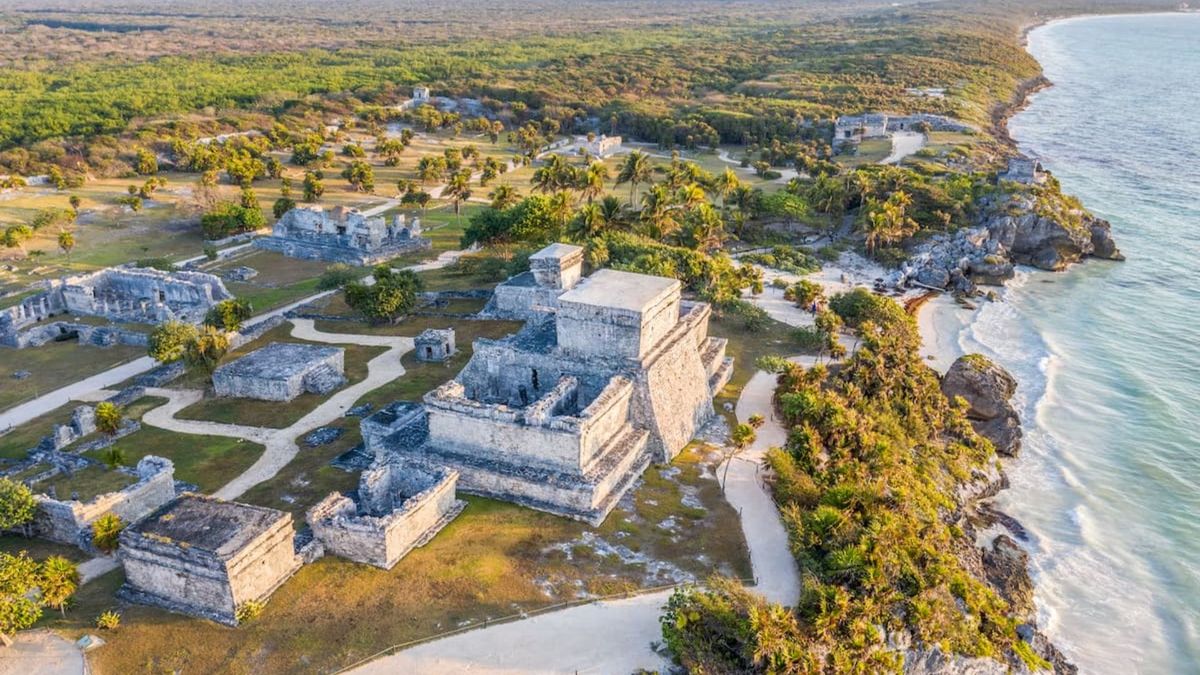
The ancient Mayan cities of Chichen Itza and Tulum in Mexico continue to draw in a staggering number of visitors, solidifying their place as premier destinations for travelers worldwide. Freshly released figures for the first half of 2025, spanning from January to June, reveal the enduring appeal of these historical sites. The data, compiled by Mexico’s National Institute of Anthropology and History (INAH), underscores the vitality of the tourism industry in the Yucatan Peninsula, even amidst fluctuating global travel trends.
**Soaring Tourist Numbers in the Mayan Heartland**
The statistics are compelling. During this six-month period, Chichen Itza, a world-renowned archaeological site in the state of Yucatan, welcomed an astonishing 1,141,734 visitors. Its sister site, Tulum, situated in Quintana Roo, experienced robust popularity as well, registering 627,634 tourists. These figures place both Mayan cities at the very top of the list of the most frequented historical locales in the nation. Chichen Itza alone accounts for 22.53% of all visitors to archaeological sites in Mexico. The ancient metropolis of Teotihuacan in the State of Mexico, with 840,421 visits, comes in second, followed by Tulum.
These impressive numbers are also a testament to Mexico’s strong tourism sector, as the INAH data reveals that in the first half of the year, a total of 11,011,274 tourists journeyed to Mexico. Of these, an astounding 5,066,937 explicitly chose to explore the nation’s archaeological zones. This indicates that a substantial portion, 46.02%, of the total visitors prioritized these culturally significant sites. The remaining 5,944,337 tourists, or 53.98%, opted to visit museums during their stay. The data highlights the importance of promoting and preserving these sites and the importance of effective city management.
**Regional Trends and Key Players**
The popularity extends beyond these two flagships of Mayan heritage. Within the Yucatan and Quintana Roo regions, other sites also achieved notable visitor numbers. Uxmal, a lesser-known but equally important Mayan city, secured the seventh position with 135,334 visitors, representing a notable 2.67% of the total. Meanwhile, Chacchoben in Quintana Roo occupied the eighth spot, with 134,868 visits, equivalent to 2.66%. Following closely at number nine, in Quintana Roo, is Coba which brought in 104,005 visitors during the first half of the year.
Given the overall strong interest in the area, this data unequivocally confirms that the Yucatan Peninsula remains a prime destination for both domestic and international travelers. Throughout June, in particular, this demand was consistent. The trend shows that Chichen Itza was significantly more popular than Teotihuacan and Teotihuacan, a testament to its powerful cultural draw. However, the June data point to some potential shifts. Chichen Itza reported 161,011 visits, which marked a slight decrease of 2.4% compared to June 2024, when 164,810 visits were recorded. The implications of this slight dip, alongside the fluctuations in other key Mayan sites, are worth further investigation.
**The Future of Chichen Itza Tulum Visitors**
The ongoing popularity of *Chichen Itza and Tulum visitors* hinges on the preservation of these sites and the ability to manage tourist flows sustainably. Ensuring that these destinations remain accessible and well-maintained is critical for continued success. As we look ahead, it is a certainty that the challenges of balancing preservation with accommodating growing crowds will continue to command attention. The next wave of data will reveal if the trends continue its trajectory of sustained positive growth or if new strategies become necessary.
We’d love to hear your thoughts, join the conversation on The Tulum Times’ social media.