
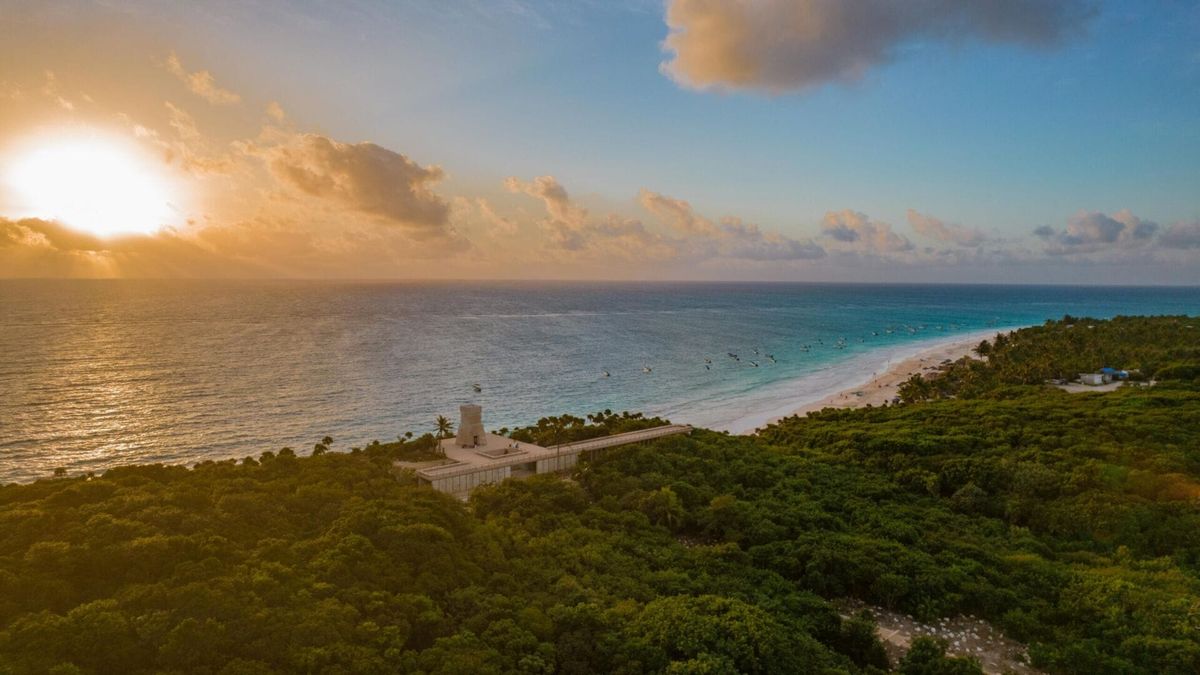
It won’t be the usual quiet hum of crickets or the rustle of coastal palms that fills the June twilight in Tulum this year. No, come the 21st, the air inside the old aeronaval base will thrum with stories, dance, and something deeper: a shared reverence for the living pulse of nature. They’re calling it “Cielo, mar y tierra. Festejemos la naturaleza”, and it’s not just a festival. It’s a rallying cry wrapped in folkloric rhythm and scientific discourse, championed by the Instituto Nacional de Antropología e Historia (INAH).
The keyword here? Biodiversidad. And not in the sterile, textbook sense. In Tulum, that word spills out with color, tradition, and a strong undercurrent of urgency.
The Pulse of the Ocean: Sharks and Survival
At exactly 6 PM, the Sala Kaab, a repurposed military space now beating with culture inside Parque del Jaguar, will dim its lights and welcome Pamela Vázquez Márquez. She’s not just a speaker; she’s a sentinel of the sea. Director of the civil association Saving Our Sharks, Vázquez Márquez, will anchor the evening with a talk titled “Conservación de los tiburones en el Caribe mexicano.”
You might wonder: why sharks? Because their survival is tangled with ours. As apex predators, sharks stitch together the marine food web. Lose them, and you pull a vital thread from the ocean’s tapestry. And in a region whose lifeblood is both ecological and touristic, that thread is non-negotiable.
Folklore Meets Flora
Then, without transition music or intermission, the stage will belong to Paraíso Maya Danzarte. Picture this: the swish of skirts, the earthy beat of Mayan drums, and movements born from centuries of storytelling. Their rendition of the vaquería, a traditional Yucatecan dance, won’t just entertain; it’ll root the audience in the cultural soil of this land.
It’s not a detour from the environmental theme. It’s a reminder: culture is nature’s echo. And nowhere is that echo louder than in Indigenous tradition.
Know Thy Creatures: Biodiversidad, Explained
When the music fades, another voice will rise, that of Rocío Peralta from Biodiversidad y Cultura Ambiental Tulum. Her lecture, “Conociendo la biodiversidad”, aims to humanize the statistics. Think less PowerPoint, more pulse-check. Expect stories of endangered species, tangled ecosystems, and the invisible dance of organisms that make Tulum more than a postcard.
This isn’t just knowledge; it’s inheritance. And with extinction knocking louder, it’s time we act like heirs.
Access and Inclusion: Who Gets to Listen?
There’s one detail that could trip up a would-be attendee: Parque del Jaguar has its own entry fees. But, and this matters, if you’re a Tulum local, your INE card is your golden ticket. INAH is opening its doors for free, but the park plays by its own rules. Still, for residents, the event remains beautifully, radically accessible.
Why It Matters
This isn’t just another date on the calendar or another festival with pretty lights and Instagram moments. It’s a convergence of science and story, tradition and truth. On the heels of World Environment Day and World Oceans Day, this night is about recognizing that the fight for biodiversidad isn’t waged in labs or law offices alone. Sometimes, it dances. Sometimes, it speaks in Mayan tongue. And sometimes, it simply asks you to listen.
We’d love to hear your thoughts, join the conversation on The Tulum Times’ social media.