

A federal appellate court order has granted a definitive suspension tied to construction works on Section 5 of the Maya Train, the stretch connecting Cancun to Tulum, according to the environmental organization Sélvame MX.
The ruling calls on federal authorities to carry out actions “within their powers” related to environmental verification, inspection, conservation, and protection. It also orders two units within Mexico’s Federal Attorney’s Office for Environmental Protection, known as Profepa, to execute corresponding measures regarding the works on that section of the rail project.
For Tulum and the broader Riviera Maya, the decision matters because Section 5 has been the most controversial part of the Maya Train route, due to its path through jungle and cave systems in Quintana Roo, including areas associated with cenotes. The suspension introduces new legal pressure on environmental oversight and enforcement tied to ongoing construction activities on the Cancun to Tulum corridor, a zone with direct implications for residents, workers, and businesses that depend on the region’s ecosystems and water systems.
What the court ordered and who must act
Sélvame MX said a Collegiate Tribunal issued the definitive suspension in a case connected to construction works on Section 5. The organization described the resolution as requiring federal authorities to take actions that fall under their environmental enforcement powers, including verification and inspection, as well as conservation and protection measures.
The resolution specifically directs the Subprosecutor’s Office for Natural Resources within Profepa to act, as well as Profepa’s General Directorate for Crimes, Commutations, Complaints, and Grievances. Based on the organization’s description, those offices are expected to carry out measures related to the construction works on Section 5.
The base text did not include the date of the ruling, the case number, or a detailed description of what measures were ordered beyond the instruction to act within those agencies’ competencies. It also did not specify whether construction must stop entirely, partially, or under specific conditions, only that the suspension is definitive and linked to the works on that section.
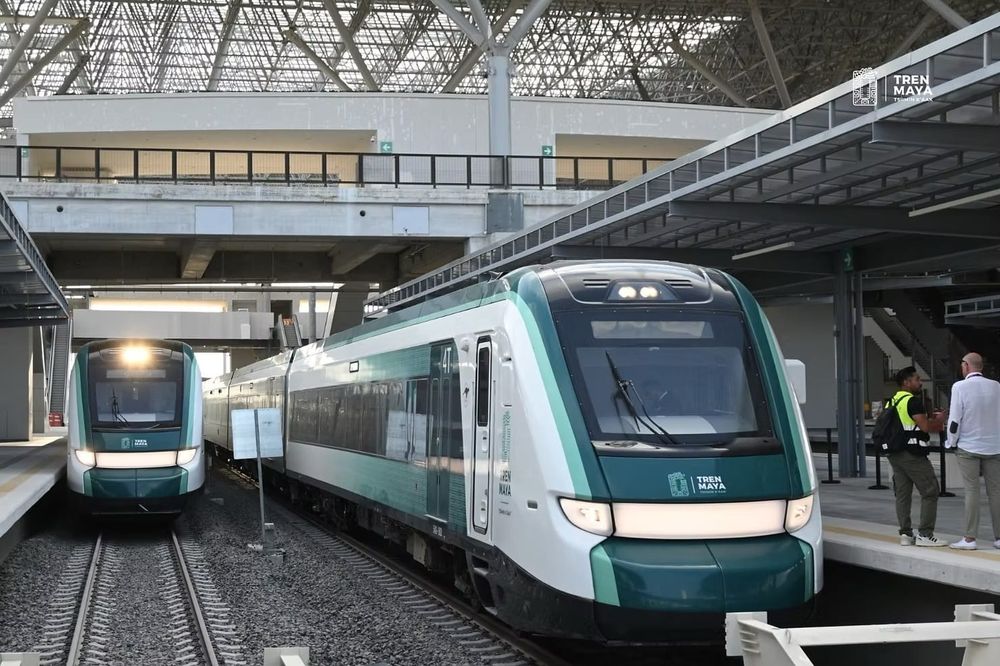
Why Section 5 has drawn the strongest scrutiny
Section 5, between Cancun and Tulum, has been the focal point of environmental conflict around the Maya Train project because it crosses jungle terrain and karst landscapes that contain interconnected caves. That geology is typical in Quintana Roo and is associated with cenotes and underground voids.
In practical terms, for Tulum, this corridor sits at the intersection of transportation expansion and environmental protection. It also overlaps with the region’s tourism economy and community concerns about the long-term health of fragile ecosystems.
Sélvame MX framed the court outcome as part of an ongoing effort focused on preservation. The organization said it was grateful to collaborators and the community for continued support “in this struggle to preserve our environment,” adding: “Together, we continue working for a more sustainable and responsible future.”
Structural risk concerns raised by experts
The controversy has also included engineering warnings tied to the elevated rail design on the Cancun to Tulum stretch. Experts have warned about the risk of a collapse scenario because the elevated structure is supported by 7,000 pilings built over karst soil, which is porous in areas with cenote caverns, according to the base text.
Criticism has also targeted the concept of running cargo service on the line, given the risk, the base text said.
Wilberth Esquivel, described as a civil engineer with expertise in structural construction in the region, previously warned about the potential consequences if even one piling were to sink. “It can be fatal for one of the pilings to sink; by 5 or 10 centimeters, it pulls the others, tilts the track, and it derails,” he said, according to the base text.
For communities in and around Tulum, these warnings underline why construction standards and oversight have become part of the public stakes. A rail link designed to move large volumes of passengers, and potentially cargo, would require confidence in long-term stability in a landscape defined by hidden voids and water systems.

What changes now for the Cancun to Tulum corridor
The definitive suspension, as described by Sélvame MX, increases the likelihood of stepped-up enforcement activity by federal environmental authorities with jurisdiction over inspections and environmental protection measures related to the works on Section 5.
For residents and workers along the corridor, the immediate change is not a new transportation service or a new rule for daily life, but rather a legal development that could shape how construction proceeds and what environmental oversight looks like going forward. The specific on-the-ground impact will depend on what actions Profepa carries out under the resolution, and whether those actions lead to changes in construction activity, mitigation measures, or compliance steps.
For businesses tied to tourism and local services in Tulum, the case reinforces that the region’s underground cave systems and jungle environment remain central to how major infrastructure projects are evaluated, challenged, and potentially constrained.
A subtle reality is that courts rarely settle a project’s broader social conflict by themselves. But decisions like this one can force clearer accountability from regulators and make enforcement, rather than promises, the key test.
What to watch next
Sélvame MX’s statement points to Profepa as the next institutional actor expected to move. What happens next will be shaped by the specific measures the agency’s offices implement under the court’s instructions and how those measures affect construction works on Section 5.
For Tulum, what is at stake is the balance between infrastructure development and environmental protection in a karst region where damage can be difficult to detect and even harder to reverse. What changes from now on is the expectation of federal environmental intervention tied to the court’s definitive suspension on Section 5, the Cancun to Tulum stretch, and the oversight process surrounding the Tren Maya Tramo 5.
We’d love to hear your thoughts. Join the conversation on The Tulum Times’ social media.
What should environmental oversight on Tren Maya Tramo 5 look like from this point forward?