

A specialized environmental court in Mexico has ordered authorities to restart the administrative process and carry out a new technical evaluation of the Adamar Solimán building in Tankah IV, one of the most disputed coastal developments in Tulum, according to case file 361/25-EAR-01-4.
The decision, issued by the Specialized Chamber for Environmental Matters and Regulation, voided a dismissal issued by Mexico’s Environment and Natural Resources Ministry, known by its Spanish acronym Semarnat, and instructed the agency to reconsider the developer’s environmental evaluation request. The ruling does not lift the property’s ongoing judicial seizure in Tulum, where criminal proceedings remain open for alleged environmental offenses.
For Tulum, the case matters beyond the courtroom. It concentrates attention on how coastal construction can advance in environmentally sensitive areas, and on the roles of federal, state, and municipal agencies tasked with authorizations, inspections, and enforcement.
A project still under seizure as legal tracks continue
The Adamar Solimán building was constructed on subdivided lots within the Tankah IV sector. Since last year, the property has remained under seizure by the Quintana Roo Attorney General’s Office as a precautionary measure tied to criminal proceedings for alleged environmental crimes.
Authorities intervened after officials detected the alleged breaking of federal seals previously placed by Mexico’s environmental enforcement agency, Profepa. The broken seals became a central element in the case, pointing to a possible act of disobedience to federal authority and raising questions about compliance and oversight during the project’s progression.
The seizure remains in effect. While the court order forces Semarnat to reprocess the administrative file and perform a fresh technical assessment, the property will continue under judicial control in Tulum as long as criminal cases connected to the alleged environmental offenses remain open.
What the ruling changes in Semarnat’s process
According to the court file, the developer, Desarrollos Tulum Dieciséis, filed a nullity lawsuit challenging Semarnat’s dismissal of its environmental evaluation request. The company argued its request was submitted within the legal deadline.
Earlier this month, the court agreed and declared the contested decision null. In practical terms, the Specialized Chamber ordered Semarnat to undo the dismissal and conduct a new technical evaluation of the project. That means the administrative procedure must be redone rather than simply resumed from where it left off.
The ruling is a procedural reset, not a clearance. A new technical evaluation may still lead to findings that require changes or additional measures, depending on what the agency determines within the reissued process. The court’s order focuses on how Semarnat handled the filing and timeline, not on resolving the underlying environmental allegations that also appear in parallel legal arenas.
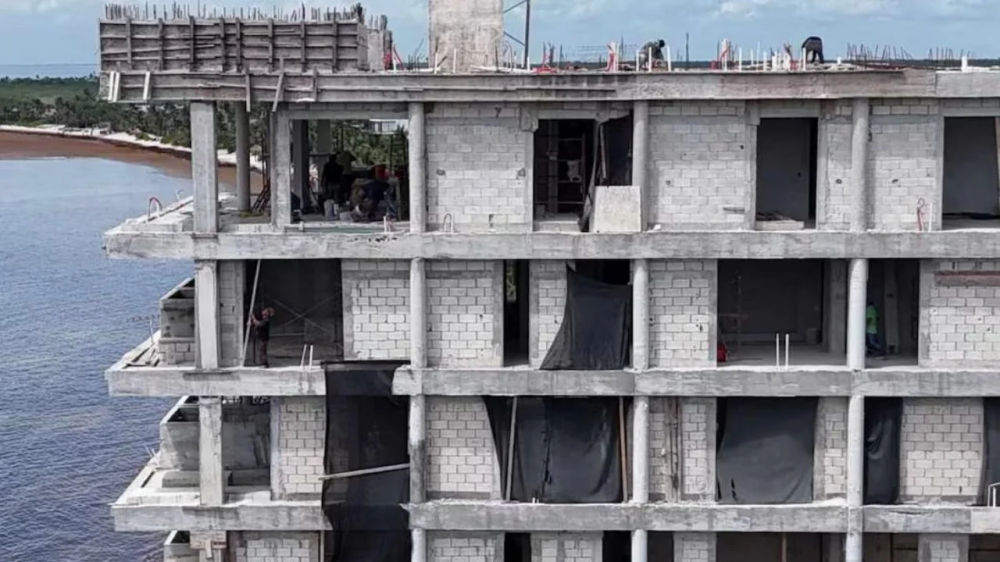
Multiple proceedings are colliding around one coastal site
The Adamar Solimán case is being fought on several fronts at once.
On the administrative side, Semarnat must now re-run the evaluation route it previously closed through dismissal. On the criminal side, the Quintana Roo Attorney General’s Office continues with proceedings related to alleged environmental crimes, with the property held as a precautionary measure. And on the constitutional side, the project also faces a demolition order that is currently being contested under Mexico’s amparo system, which is designed to challenge government actions that may violate constitutional rights.
This overlap is part of what makes the case unusually consequential in Tulum. Each track operates under different rules, timelines, and standards of proof. And each can impose different consequences, from administrative determinations to criminal sanctions to structural outcomes such as demolition.
The result is a legal landscape where progress in one arena does not automatically resolve the others. Even if Semarnat completes a new technical evaluation, the seizure and other proceedings can keep the site immobilized, depending on judicial decisions and enforcement actions.
Oversight questions reach beyond federal agencies
While the dispute is formally between the developer and federal authorities, the case has also focused scrutiny on agencies and offices responsible for monitoring and authorizing development in Tulum’s coastal zone.
Semarnat is responsible for evaluating and authorizing environmental impact projects, as applicable. But the base questions raised locally are also municipal: how permits were issued, how construction advanced, and how compliance with urban rules was supervised.
Municipal authorities in Tulum, the text notes, are responsible for granting construction licenses and overseeing compliance with urban regulations. The Adamar Solimán case highlights how environmental procedures and municipal licensing can become disconnected in practice, especially in coastal areas widely considered environmentally sensitive.
In Tulum, where rapid construction has repeatedly tested the capacity of local oversight systems, the case functions as a public measure of whether existing controls can prevent disputed projects from moving forward before environmental requirements are fully resolved. The Tulum Times is following the case as a benchmark of how environmental enforcement is applied in the municipality’s most pressured coastal corridors.

Claims of environmental risk and the role of civil society
Environmental organizations have also shaped the case’s trajectory, particularly through litigation and monitoring.
The civil association Defendiendo el Derecho a un Medio Ambiente Sano, known as DMAS, has promoted amparo actions and maintained close attention on the development. DMAS has warned that the building could affect sea turtle nesting areas, a protected species in the region, according to the text.
That warning is part of a wider concern in Tulum’s coastal areas, where construction and habitat pressures can collide most visibly during nesting seasons and in zones with limited buffers between buildings and natural systems. The court’s order for a new technical evaluation may become one of the few formal opportunities for those concerns to be addressed through a renewed administrative file, even as other legal proceedings continue.
Why this matters for Tulum right now
Tankah IV has become a flashpoint not only because of the project itself, but because it reflects the broader pattern residents and observers have seen in recent years: development advancing in the coastal zone amid allegations of environmental risk and uneven enforcement.
For local communities, the impact is practical as well as environmental. Coastal oversight affects how beaches and adjacent areas are managed, which areas remain accessible, and how environmental protections are enforced. It also affects the credibility of the institutions responsible for deciding what can be built and under what conditions.
And the case raises a governance question that resonates across Tulum: when a project is alleged to have started without the necessary environmental permits, what mechanisms are supposed to stop it early, and who is accountable when those mechanisms fail or are bypassed?
What happens next after the court-ordered reset
The most immediate next step is procedural: Semarnat must reopen the administrative path that was dismissed and perform the new technical evaluation ordered by the Specialized Chamber.
At the same time, the property remains under seizure while criminal proceedings continue in Tulum. The demolition order, which the project is contesting through amparo litigation, remains an additional legal risk that could shape the site’s future regardless of the administrative evaluation’s outcome.
In the near term, the decisive change is that the environmental review process is no longer closed by dismissal and must be reissued. What is at stake is the credibility of coastal oversight and the practical limits of enforcement in one of Tulum’s most sensitive development zones. The next phase will turn on the new technical evaluation and how the parallel cases proceed, with the Adamar Solimán environmental review now positioned as a required step rather than a dismissed filing.
We’d love to hear your thoughts. Join the conversation on The Tulum Times’ social media.
What should Tulum residents expect from authorities as this review restarts?