

Every year, as October fades, the Yucatán Peninsula prepares for one of its most intimate and meaningful traditions, Janal Pixan, the Maya version of the Day of the Dead. Across Tulum, Valladolid, and small villages scattered through Quintana Roo, families build altars, cook ancestral dishes, and welcome back the souls of their loved ones. For travelers, witnessing this blend of spirituality and culture reveals a Mexico far deeper than its turquoise beaches.
Where Food Becomes a Bridge Between Worlds
In Yucatec Maya, Janal Pixan means “food for the souls.” The name itself captures the essence of the celebration: nourishment as a sacred link between the living and the dead. While the Day of the Dead is known throughout Mexico, this local tradition preserves a distinctly Maya worldview, one in which death is not an end but a passage.
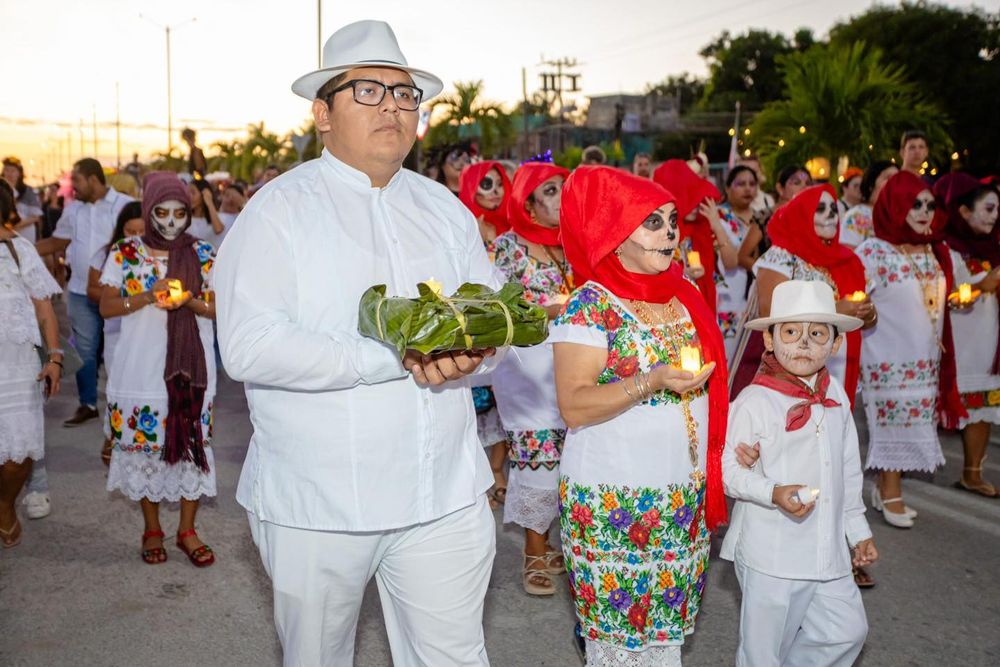
Families believe that during these days, the spirits return home. To receive them, they prepare offerings of food, light candles, and decorate altars with cempasúchil flowers. The air fills with the scent of copal incense and freshly baked mucbipollo, a tamale buried in the earth and cooked with patience and devotion.
As one local elder in the village of Cobá once said, “We don’t mourn the dead, we feed them, so they know they’re still part of us.”
A Tradition Rooted in Time and Faith
The origins of Janal Pixan stretch back to the ancient Maya, long before Spanish colonization. Archaeological records and oral traditions suggest that communities once gathered each year to honor their ancestors through offerings and ritual meals. When Catholicism arrived, those indigenous beliefs intertwined with All Saints’ Day and All Souls’ Day, creating a hybrid celebration that still thrives today.

In towns across Quintana Roo and Yucatán, the fusion remains visible: crosses made of palm leaves share space with clay figurines of jaguars and maize gods. Each element speaks of a faith that adapted rather than vanished.
This is what makes the Day of the Dead in the Riviera Maya unique, a cultural expression that unites two worlds, preserving identity through the language of remembrance.
A Calendar of Souls
Locals often refer to Janal Pixan as a journey through three days.
On October 31, known as U Hanal Palal, families welcome the souls of children with sweets, toys, and light-colored candles. November 1 honors adults during U Hanal Nucuch Uinicoob, when favorite dishes and drinks are placed on the altar. Finally, November 2, U Hanal Pixanoob, belongs to all souls. Families visit cemeteries, share food with neighbors, and retell stories that keep memories alive.
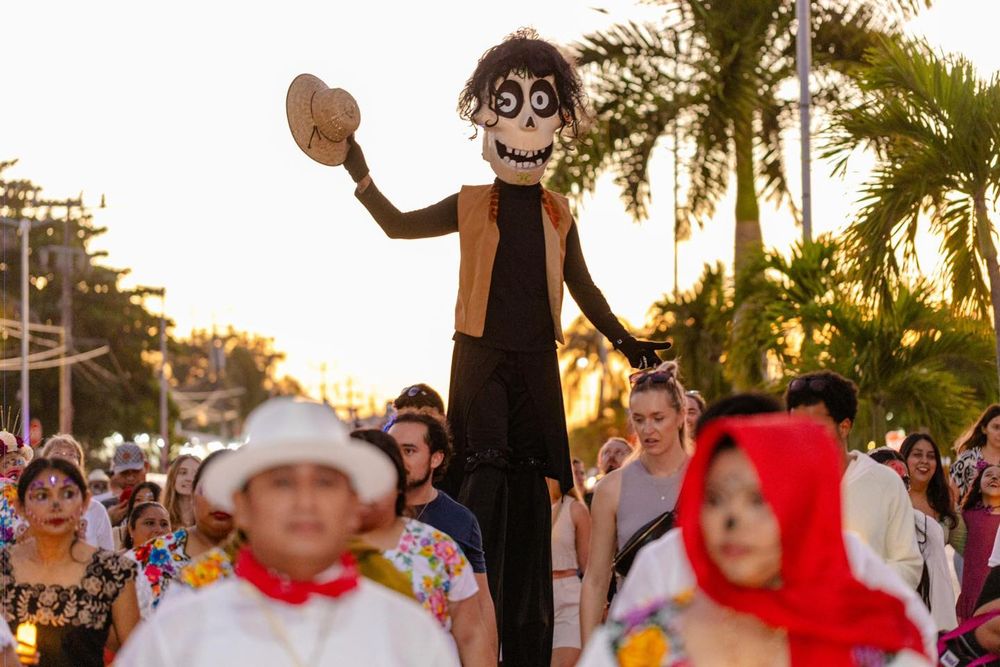
These days blend solemnity and celebration. Streets glow softly at night with candles, while laughter from shared meals echoes across courtyards. In Maya culture, joy is part of remembrance, an affirmation that the bond between the living and the dead never breaks.
The Altar as a Language of Memory
Every household builds its altar differently, but all speak the same symbolic language. The photos identify the souls being honored. Candles light their way. Flowers, especially the bright orange cempasúchil, symbolize the sun that guides them. Copal incense purifies the space. Food completes the offering, pib, atole nuevo, xek’, and pan de muerto.
Many altars have three levels representing the Maya cosmos: sky, earth, and underworld. In modern homes, this structure often rests beside Catholic images, showing how old beliefs coexist with new faiths.

For visitors, observing these details offers more than aesthetic beauty; it opens a window into the philosophical depth of Maya life, where the natural, spiritual, and human worlds exist in constant dialogue.
The Taste of the Underworld
If there is a flavor that defines the Day of the Dead in the Riviera Maya, it is mucbipollo, or simply pib. Made from corn dough, chicken, pork, and local spices, it is wrapped in banana leaves and baked in an underground pit lined with hot stones. The process takes hours, sometimes a full day, and is often done collectively.
Preparing the pib is both a meal and a ritual. Families gather in backyards, sharing stories as they tend the fire. The act of uncovering the pib, with steam rising from the earth, becomes a moment of reunion.

Travelers lucky enough to be invited to one of these gatherings witness a living tradition, not a staged performance. Here, food is not just sustenance. It is remembrance.
From Home Altars to Public Celebrations
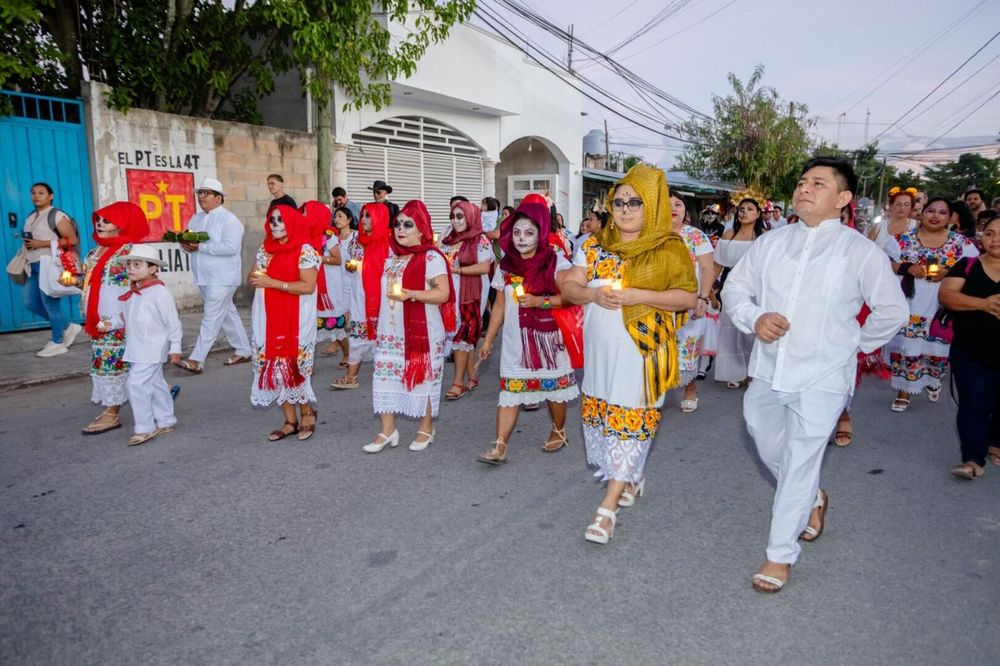
In recent years, municipalities in Quintana Roo have embraced Janal Pixan as part of their cultural tourism calendar. Tulum, Playa del Carmen, and Felipe Carrillo Puerto organize parades and exhibitions known as Paseo de las Ánimas, the Walk of the Souls. Locals dress in white, carry candles, and march toward the cemetery in silence or soft song.

These events attract visitors from around the world. Yet, behind the spectacle, the core of the tradition remains family-centered. In small villages, the rituals unfold quietly in homes and graveyards, where time seems to move at a different rhythm.
The Tulum Times has reported that local cultural organizations are working to balance tourism with authenticity, ensuring that the rituals are preserved as acts of faith, not performance.
Heritage at the Crossroads of Tourism
The growing interest in Janal Pixan raises a larger question: how can sacred customs coexist with the demands of tourism? In Tulum and across the Riviera Maya, hotels and restaurants increasingly incorporate Day of the Dead themes, from altars in lobbies to tasting menus inspired by ancestral dishes.
For many, this visibility helps keep the tradition alive. But some anthropologists caution that over-commercialization could erode its meaning. True preservation, they argue, comes from understanding, not imitation.
Still, the encounter between locals and visitors can be enriching when approached with respect. Cultural tourism, when guided by community voices, offers travelers a rare opportunity to participate in a living heritage rather than merely observe it.

A Ritual of Connection and Continuity
At its heart, the Day of the Dead in the Riviera Maya is about connection, between generations, between the seen and unseen, between memory and celebration. Lighting a candle or sharing pib around an altar is not just a gesture of devotion; it’s an act of continuity.
As one young Tulum resident explained during last year’s Paseo de las Ánimas: “When we cook for our ancestors, we remember who we are.” That sentiment carries through every aroma of corn, every flicker of candlelight, and every story retold to a child.
What Remains Eternal
Janal Pixan continues to shape how the Riviera Maya remembers and renews itself. It’s a ritual that resists disappearance by transforming, from pre-Hispanic ceremony to family feast to cultural heritage.

For visitors, it offers more than a spectacle; it is an invitation to understand a worldview where death is not an end but part of life’s eternal conversation.
The Day of the Dead in the Riviera Maya endures not because it is performed, but because it is lived.
We’d love to hear your thoughts. Join the conversation on The Tulum Times’ social media.
What part of this tradition do you find most meaningful, the food, the faith, or the family bond?