

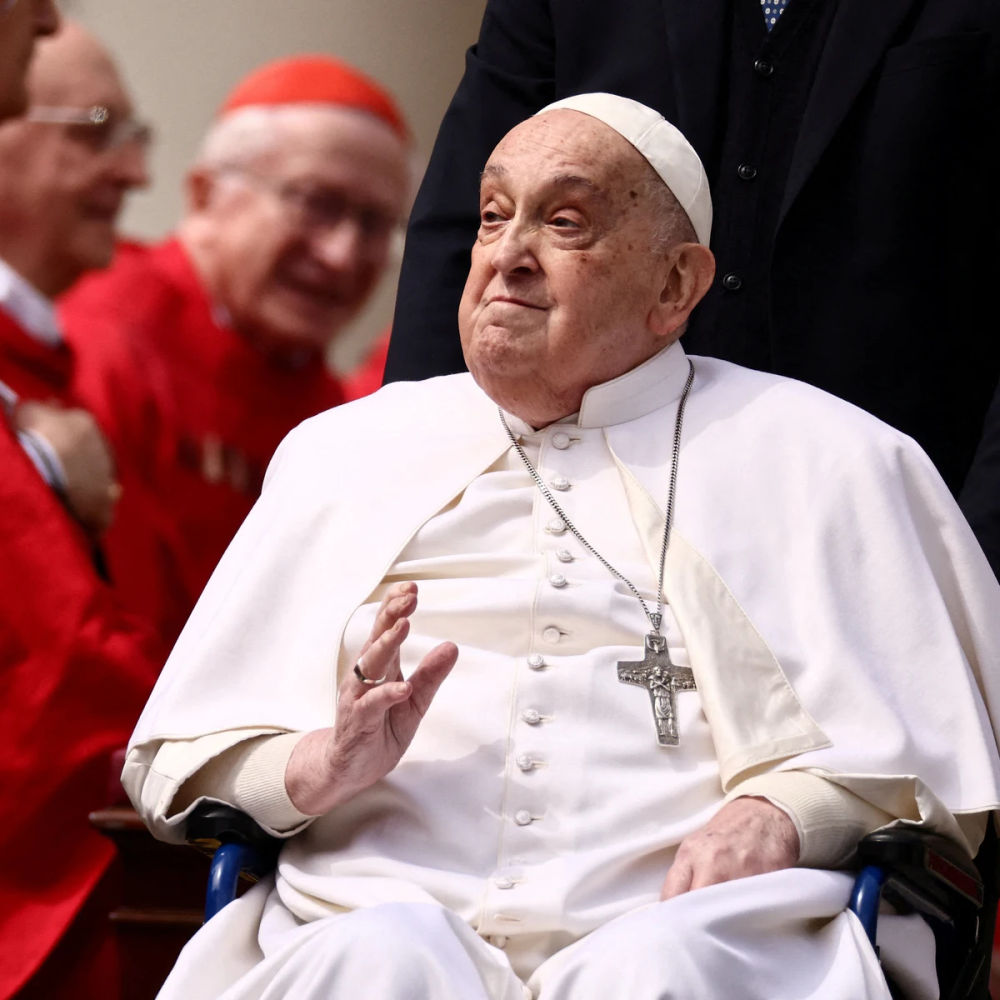
Pope Francis has died at the age of 88, the Vatican announced early Monday morning. “This morning at 07:35 (05:35 GMT), the Bishop of Rome, Francis, returned to the house of the Father,” Cardinal Kevin Farrell stated through the Holy See’s official Telegram channel.
His death marks the end of a significant chapter in the modern history of the Catholic Church. As the first pope from Latin America and the final pontiff to visit Mexico, Francis leaves behind a complex yet deeply human legacy, one characterized by outreach, reform, and a persistent commitment to the marginalized.
The 2016 visit to Mexico, spanning six days and five states, was a powerful reflection of his values. More than just a pastoral journey, it symbolized his vision of a Church that listens, travels to the peripheries, and speaks to the realities of everyday people.
A Pilgrimage Beyond Ceremony
Papal visits are rarely mere ceremonial affairs. They often hold profound social and political resonance, reinforcing the Church’s presence in contemporary life while promoting ideals such as peace, compassion, and cultural dialogue. Mexico has hosted three pontiffs on seven separate occasions, yet Francis’ visit stood out for its broad inclusivity and deeply human approach.
His trip in February 2016 followed two years of careful diplomatic planning. It was first set in motion during a meeting between then-president Enrique Peña Nieto and Pope Francis at the Vatican in 2014. The gesture of offering a jersey from Mexico’s national football team and an image of the Virgin of Guadalupe was more than symbolic, it was an invitation that would resonate with millions.
The official announcement was made during a Mass on December 12, 2015, at St. Peter’s Basilica, when Francis declared that he would travel to Mexico starting on February 12 of the following year. That proclamation would set into motion one of the most logistically complex and spiritually significant events in recent Mexican history.
An Encounter with the People
Francis arrived in Mexico City on the evening of February 12, 2016, where he was warmly welcomed by President Peña Nieto, First Lady Angélica Rivera, and high-ranking Church officials. From there, he embarked on a 20-kilometer journey in the papal motorcade to the Apostolic Nunciature. An estimated 300,000 people lined the streets to greet him, waving flags and holding handmade signs of welcome.
The next day, in a historic first, he was received at the National Palace, an unprecedented gesture that reflected the deepening ties between the Mexican state and the Holy See. Later that day, he was given the keys to Mexico City and presided over a Mass at the Basilica of Our Lady of Guadalupe, a moment of spiritual significance for millions.
On February 14, he traveled to Ecatepec in the State of Mexico, where over 400,000 faithful attended an open-air Mass. The following day in Chiapas, he celebrated a liturgy dedicated to Indigenous communities and offered a heartfelt apology for the Church’s past mistreatment of Indigenous peoples throughout the Americas.

From there, he continued to Morelia, Michoacán, where a minor but controversial incident unfolded. After being pulled by an overzealous crowd member, the pontiff responded with a firm, “Don’t be selfish, son,”, a phrase that sparked online debate but also revealed his unfiltered humanity.
His final stop was Ciudad Juárez on February 17. There, steps away from the U.S. border, Francis held a historic binational Mass, blessing a cross dedicated to migrants and acknowledging the suffering experienced by so many who seek a better life. It was a poignant closure to a journey that had touched every corner of Mexican society.
A Legacy Rooted in Compassion
The death of Pope Francis brings a reflective pause for millions. His time as pontiff will be remembered for its sincerity and moral clarity, as well as his unflinching engagement with issues like poverty, migration, and interfaith understanding. For Latin America, and particularly for Mexico, his legacy endures in the memories of a pope who spoke not only to the faithful, but also for the forgotten.