
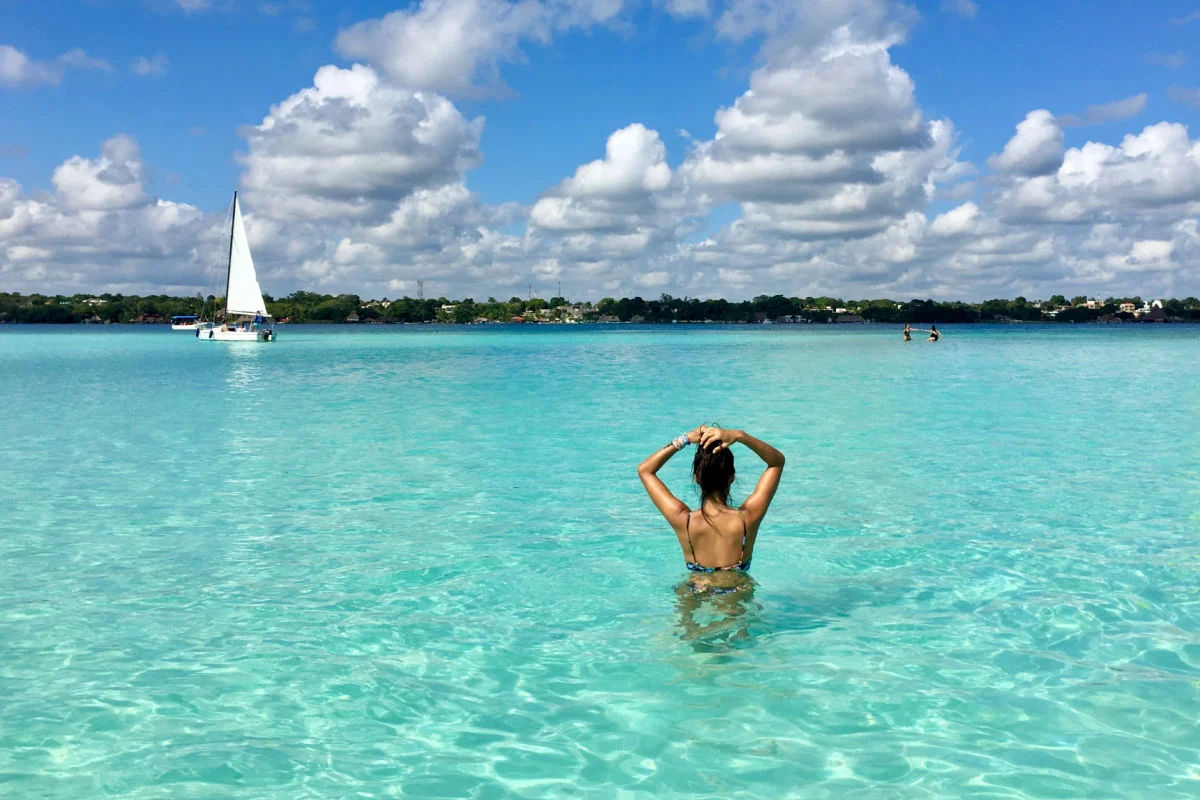
Under the weight of the July sun, when the sea glows electric and the air feels thick enough to bottle, the Mexican Caribbean didn’t just weather the high season. It owned it. Between July 12 and 18, 2025, the region welcomed 470,763 tourists, with hotel occupancy holding a solid 70.3%.
That number isn’t just bureaucratic trivia. Behind it echoes the clatter of mezcal glasses, the swing of hammocks, and the timeless percussion of waves against optimism.
Hotel Occupancy in the Mexican Caribbean: Still Riding High
Cancún Still Leads, But Others Catch Up
Cancún, never shy about the spotlight, posted an 80.6% occupancy rate, proof that its status as a vacation juggernaut is still intact. Riviera Maya followed with a healthy 74.7%, while Isla Mujeres, quieter and slower-paced, reached a respectable 68.9%.
Meanwhile, less-hyped destinations like Chetumal (58.5%) and Bacalar (50%) are slowly entering the collective imagination of travelers seeking something less polished and more personal. These are not afterthoughts anymore, they’re detours worth planning.
Is this a boom? Perhaps not quite. But it’s more than momentum. It’s a murmur turning into a movement, especially in the southern corners of the state. They’re no longer content to be the footnotes, they want chapters of their own.

Who’s Visiting the Region, and Why That Matters
A Changing Tourist Landscape
From January to May 2025, U.S. citizens made up nearly 38% of visitors, no surprise there. But Mexican travelers weren’t far behind, representing 32.6% of arrivals. Canadians chipped in 13.9%, continuing their love affair with turquoise horizons and year-round margaritas.
But here’s where the data gets intriguing: Argentina, the U.K., France, Germany, Chile, all showing up in greater numbers. The Mexican Caribbean is no longer an exotic escape for the occasional European backpacker. It’s becoming a regular fixture in global travel plans.
Is this the result of marketing? Infrastructure? Maybe. But at its heart, it suggests something deeper: the region’s ability to absorb shocks and still offer clarity. Cultural buoyancy disguised as vacation.

Maritime Magic: Cruises Keep Cozumel Buzzing
27 Cruise Ships in One Week, and More to Come
Cozumel and Mahahual saw 27 cruise ships dock between July 12 and 18, each one a floating city spilling thousands into the ports for tacos, tequila, and trinkets.
Dismiss them as superficial tourists, and you miss the point. These short stops power local economies, fill tour vans, and keep taco vendors flipping tortillas long past sunset.
And the waters aren’t quieting down, 17 more cruise ships are scheduled before July ends. Big names like Enchanted Princess, Harmony of the Seas, and Disney Dream aren’t just traffic, they’re indicators of resilience in an industry that many wrote off too soon.
Up in the Air: Flights, Routes, and Reach
Cancún Still Rules the Sky, But Tulum Is Rising
Cancún International recorded 3,965 flight movements during the same week, a number that speaks for itself. But others are stepping up. Cozumel logged 138, Chetumal had 66, and Tulum, yes, Tulum, handled 160.
What matters isn’t just the number of flights, but their destinations: over 100 cities in 30+ countries, including 39 in the U.S. and 17 in Europe.
Then there’s Tulum, once a sleepy outpost with dreamcatchers and coconut wifi. Its airport now connects to four countries, including Colombia and Costa Rica. The jungle, quite literally, now has a runway.

Where Tourists Sleep: Hotels and Vacation Rentals in Balance
The Traditional and the Alternative, Side by Side
With 1,478 hotels and more than 135,000 rooms, the region’s hospitality industry is flexing its muscles. Unsurprisingly, Cancún and Playa del Carmen account for 68% of that capacity.
But the new player? Vacation rentals.
There are 23,538 active short-term rentals, the vast majority being full homes. In Tulum alone, there are over 5,300 listings. And the average nightly price? $3,429.30 MXN. That’s not exactly budget travel. This isn’t about hostel-hopping anymore, it’s about digital nomads, remote professionals, and boutique-seeking travelers reshaping the narrative.
The hospitality sector isn’t a pyramid anymore. It’s a mosaic of options, curated and scattered across coastline and jungle alike.
Reading Between the Numbers: What This All Means
Quintana Roo isn’t resting on its laurels, it’s recalibrating. The metrics show strong tourism and global connectivity. But beneath those stats are quieter shifts: locals exploring their own country, European travelers finding new routes, and emerging hubs gaining traction.
Yes, the sun still sets golden over the Caribbean. But in the shadows, a new tourism paradigm is taking shape, rooted in diversity, resilience, and an evolving sense of place.
What do you think? Is the Mexican Caribbean redefining what travel looks like in 2025? Let us know on The Tulum Times’ social media and be part of the conversation.