

As winter approaches, the turquoise coastlines of Tulum once again top the travel lists of those escaping colder climates. But while interest in Mexico’s newest airport continues to grow, finding the most efficient flights to Tulum remains a puzzle of routes, connections, and evolving schedules.
The Felipe Carrillo Puerto International Airport (TQO), inaugurated in December 2023, is still defining its role within Quintana Roo’s tourism infrastructure. For now, the reality is clear: the number of direct flights to Tulum is still limited, and many travelers will continue arriving through Cancún before heading south by road.

Direct flights remain limited but are slowly expanding
For the 2025/2026 winter season, only a handful of airlines operate direct flights to Tulum. Volaris and Viva Aerobus currently connect the city with Mexico City in journeys lasting between 90 minutes and two hours.
Other major carriers, such as American Airlines, United, Copa Airlines, and Avianca, offer connecting flights that typically route through hubs like Mexico City, Panama City, or Cancún.
From major U.S. cities like Miami, Dallas, and Houston, travelers can find one-stop itineraries that land in Tulum after roughly six to eight hours of total travel time. From European cities, connections usually involve a transfer in Mexico City or Cancún and can exceed 13 hours.
Average round-trip fares for December 2025 start around $250 to $400 from Mexico City, $600 to $850 from major U.S. cities, and $950 to $1,200 from Europe, depending on date and demand.
The road from Cancún still matters
Despite the excitement around Tulum’s own airport, Cancún International (CUN) remains the dominant gateway to the Riviera Maya. Its vast network of international flights, from New York, London, Madrid, Paris, and São Paulo, offers convenience that Tulum still cannot match.
Once in Cancún, the 130-kilometer journey to Tulum takes roughly 1 hour and 40 minutes by road. The options are diverse:
- ADO buses, offering safe and affordable service with multiple daily departures.
- Private transfers or taxis, more comfortable and faster but often above $100 per vehicle.
- Rental cars, providing flexibility for travelers exploring Playa del Carmen or the cenotes along the way.
It’s a route thousands of visitors know well. For many, landing in Cancún and traveling by road to Tulum has become almost a ritual, the unofficial start of their vacation.

New airport, old challenges
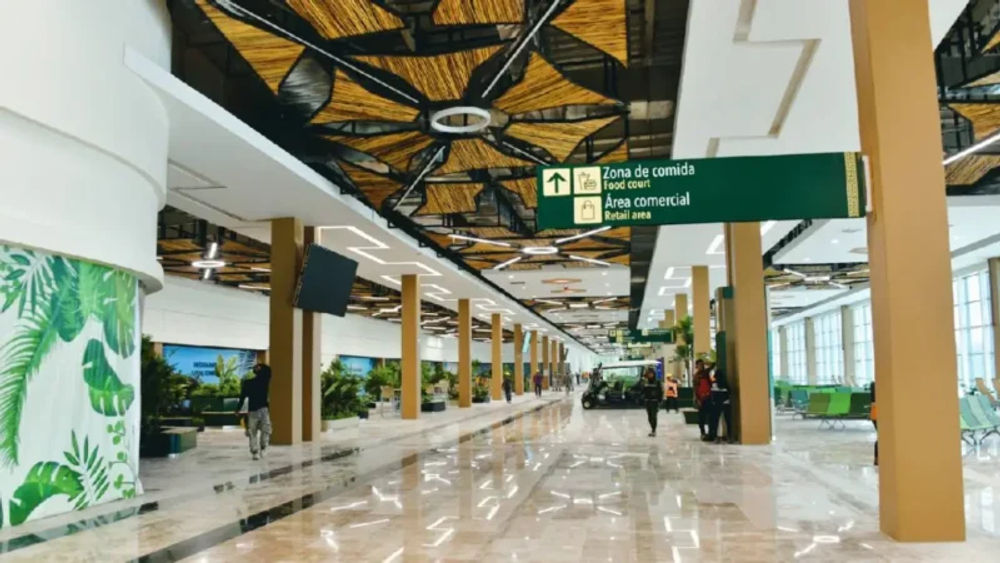
The new Felipe Carrillo Puerto Airport was designed to ease congestion in Cancún and strengthen southern Quintana Roo’s connectivity. Its modern infrastructure has been praised, but the pace of airline expansion has lagged behind expectations.
Industry analysts point to several factors: fuel costs, regional demand, and the challenge of establishing new international customs operations for direct arrivals. Discover Airlines, for instance, originally scheduled seasonal flights from Frankfurt to Tulum but later shifted them back to Cancún due to higher logistics costs and better ground connections.
This cautious growth mirrors what often happens with emerging tourist airports: enthusiasm outpaces infrastructure. As one local tourism official observed, “Every new airport in Mexico needs time to prove its market. Tulum’s will find its rhythm, but not overnight.”
Where travelers are coming from this season
The strongest demand this winter is expected from North America. According to booking data from travel agencies, passengers from U.S. hubs like Miami, Dallas, Houston, and Los Angeles are driving much of Tulum’s inbound market.
Latin American travelers, especially from Colombia, Chile, and Brazil, are also showing interest, often connecting through Panama or Mexico City. For Europeans, the most practical path continues to be a direct flight to Cancún, followed by a road transfer south.
The growing mix of visitors highlights Tulum’s transformation from a niche beach town into a global destination that attracts digital nomads, luxury travelers, and sustainability-minded tourists alike.
Prices, planning, and what to expect
As of November 2025, flight prices to Tulum and Cancún are fluctuating due to high seasonal demand. December tends to offer slightly better rates, while January, peak holiday month, shows increases of up to 20 percent.
For budget-conscious travelers, booking early remains key. Experts recommend comparing fares between direct Tulum flights and Cancún arrivals, as the difference can range from $100 to $300 once ground transportation is included.
Beyond airfare, travelers should consider Tulum’s developing infrastructure. Ride-sharing services are limited, taxis can be expensive, and roads often experience congestion near the coastal zone.
Yet the appeal endures. As one traveler from Chicago recently posted, “The moment you leave the highway and see the jungle opening toward the sea, you know why you came.”

The evolving air map of Quintana Roo
Tulum’s airport symbolizes more than convenience, it represents the region’s attempt to distribute tourism more evenly across Quintana Roo. While Cancún continues to draw mass tourism, Tulum’s government is seeking to balance growth with environmental responsibility, an ongoing debate in the Riviera Maya.
Observers say that if Tulum expands its flight network gradually and sustainably, it could relieve pressure on Cancún while maintaining its own character. The question is how fast that evolution should happen.
As The Tulum Times has previously reported, local infrastructure must grow in parallel with air connectivity to ensure long-term viability. “Airports don’t create destinations,” a regional planner said, “but they can redefine how people reach them.”
Looking ahead
By late 2026, several airlines are expected to evaluate new routes to Tulum depending on performance this winter. The success of the Mexico City and U.S. connections will determine whether European carriers return to the idea of direct flights.
For now, travelers planning a trip to the Riviera Maya should remain flexible. Whether flying straight into Tulum or landing in Cancún and heading south by road, the journey remains part of the experience, one that combines convenience with the anticipation of reaching one of Mexico’s most talked-about destinations.
As the skies open further and the airport finds its rhythm, flights to Tulum could soon reflect not just a new route, but a new chapter in how the world arrives at this corner of Quintana Roo.
We’d love to hear your thoughts. Join the conversation on The Tulum Times’ social media.
What would make your trip to Tulum easier next winter: more direct flights or better ground transport?