
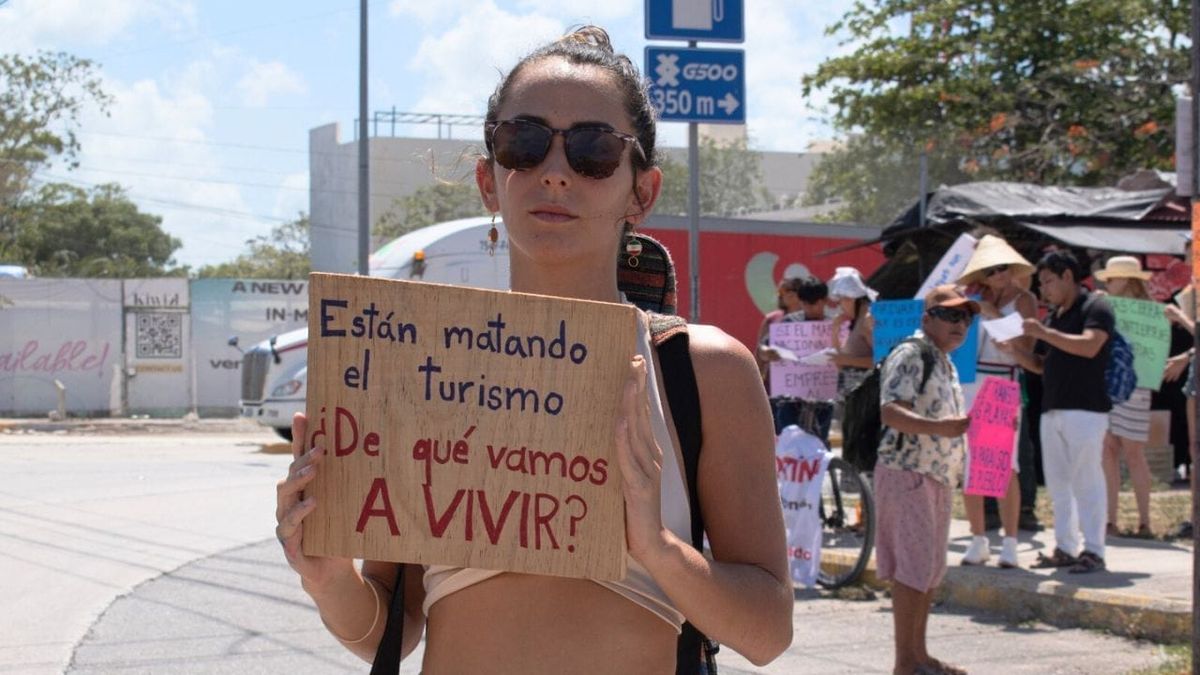
The scorching June sun beat down on Federal Highway 307 yesterday, not on a quiet stretch of asphalt, but on a boiling point of human frustration, as Tulum residents, once again, dramatically asserted their demand for free beach access. This wasn’t a casual stroll to the shore; it was a full-blown blockade, a desperate measure taken after what many perceive as a callous disregard for their fundamental rights to the very coastline that defines their home. The air, thick with the humidity of the approaching summer rains, also hung heavy with unspoken grievances, a simmering resentment that boiled over into a full halt of traffic, disrupting the flow not just of vehicles, but of everyday life in this burgeoning coastal community.
## Escalating Tensions Over Free Beach Access
The genesis of this latest dramatic escalation lies in a familiar narrative here in Tulum: the relentless encroachment of private development upon public spaces. For years, locals have watched, often helplessly, as stretches of their beloved coastline, once easily reachable, have been cordoned off, annexed, or made inaccessible by sprawling resorts and exclusive beach clubs. The notion of free beach access, once a given, has become a battle cry, a rallying point against what feels to many like a slow strangulation of their heritage.
The recent spark, it seems, was the perceived closure of a public entrance near the Coco Tulum hotel, a gateway locals insist has always been their guaranteed ingress to the sandy reaches. But wasn’t that the whole point of public land? Aren’t these natural treasures meant for everyone, not just those with deep pockets and exclusive reservations? The very idea feels anachronistic, almost colonial, in a place that prides itself on natural beauty and open spaces.
### A Community Mobilizes
The blockade, an act of sheer will and collective exasperation, began shortly after 9:00 AM. Approximately 30 individuals, their faces etched with a mixture of determination and exhaustion, positioned themselves across the highway, effectively severing the vital artery connecting Tulum with its neighboring regions. They held firm for a grueling three and a half hours, their presence a stark, undeniable visual plea. Drivers, some irate, others perhaps empathetic, found themselves caught in a standstill, a poignant symbol of the wider stalemate between community needs and commercial interests.
The protestors’ message was unequivocal: open the beaches, ensure the pathways. They demanded an meeting with Mayor Diego Castañon Trejo and Francisco Hernández, the General Secretary of the City Council, a desperate bid to finally be heard, to move beyond hollow promises and see tangible action. This isn’t just about a strip of sand; it’s about dignity, about belonging in one’s own town.
The Federal Highway Patrol, responsible for maintaining order and traffic flow, eventually intervened. Their primary objective, one might assume, was to restore normalcy. After negotiations, a fragile truce was reached. The protestors, having made their impactful statement, agreed to disperse, but only after receiving assurances that their plea for dialogue would be answered. A meeting, it was promised, would be convened, allowing a delegation of protestors to voice their grievances directly to the municipal authorities.
This incident, while disruptive, underscores a profound struggle brewing beneath the idyllic surface of Tulum. It is a testament to the enduring human spirit, a refusal to be silently pushed aside. The fight for free beach access is more than a localized dispute; it is a microcosm of the global challenges faced by communities grappling with rapid development, the commodification of nature, and the fundamental right to their own surroundings. Whether this latest act of defiance will truly shift the tide remains to be seen, but one thing is clear: the people of Tulum are not giving up their fight for their beaches, not now, not ever.
We’d love to hear your thoughts, join the conversation on The Tulum Times’ social media.