
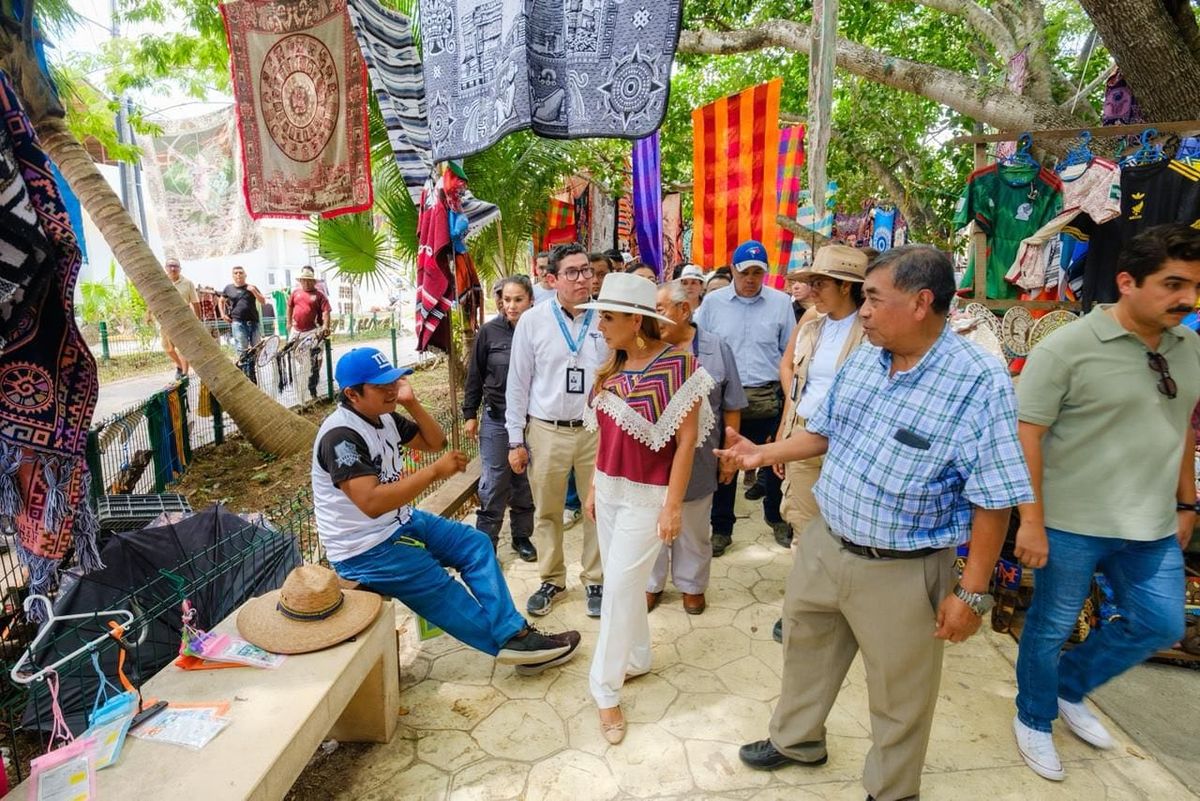
Representatives of businesses located near the Tulum archaeological zone, members of the Frente de Playas Libres, and local community leaders met over the weekend with municipal authorities, led by Mayor Diego Castañón Trejo, to follow up on the ongoing demand for unrestricted access to the beaches of this iconic destination in Quintana Roo.
The meeting, held in the heart of Tulum, underscored a long-standing concern: ensuring that residents and visitors, both Mexican and foreign, can reach the beaches that border the Jaguar Park without barriers or private controls. These coastal areas are considered part of the region’s cultural and environmental heritage, yet access has become increasingly limited in recent years.
Public voices call for open paths to the sea
Local artisans, vendors, and residents expressed frustration over the current restrictions at the park’s northern entrance, the same route that connects directly to the archaeological site of Tulum. For many, the closure or limitation of this access point symbolizes a broader trend toward privatization and exclusion in spaces that should remain public.
Several attendees emphasized that existing legislation already protects the right to free passage to beaches in Mexico. “We only want what the law already guarantees,” one participant said during the discussion. This sentiment echoed widely among community members who fear that tourism growth could deepen social inequality if public access continues to shrink.
Mayor Castañón calls for patience as talks advance
In response, Mayor Diego Castañón Trejo urged participants to remain patient, assuring them that the municipality is working with state and federal agencies to reach a “real and lasting solution.” According to his remarks, negotiations are ongoing with the Ministry of Tourism and other federal entities to ensure that access routes comply with environmental and heritage regulations while remaining open to the public.
Castañón pointed to the recent visit of high-level officials, including Josefina Rodríguez, Mexico’s federal tourism secretary; Quintana Roo governor Mara Lezama; state tourism chief Bernardo Cueto; and Adolfo Héctor Tonatiuh Velasco Bernal, director of the Grupo Mundo Maya. Their presence in Tulum, he said, signals that the issue is being taken seriously at the highest levels of government.
Expectations rise ahead of federal announcement
The mayor suggested that this week could bring “good news” on the matter, potentially during the upcoming morning press conference led by President Claudia Sheinbaum Pardo. Although he offered no specifics, the comment fueled optimism among local activists and business owners who have campaigned for years to restore full access to Tulum’s shores.
If confirmed, any policy shift announced by the federal government could mark a turning point in the Playas Libres movement, which has gained traction across Quintana Roo and beyond. The cause has become a test case for how Mexico balances tourism development with community rights and environmental stewardship.
A movement shaped by persistence and cooperation
The Frente de Playas Libres has evolved from a loose coalition of local residents into a well-organized civic platform. It unites artisans, hoteliers, restaurateurs, and environmental advocates around a single principle: that Tulum’s beaches must remain open to all. Their gatherings, often peaceful yet firm in message, reflect a growing awareness that public access is both a legal right and a cultural value.
Observers note that the conflict over beach access has broader implications. It highlights the tension between the economic ambitions of the Riviera Maya’s tourism industry and the social demands of those who live and work in the region. As one local business owner put it, “Tourism cannot thrive if it forgets the community that sustains it.”
This grassroots statement, shared widely on social media, captures the tone of a movement that blends activism with civic pride. For many residents, defending free access to the sea is about more than recreation, it is about dignity and belonging.
What is at stake for Quintana Roo
The outcome of these negotiations could influence how future development projects in Quintana Roo are planned and regulated. With major federal investments such as the Jaguar Park and the Maya Train reshaping the region, the question of who benefits, and who is left behind, remains central to public debate.
For now, the municipal government’s call for patience contrasts with the urgency felt by local groups who fear losing one of the few remaining open stretches of coastline near Tulum’s archaeological site. But there are signs of dialogue and a growing recognition that cooperation, rather than confrontation, might yield lasting progress.
The Tulum Times has previously reported on similar cases where sustained community engagement led to improved management of coastal zones. The current momentum suggests that Tulum’s civic leaders are learning from those precedents.
Toward a fair and sustainable solution
Whether the promised “good news” arrives this week or later, the demand remains clear: beaches should remain public, accessible, and protected as part of Mexico’s shared heritage. As the Playas Libres movement continues to gain support, it also redefines what civic participation looks like in a tourism-driven economy.
The next few days could reveal whether the government’s commitment matches the community’s expectations. And if the dialogue continues, Tulum may yet become a model for how coastal towns balance development with inclusion.
Free beach access in Tulum is more than a local demand, it represents a national conversation about public rights and sustainable tourism.
We’d love to hear your thoughts. Join the conversation on The Tulum Times’ social media.
How do you think Mexico should balance tourism growth with the right to public beach access?