
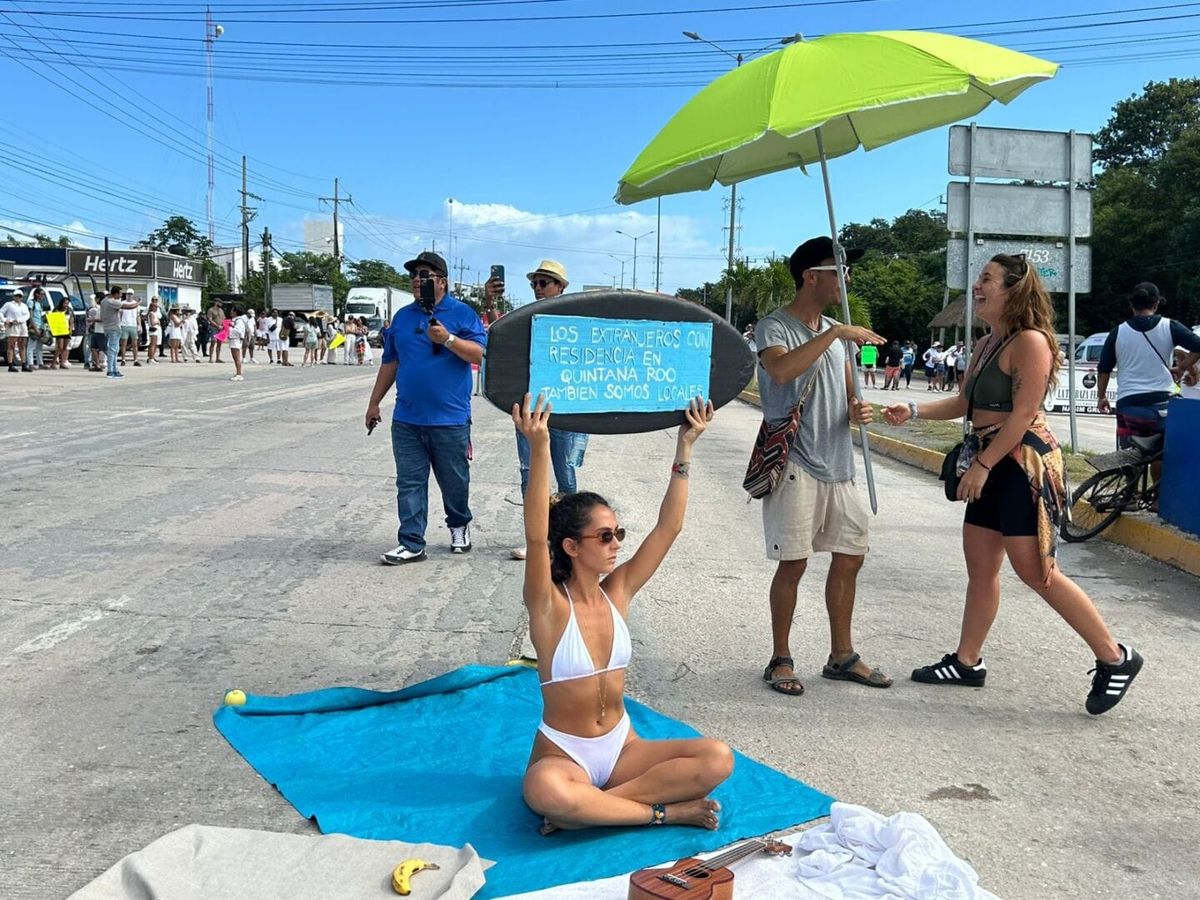
A low hum of discontent has been building, a murmur that has now crescendoed into something more palpable, something almost demanding. It started subtly, a ripple perhaps, but now it feels like a genuine wave of frustration washing over the sun-drenched shores of Tulum. Foreigners Demand Free Beach Access Rights. It’s a phrase that hangs in the air, a declaration that seems to encapsulate a burgeoning tension, a push and pull between those who have arrived and those who have always *belonged*.
The scene was set, as it often is here, under the impossibly blue sky. A collective of foreign residents, their faces a mix of earnestness and a touch of something approaching indignation, had gathered. Their message was clear, articulated with a stark simplicity that cut through the usual hum of tourist chatter: they want the beaches to be free. Not just *some* beaches, or *parts* of beaches, but the very stretches of sand that have, for too long now, been held behind a velvet rope, so to speak.
They spoke of what they perceive as a fundamental right, a natural extension of their residency here. “We contribute to the economy,” one voice resonated, cutting through the salty air. “We pay taxes, we live here, we should have the same access as any Mexican citizen.” It’s a logic that, on the surface, feels sound. After all, if you make a place your home, if you integrate your life into its rhythm, shouldn’t the basic joys, the simple freedoms, be afforded to you?
But then, the other side of the coin reveals itself. The locals, the long-standing residents of Tulum, find these demands perplexing, sometimes even galling. They’ve witnessed the transformation, the slow, relentless creep of development, the rise of the exclusive beach clubs that now dominate the coastline. These aren’t just places to sunbathe; they’re often the only paths to the water, pathways that now come with a hefty price tag or are reserved for hotel guests. And it’s not just foreigners who wish for free access; many Mexican citizens residing in Tulum find themselves in the same predicament, forced to pay or find increasingly circuitous routes to their own ancestral shores.
The issue, you see, isn’t just about a strip of sand. It’s about equity. It’s about how progress, or what some call progress, sometimes forgets the very people it’s supposed to serve. The foreigners, in their insistence, are perhaps reflecting a broader frustration, a mirror held up to a system that has slowly but surely walled off what was once communal. They argue that these aren’t private properties or exclusive enclaves; they are federal zones, public spaces meant for everyone. That’s the law, they insist, the very letter of it. And indeed, the Mexican Constitution, in Article 27, declares the beaches public property. The federal government, through SEMARNAT, issues concessions, but these are for services, not for the privatization of the beach itself.
Yet, despite this clear legal framework, the reality on the ground is starkly different. The hotels, the beach clubs, they act as gatekeepers. They charge for entry, demand consumption minimums, or simply bar access to anyone not staying there. It’s a quiet exclusion, one that has grown so pervasive it barely registers as unusual anymore unless you actively seek out the remaining public access points, which often involve a trek, a difficult parking situation, or just aren’t there at all in certain stretches.
One local voiced a poignant sentiment, a quiet sigh of despair. “We used to just walk to the beach. My grandmother played there. Now, we have to pay just to touch the water our ancestors swam in.” It’s a different kind of pain, a profound sense of loss that echoes in the hearts of those who remember a Tulum before the chic boutiques and the multi-course tasting menus. The foreigners, in their pursuit of what they see as fairness, are tapping into a much deeper current, one that asks: who is Tulum for, ultimately?
The hope, at least for some, is that this collective voice, this insistent push from both foreign and Mexican residents, might finally move the needle. A petition has been circulated, a legal team is reportedly being assembled, all aimed at a simple goal: ensuring free and unhindered access for everyone. Not just for tourists or hotel guests, but for the people who call Tulum home, regardless of where they were born, but especially for those who have been here, generation after generation.
It’s a complicated tapestry, this debate over beach access. It’s woven with threads of law, economics, history, and a very human desire for belonging. Will the federal authorities intervene? Will the local government finally be compelled to enforce the constitutional mandate? Or will the tide of privatization continue to rise, slowly engulfing the last vestiges of public access? The answers are still drifting somewhere out on the horizon, obscured by the shimmering heat.
What do you think? Share your thoughts with us on The Tulum Times’ social media.