

The Mexican Ministry of Tourism has sharpened its promotional focus on southern Quintana Roo with a new Tulum Punta Allen excursion designed to attract winter travelers and reposition the region as a hub for low-impact nature tourism. The route links the growing resort town of Tulum with the small fishing community of Punta Allen, cutting through some of the most conserved ecosystems in the Mexican Caribbean and offering an alternative to mass tourism along the Riviera Maya.
The initiative comes as tourism authorities look for ways to diversify visitor experiences in Mexico while responding to growing global interest in sustainability, conservation, and authentic local encounters. And it signals a broader effort to balance economic activity with environmental limits in one of the country’s most fragile regions.
A route through ecosystems that still resist mass tourism
At roughly 60 kilometers, the Tulum Punta Allen excursion is not defined by speed or convenience. It is defined by what surrounds it. The journey passes through jungle corridors, wetlands, lagoons, mangroves, and long stretches of coastline that remain largely untouched by large-scale development.
The route begins at Laguna de Muyil, one of the most emblematic access points to the Sian Ka’an Biosphere Reserve. The lagoon, known for its calm turquoise waters and ancient Maya trade canals, already draws travelers interested in kayaking and boat tours. From there, the road continues south toward the Boca Paila Bridge, a narrow crossing where the Caribbean Sea meets inland wetlands.
The bridge itself has become an unlikely attraction. Visitors often stop to watch crocodiles that inhabit the surrounding waters, a reminder that this corridor remains as much a wildlife habitat as a tourist passage.

“This is not a transfer. The road is the experience,” said one tourism promoter familiar with the project, a phrase that captures the spirit authorities are hoping to sell.
Sian Ka’an as the backbone of the experience
Once inside Sian Ka’an, a UNESCO World Heritage Site, the excursion shifts in tone. Speed drops. Attention sharpens. Mangrove forests stretch on both sides, estuaries reflect the sky, and birdlife becomes impossible to ignore.
Sian Ka’an, which means “Origin of the Sky” in Maya, covers more than 528,000 hectares and is considered one of the most biodiverse protected areas in Mexico. Jaguars, manatees, hundreds of bird species, and extensive coral systems all fall within its boundaries. Tourism here has long been regulated, with strict limits on development and visitor activities.
By placing Sian Ka’an at the center of the Tulum Punta Allen excursion, the Secretariat of Tourism appears to be betting that conservation itself can be a selling point. Not comfort. Not nightlife. But restraint.
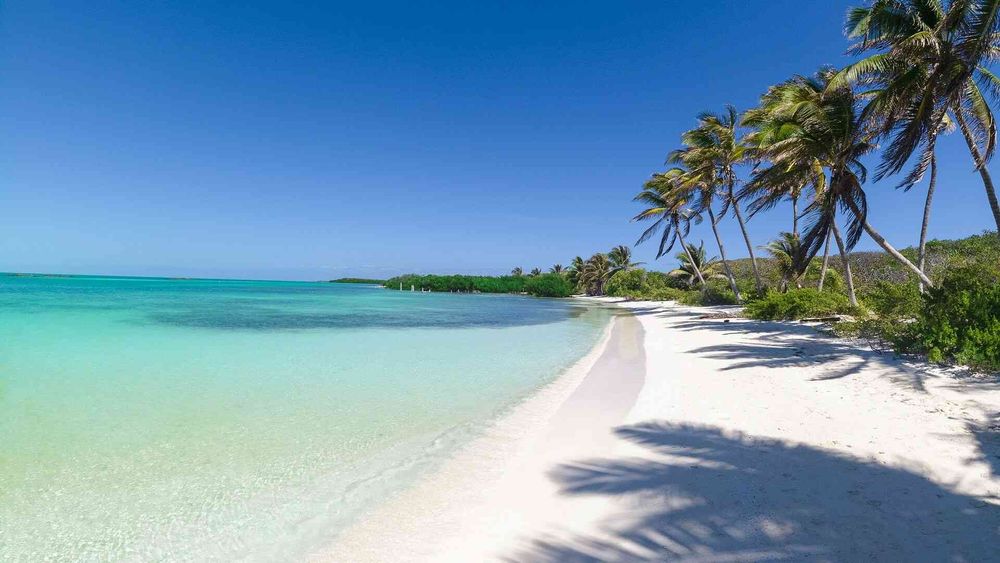
And that is a notable shift for a region often marketed through luxury resorts and nightlife-driven branding.
Punta Allen and the appeal of a slower coastal life
The excursion ends in Punta Allen, a fishing village of roughly 400 residents located at the edge of the biosphere reserve. There are no large hotels here, no beach clubs, and limited cell service. Electricity can be intermittent. The pace is unhurried by design.
Wooden docks line shallow waters. Modest homes face the sea. A lighthouse marks the horizon. For visitors arriving from Tulum, where tourism growth has accelerated rapidly over the past decade, the contrast is immediate.
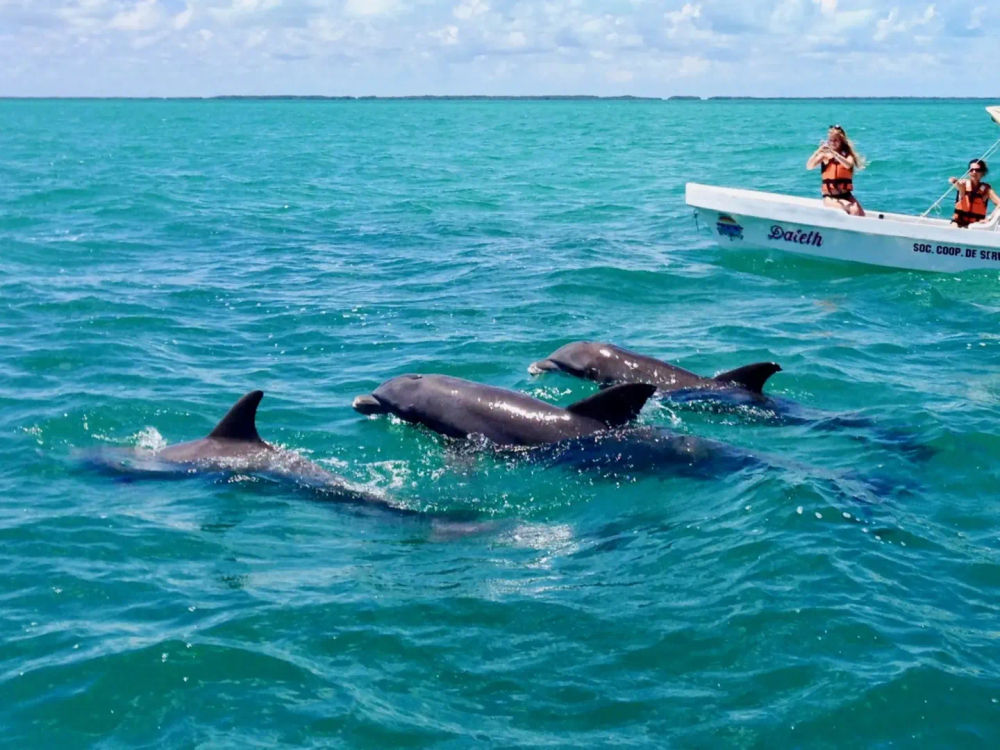
Punta Allen’s economy is rooted in small-scale fishing and regulated eco-tourism. Visitors often take guided boat trips to observe dolphins, sea turtles, rays, and seasonal bird migrations. Walking trails wind through the coastal forest. Meals tend to center on freshly caught lobster and fish prepared simply, reflecting both tradition and sustainability.
One visitor described the experience succinctly: “You don’t come here to be entertained. You come here to notice things.”
Responsible tourism as policy, not slogan
The Secretariat of Tourism has emphasized that the Tulum Punta Allen excursion is intended to promote responsible and conscious travel. Officials argue that channeling visitors toward experiences that value ecosystems and local communities can generate economic benefits without pushing protected areas past their limits.
This approach aligns with broader discussions taking place across Quintana Roo, where authorities are grappling with how to manage tourism growth that has outpaced infrastructure and environmental safeguards in some areas.

In Tulum, concerns over overcrowding, beach access, and environmental degradation have intensified in recent years. The new excursion offers a way to redirect attention southward, dispersing visitor flows while reinforcing the idea that not every destination must scale endlessly.
There is, however, an implicit tension. Increased promotion inevitably brings more visitors. And more visitors, even well-intentioned ones, place pressure on ecosystems that thrive on minimal disturbance.
The success of the route may depend less on marketing reach and more on enforcement, visitor education, and limits that are actually respected.
Winter season timing and strategic repositioning
The decision to highlight the excursion ahead of the winter travel season is strategic. Winter remains one of the busiest periods for international tourism in Mexico, particularly for travelers from the United States and Canada seeking warm-weather destinations.
By offering an experience that goes beyond the standard sun-and-beach formula, tourism officials appear to be targeting a specific segment of travelers: those willing to trade convenience for meaning, and crowds for context.
Southern Quintana Roo, long overshadowed by Cancun and Playa del Carmen, could benefit from this reframing. Punta Allen, Muyil, and other communities near Sian Ka’an have historically existed on the margins of mainstream tourism promotion. This initiative places them closer to the center of the narrative.
As reported by The Tulum Times, local stakeholders have cautiously welcomed the attention, while stressing the need for careful management to avoid repeating mistakes seen elsewhere in the Riviera Maya.

Infrastructure limits remain the quiet question
One issue that hovers over the project is infrastructure. The road connecting Tulum to Punta Allen is narrow and vulnerable to weather conditions. Heavy rains can flood sections. Maintenance is ongoing but costly. Emergency services are limited once inside the reserve.
Tourism authorities have not announced major infrastructure expansions tied specifically to the excursion, which may be intentional. Overbuilding would contradict the low-impact message. But underinvestment could create safety and logistical challenges as visitor numbers grow.
For now, the experience is best suited to guided tours and travelers prepared for unpredictable conditions. That limitation may act as a natural filter, at least in the short term.
Linked strategies across Quintana Roo
The promotion of the Tulum Punta Allen excursion is unfolding alongside other tourism policy reviews in Quintana Roo. State and federal authorities are evaluating ways to open additional public beach access points in areas such as Jaguar Park in Tulum and parts of Cancun.
The goal is to improve the state’s overall tourism competitiveness while addressing long-standing concerns about restricted access and overconcentration in certain zones.
Seen together, these efforts suggest a recalibration rather than a reinvention. Tourism remains central to the regional economy. But how it is framed, and where it is directed, may be evolving.

Between preservation and promotion
The excursion tells a story that Mexico wants travelers to hear. That conservation can be experienced, not just admired from a distance. That small communities still matter. That tourism does not have to erase what makes a place distinct.
But stories only hold if reality supports them.
If managed carefully, the Tulum Punta Allen excursion could help anchor a different model of tourism in southern Quintana Roo, one that values limits as much as growth. If not, it risks becoming another example of good intentions overtaken by demand.
For now, the route remains both an invitation and a test.
We’d love to hear your thoughts. Join the conversation on The Tulum Times’ social media.
Can nature-based tourism truly scale without losing the very qualities that make it appealing?