

On Sunday night, the Super Bowl halftime show unfolded across Tulum in a way few places could replicate. Screens lit up along the beach, inside bars, beach clubs, hotels, and open-air spaces. What is usually a tightly structured segment of a sporting event became something else entirely. For those minutes, it stopped being about football and became a shared experience shaped by place, language, and audience.
The performance, led by Bad Bunny, was delivered entirely in Spanish. There were no translations, no adjustments for an English-speaking audience, and no framing to soften its cultural specificity. Spanish stood on its own, carried across a town known for its linguistic and cultural intersections.
A town where languages overlap daily
Tulum is a linguistic crossroads. Maya remains alive in nearby communities, anchoring the region to its ancestral roots. Spanish defines everyday life and national identity. English, particularly along the coast, has become the dominant language of tourism, hospitality, and daily interaction. In many beachfront businesses, English often functions as the default language, sometimes even the only one used.
That context made the halftime show notable. A Spanish-language performance played simultaneously across spaces where English usually dominates. It was not presented as a niche moment or a concession to a specific audience. It occupied the center of attention.

Bad Bunny, one of the most visible Latin American artists on the global stage, brought more than a performance. As a Puerto Rican artist performing during one of the most-watched television events in the United States, he carried a broader sense of representation. The music did not attempt to adapt itself to an international audience. It arrived complete, confident, and unaltered.
From broadcast to collective moment
Across different points along the beach, a similar scene played out. People of different nationalities, backgrounds, and native languages stopped watching the broadcast as a game. Many stood up. Some danced. Conversations paused. What was meant to be a halftime show shifted into something closer to a shared celebration.
For several minutes, the usual boundaries between spectator and participant dissolved. The crowd was no longer divided by language comprehension or cultural familiarity. Movement replaced explanation. Rhythm replaced commentary.
Language, in this case, did not divide the audience. It unified it. The moment was not defined by exclusion, nor framed in opposition to anything else. It was not about rejecting English or elevating one language at the expense of another. It was about coexistence, experienced rather than argued.

Presence without adaptation
The power of the moment did not come from provocation. It came from presence. A Spanish-language performance during the most prominent sporting broadcast in the United States, watched collectively from a Mexican town with deep Mayan roots and a global tourism identity, carried a clear but quiet message. Culture does not need permission to exist fully.
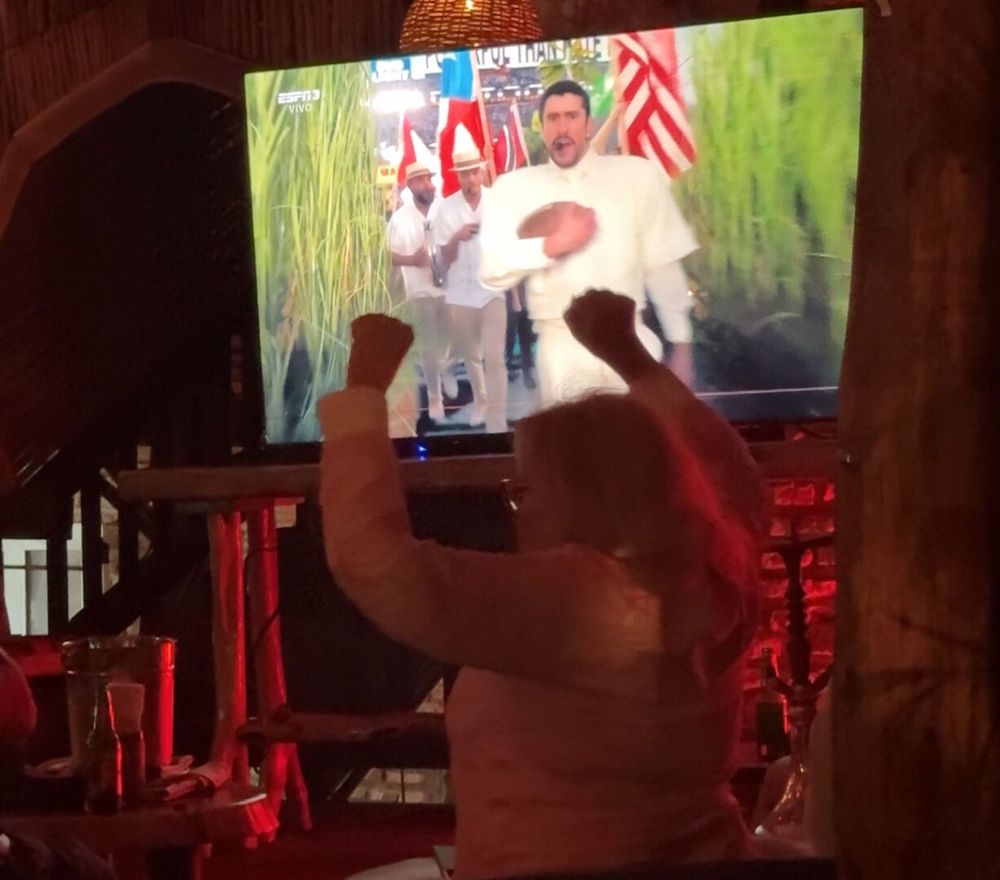
Tulum is often described through extremes. It is frequently romanticized or criticized, portrayed as overexposed or misunderstood. Those narratives tend to flatten the town into a single image. Moments like Sunday night’s halftime show reveal something more complex.
Tulum is still becoming. Its identity is negotiated daily, shaped by the tension between local history and global influence. What happened that night reflected that ongoing process, not through policy or planning, but through shared experience.
Coexistence rather than sameness
The coexistence of languages in Tulum is not always simple. It can be uncomfortable. It can expose inequalities tied to tourism, labor, and access. At the same time, it creates space for encounters that are rare in more homogeneous settings.
A halftime show in Spanish, embraced not only by Spanish speakers but by a multilingual, international crowd, offered a brief glimpse of what that coexistence can look like. Not unity through sameness, but unity through overlap. Not silence, but shared movement. Not translation, but listening.
For a few minutes, Tulum did not simply host a Super Bowl broadcast. It mirrored something larger. The idea that belonging is not determined by who adapts the most, but by who is allowed to show up fully.
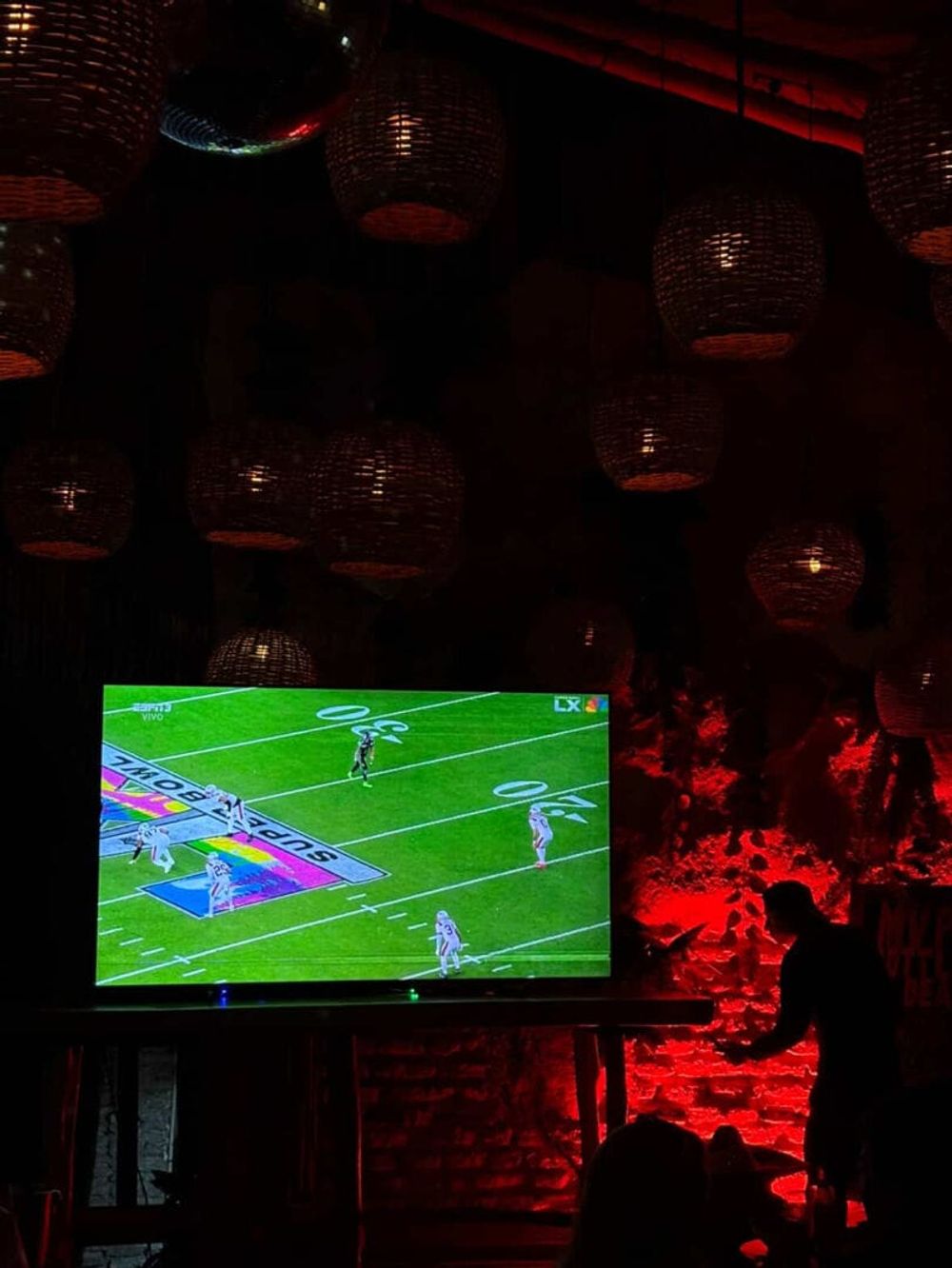
The scene did not resolve the complexities of language, tourism, or cultural power in Tulum. But it highlighted how those forces already intersect in daily life. Sometimes, the shift is not announced. Sometimes, it arrives as a beat, a language, and a beach willing to move together.
As The Tulum Times has observed in other moments of cultural convergence, these shared experiences do not redefine the town overnight. They do, however, reveal how identity here continues to be shaped in real time, through ordinary spaces and unexpected intersections.
What remains after the music fades is the question of what Tulum chooses to make room for next, and how those choices are reflected in the everyday life of residents, workers, and visitors alike. The primary keyword, Spanish-language halftime show, will likely continue to resonate as more global moments pass through this small but symbolically significant town.
We’d love to hear your thoughts. Join the conversation on The Tulum Times’ social media.
What did this moment reflect for you about language and belonging in Tulum?