
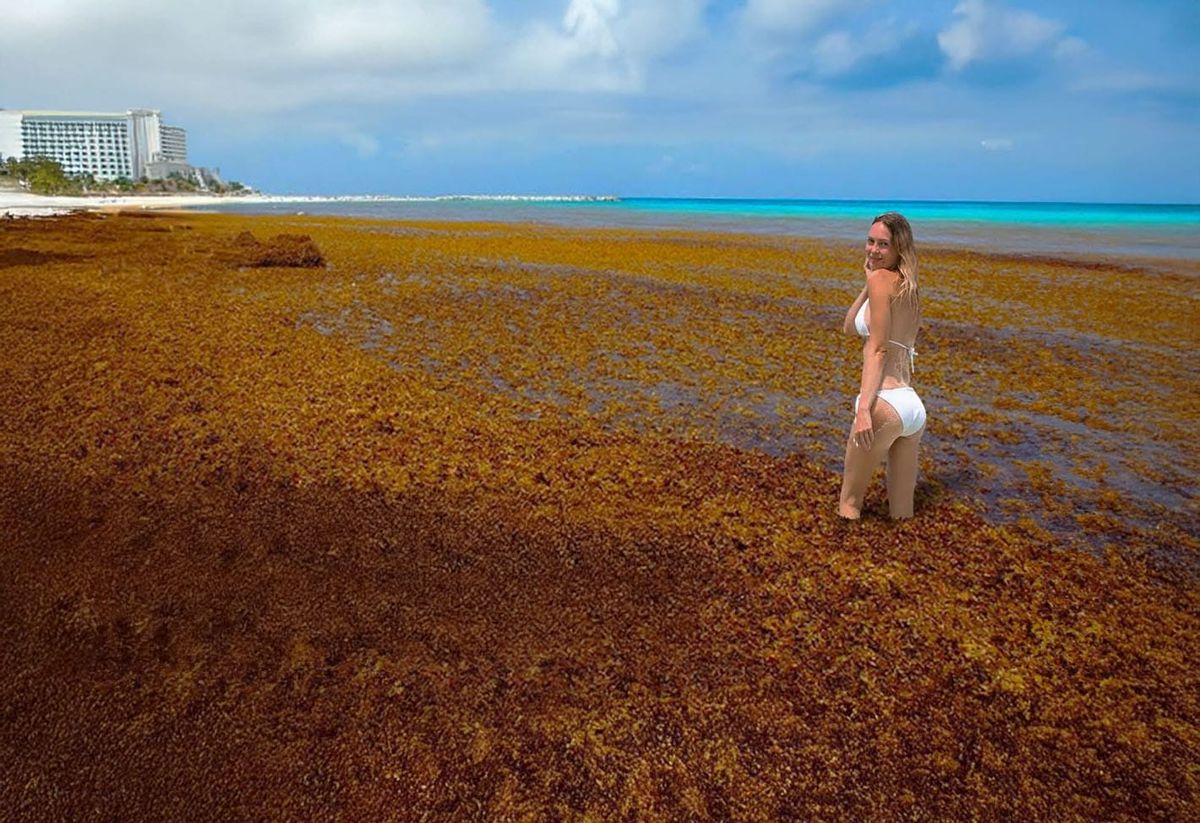
Before dawn’s first light streaks the Caribbean horizon, small teams of workers in Tulum assemble along the shore, rakes and shovels in hand. They stand at the water’s edge confronting a familiar adversary: mounds of drifting brown seaweed that arrived overnight. Each shovelful of damp sargassum they heave off the sand is more than a routine chore – it has become a morning ritual of resilience, a quiet stand against an encroaching tide that has gradually reshaped daily life in the Riviera Maya.
The sargassum season has returned in 2025 with a vengeance, met by a community resolve that seems to grow stronger each year despite the challenges. Over a decade has passed since these Mexican Caribbean beaches first saw the great golden tides roll in. Now, from Cancún down to Tulum, locals have learned to live by not just the calendar’s seasons but the unpredictable rhythms of the Atlantic’s sargassum blooms.

Early warnings for this year’s influx came long before seaweed touched the sand. Through winter, satellites captured ominous signs: an enormous belt of sargassum gathering in the Atlantic, six times larger than the previous years. By January, oceanographers were sounding the alarm that 2025 could deliver one of the heaviest sargassum seasons on record, possibly rivaling the worst observed years.
Quintana Roo’s beaches mainly remained clear briefly in January and February. But the sea’s calm was deceptive. “We are expecting more intense and frequent arrivals along the entire coast,” a regional monitoring director warned. By early spring, mats of seaweed began darkening the turquoise shoreline again. In Tulum, after about 60 tonnes were collected in each of the first two months, March brought a sudden spike – over 320 tonnes were hauled off the beaches in that single month. April followed with another 300 tonnes, and May saw the onslaught intensify.

Beach cleanup brigades in Playa del Carmen were removing up to 200 tons per day. By all accounts, the 2025 sargassum invasion is unfolding earlier and more aggressively than usual, confirming fears that this summer could be record-breaking. Regional monitoring centers report that the total amount of sargassum in the Atlantic-Caribbean system this spring has surpassed anything observed.
Forecasts from Sea and Space
The effort to predict these floating invasions has grown increasingly sophisticated – and urgent. Scientists rely on satellites that scan for rust-colored ribbons of sargassum riding the ocean’s surface. They forecast where and when the seaweed will hit land by analyzing ocean color data and oceanographic models.
In December 2024, satellites spotted an unusually massive buildup of sargassum in the tropical Atlantic – about 75% higher than any previous December. By January, over 7 million tonnes of the algal mass stretched across the ocean, far above normal. Through April, imagery confirmed that sargassum quantities swelled and shattered previous records. April levels were roughly 200% higher than any April in history. By spring, the total bloom size had exceeded the peak levels of the last record years.

What’s driving this dramatic surge? Experts point to a combination of warming oceans, nutrient-rich runoff, and shifting currents. Climate patterns such as the return of La Niña have also contributed. A relatively mild 2024, aided by El Niño, offered a brief reprieve. But that pause is over. In 2025, the bloom is back in full force, moving steadily toward the coast.
By May, state authorities declared the official start of sargassum season and activated contingency plans. The sense of urgency has been palpable.
Environmental Toll on Shore and Sea
Sargassum supports marine life in the Atlantic, but when it washes ashore in excess, it becomes a hazard. Along the Riviera Maya, the environmental impact has been stark. Piles of seaweed blanket shallow waters, decompose quickly, and create hypoxic conditions that kill fish and other marine organisms.

Coral reefs face increased stress as sunlight is blocked and sediment from decaying seaweed smothers sensitive ecosystems. “It mainly affects species that cannot move or move very little,” explained a marine biologist. The smell is another sign of the problem – rotting sargassum releases hydrogen sulfide, which causes the distinctive “rotten egg” odor.
Endangered sea turtles, which come ashore to nest, often find their nesting grounds buried in algae. Hatchlings must fight their way to the sea, many becoming trapped. Beach erosion has worsened where heavy machinery is used for cleanup, further disturbing delicate dune systems. Authorities now face the dilemma of clearing sargassum while preserving natural beach resilience.

Tourism and Livelihoods on the Line
Tourism is the economic lifeblood of the Riviera Maya. When beaches are buried under seaweed, the effect is immediate. Hotel bookings slow, travelers cancel trips, and visitors share unpleasant experiences online. Businesses, particularly beachfront restaurants, bars, and activity providers, see a sharp drop in revenue.
Fishermen face similar challenges. Seaweed clogs motors, drives fish away, and fills nets. Some small-scale cooperatives have been unable to operate during peak arrivals. The chain reaction is wide-reaching. Dive boats are grounded, beach clubs see fewer guests, and taxi drivers lose income.
“It’s not just an eyesore on the beach; it’s hundreds of paychecks on the line,” said one hotel manager in Playa del Carmen.

Fighting Back: Cleanup and Containment Efforts
In 2025, the response is more coordinated than ever. The Mexican Navy is patrolling the waters with specially outfitted boats to collect sargassum before it lands, and floating barriers have been installed strategically along the coast to redirect the seaweed.
Governor Mara Lezama emphasized collaboration across government levels and sectors. In Tulum, local authorities nearly doubled their cleanup crews this spring. Specialized equipment and trucks are deployed daily to haul away the collected biomass.
Still, logistics remain complex. Disposal sites fill quickly, and drying the seaweed takes time and space. There’s also concern about contamination of the aquifer. Meanwhile, communities and volunteers continue to assist. School groups and NGOs are active in daily cleanups and public education.
Hotels have also taken matters into their own hands. Many employ early-morning crews to clear beach fronts before guests arrive, and some have invested in containment nets. Though the sargassum keeps coming, collective efforts have helped keep key beaches open and relatively clean.

Looking Back: How 2025 Compares to Recent Years
The assault of 2018 was once considered unprecedented, until 2019 surpassed it. In 2023, satellite estimates revealed 13 million tonnes in the Atlantic – the highest on record. That year, health alerts and marine die-offs raised alarm. Then came 2024, a relatively mild season. El Niño played a role in limiting algae growth, and beaches remained clearer.
But 2025 has changed the narrative. The sargassum bloom surged anew with ocean temperatures warming again and nutrient flows undiminished. If current trends continue, this could become the most severe season yet. However, the region is better prepared. Coordination between federal, state, and municipal agencies has improved, and new technologies and protocols are in place.
Previous years’ experience has built resilience – not only in response infrastructure, but in community spirit.

From Crisis to Opportunity: Finding Silver Linings
Out of necessity, innovation is growing. Researchers and entrepreneurs are finding ways to repurpose sargassum. Biofuels, building materials, biodegradable packaging, and natural fertilizers are all under development. Sargassum’s absorbent properties may even make it worthwhile for water purification or carbon sequestration.
In some towns, seaweed is being transformed into compost mixed with coconut husk and microbes. Others envision sinking dried sargassum into the deep ocean to sequester carbon, a bold idea still under scientific debate.
Beyond technology, perhaps the most valuable outcome is increased environmental awareness. Children now learn about sargassum in school. Volunteers train in turtle-safe cleanup methods. Locals exchange tips on how to deal with the smell and protect the dunes.

One marine researcher noted that “it’s a tangible sign of broader planetary imbalances. ” The problem illustrates the global interconnectedness of oceans, climate, and human impact.
Yet there is also hope. Hope in adaptation, innovation, and solidarity.
As the summer continues and the seaweed rolls in, Tulum and the entire Riviera Maya will keep rising to meet the challenge. We invite you to share your thoughts, stories, and ideas with us on social media and be part of this evolving conversation.