
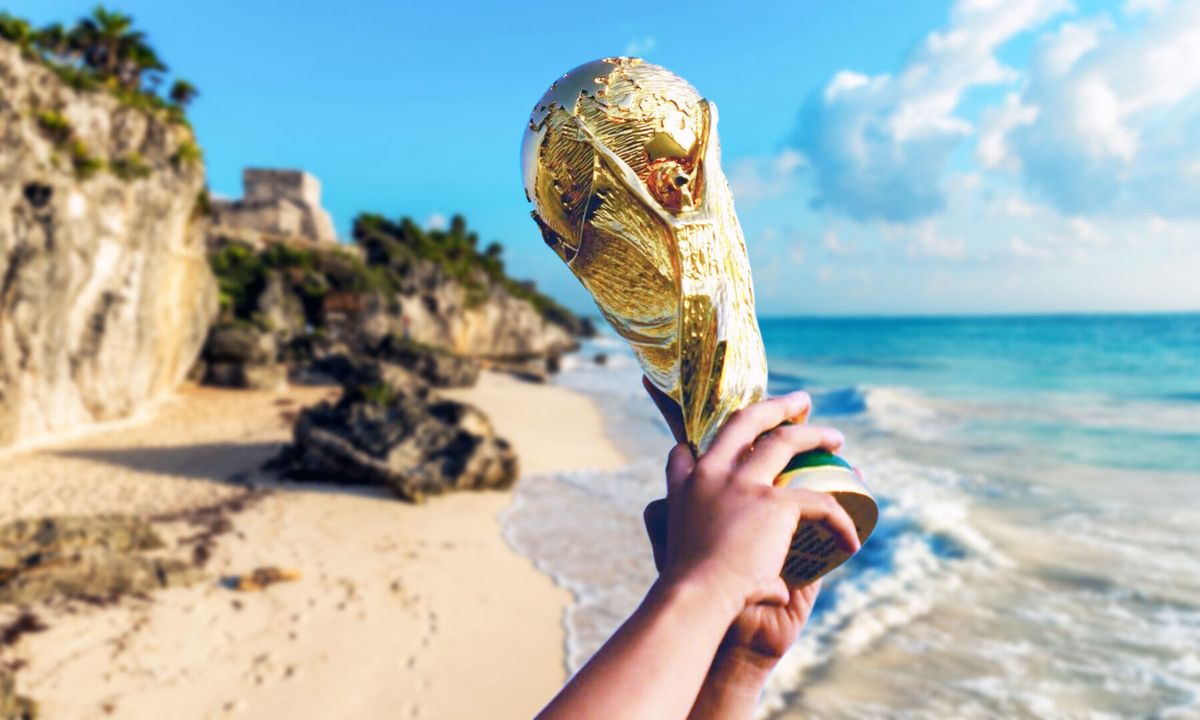
There’s something audacious about the way Tulum is stepping into the spotlight. No stadiums, no kickoff times, no chants echoing through concrete arenas. And yet, this lush enclave in the Riviera Maya is making strategic noise, setting itself up to be one of the most visited, talked-about, and remembered destinations of the World Cup 2026 in Mexico.
This isn’t by accident. It’s the result of a meticulously crafted promotional offensive, orchestrated by Mexico’s Secretariat of Tourism, Visit Mexico, and the Tulum Tourism Promotion Council. At the helm is Caleb Ordóñez Talavera, a man known for thinking beyond borders. His vision? Turn the biggest sporting event on Earth into a nationwide tourism showcase, and let places like Tulum steal the show.

Why the World Cup 2026 in Mexico Is About More Than Just Soccer
The FIFA World Cup has always been more than just a tournament. It’s a cultural eruption, bringing millions of fans, media outlets, and international attention to host countries. Mexico, sharing the 2026 event with the U.S. and Canada, understands the magnitude. But unlike previous hosts, this campaign stretches well beyond the match cities.
In fact, the government’s tourism strategy sees the World Cup as a gateway to Mexico’s soul. Through sweeping marketing efforts, both domestic and international, authorities are turning the country’s rich cultural fabric, biodiverse landscapes, and culinary genius into real attractions. From the Sierra Madre to the Caribbean coast, the campaign’s message is clear: come for the football, stay for the experience.
And that’s where Tulum comes in.

Tulum: From Hidden Gem to Global Icon
Twenty years ago, Tulum was a secret whispered among backpackers. Today, it’s a global brand, synonymous with luxury, spirituality, and sustainability. Its palm-fringed shores and ancient Mayan ruins draw millions. But as the World Cup 2026 in Mexico looms, Tulum is transitioning from trend to strategy.
The newly inaugurated Tulum International Airport is a critical piece of that plan. With direct routes from the U.S., Europe, and South America, it gives football fans a seamless way to pivot from stadium seats to cenote swims in a matter of hours. Senator Eugenio Segura estimates that Cancún alone could absorb 40% of World Cup tourists. Tulum is poised to catch the overflow, and then some.
Governor Mara Lezama sees more than just economic opportunity. She frames Tulum as a model for Mexico’s future: a fusion of culture and conservation, commerce and community. “Tulum isn’t just a destination,” she’s said. “It’s an invitation to experience Mexico in its most authentic form.”

Beyond the Beaches: A Story of Culture, Community, and Connection
What sets Tulum apart during this global moment is its commitment to deeper tourism. Visitors won’t just snap photos, they’ll be invited to engage. Local communities, artisans, and indigenous leaders are being woven into the tourism narrative. From cacao ceremonies to reef conservation tours, the experiences being curated reflect not just what Mexico has, but who it is.
The strategic promotion, driven directly by President Claudia Sheinbaum’s national agenda, goes beyond short-term gains. It’s about reshaping Mexico’s global image, turning old stereotypes into new stories. And for that, destinations like Tulum, with its mystique and magnetism, are invaluable.

The Emotional Play: Why Travelers Will Remember Tulum
For many, attending the World Cup is a once-in-a-lifetime event. But what happens in between the matches, those days of wonder, rest, exploration, can define the trip. Tulum offers that pause. That breath. That moment of clarity in the chaos.
Imagine it: a fan flies into Cancún, watches Argentina vs. Germany in Mexico City, then escapes to Tulum. They walk barefoot on ancient ground. Eat ceviche by candlelight. Hear stories told in Mayan. It’s not just travel, it’s transformation.
And that’s the bet Mexico is making.
A Closing Thought, and a Wider Invitation
In the shadow of stadiums and scoreboards, a new kind of player is emerging. Tulum is proof that, with vision and heart, even the quietest corners can take the world stage. As the countdown to the World Cup 2026 in Mexico accelerates, the question isn’t whether Tulum is ready.
It’s whether the world is ready for Tulum.
We’d love to hear your thoughts, join the conversation on The Tulum Times’ social media.