
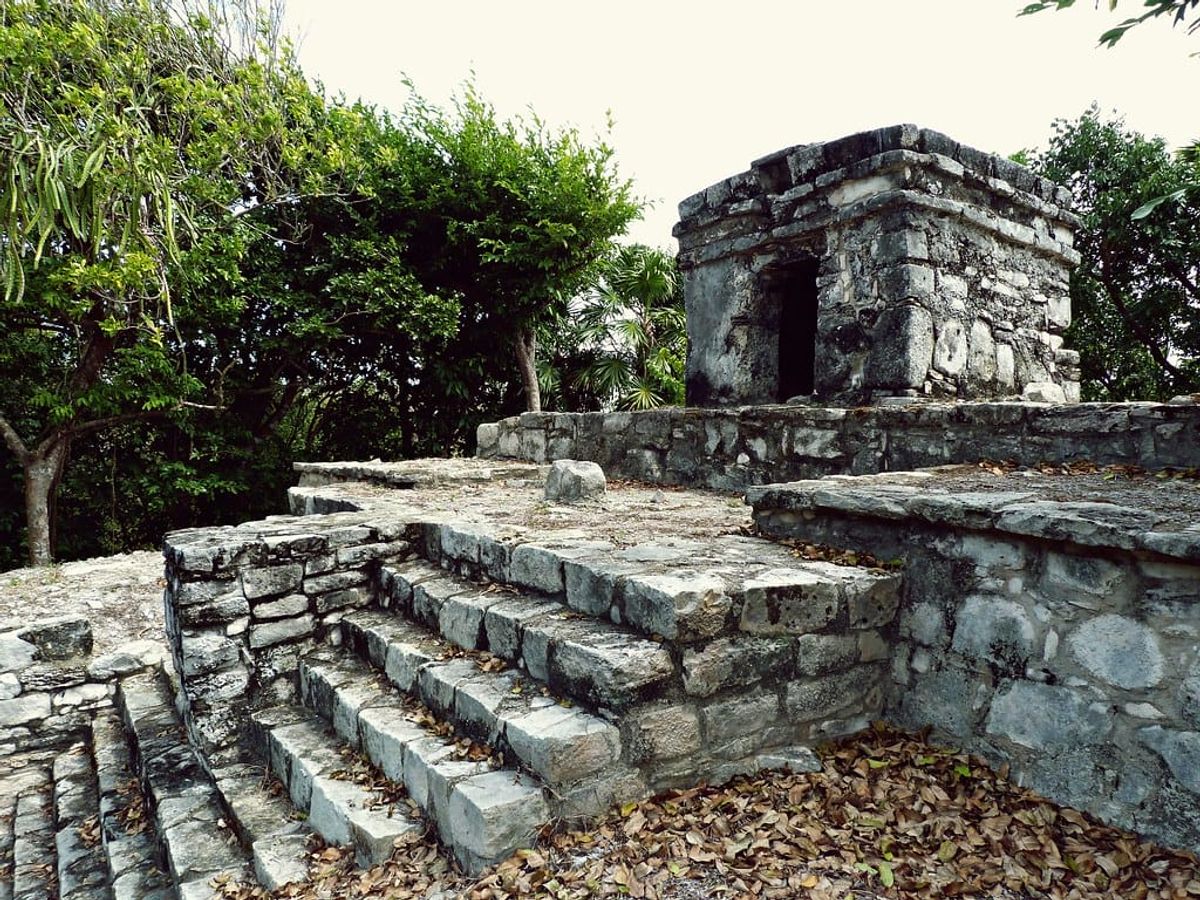
Somewhere between the thump of beachside bass in Tulum and the hush of jungle canopy, there’s a sliver of time wedged into the soil, forgotten by many, remembered by few. That’s the magic of the archaeological site of Tancah. It doesn’t shout like Chichén Itzá or pose like its coastal cousin Tulum. Tancah waits. Quietly. Patiently. And if you listen, it tells a story that predates hashtags, resorts, and coconut mojitos.
Just a few kilometers north of Tulum, where the sea whispers secrets to limestone and the air hums with unseen history, Tancah holds its ground. It’s a remnant of the Maya’s Postclassic period (roughly 900 to 1500 A.D.), an era often miscast as decline but which, in places like this, pulses with complexity. Here, the ceremonial brushes shoulders with the residential. Temples rise beside cenotes. And not the Instagram kind, real, sacred sinkholes wrapped in myth and algae.

The Coastal Artery of Trade and Faith
The archeological site of Tancah wasn’t just a dot on a map. It was a junction in a sprawling maritime network. According to the National Institute of Anthropology and History (INAH), it was a critical node in Maya trade routes, where obsidian, conch shells, and woven textiles flowed like blood through the veins of the empire. Imagine the place as a coastal marketplace-meets-pilgrimage stop. A sanctuary where ocean gods were honored in vivid murals that still cling, stubbornly, to stone walls like ancient tattoos.
And then there’s the quiet dignity of its structures. Not grandiose, but grounded. Real. The main temple stands weathered but defiant, its stones warmed by centuries of Caribbean sun. Murals within depict sea deities, fish, waves, cosmic currents, an artistic nod to the spiritual tether between the Maya and the ocean’s rhythms. This isn’t decor; it’s cosmology in pigment.

A Solitary Walk Through Memory
Unlike Tulum, which now teems with sunburnt pilgrims and selfie sticks, Tancah remains untouched by the circus. It’s the kind of place where silence is the tour guide and every leaf crunch is a reminder of how alone you are, with the past, with yourself.
But don’t mistake solitude for neglect. Local Maya communities are not just custodians of this site; they are its storytellers. They guide visitors through ruins not just with facts, but with inherited memory. Oral histories thread through archaeological data, breathing life into stone. You don’t just see Tancah. You feel it.
One traveler, known on X as @MayaExplorer, put it this way: “Tancah is like Tulum, but without the crowds. A place where the ghosts still have room to breathe.”

Buried Truths and the Tech That Finds Them
Then came LiDAR, laser tech that strips away jungle camouflage like peeling back skin from bone. Recent scans revealed more structures hidden under centuries of leaf litter and silence. What was once thought to be a modest outpost now stretches wider, deeper, stranger.
INAH’s upcoming issue of Ecos de la Costa Oriental will shine a scholarly spotlight on Tancah’s murals, affirming their artistic and cultural heft. It’s not just about pretty pictures on old walls. It’s about decoding the Maya worldview, how they saw themselves in the universe, how they made sense of storms, trade winds, and time itself.

The Tension Between Preservation and Progress
But here’s the rub. The Riviera Maya grows like a weed, fast, unchecked, hungry. And Tancah, serene as it is, sits in the crosshairs. Tour buses idle not far off. Developers drool over coastal real estate. INAH has doubled down on protective measures, and rightly so. But it’s a race. Between memory and amnesia. Between reverence and revenue.
By 2026, there’s talk of a new interpretive trail, an eco-conscious path linking ruins with cenote, with educational plaques and community partnerships. A gentle gesture, maybe, but one that could mean the difference between preservation and plunder.
Tancah: Where Time Waits in the Trees
So, what do you find at the archaeological site of Tancah? Not a spectacle. Not grandeur. Something else. Something smaller, slower, more sacred. A forgotten page in the Maya ledger, still legible if you lean in close. There’s a cenote that reflects the sky like a mirror held by gods. There are stones that remember your footsteps. And there’s wind, always wind, carrying the breath of those who came before.
This isn’t just archaeology. It’s listening. It’s honoring. It’s walking backward into the past, barefoot, eyes open.
We’d love to hear your thoughts, join the conversation on The Tulum Times’ social media.