

For months, the municipality of Tulum in Quintana Roo has faced a problem that exposes the fragility of its urban governance. Beyond the long-standing complaints about excessive beach charges, inflated prices, and conflicts with taxi drivers, a new phenomenon is undermining public confidence: the illegal occupation of land.
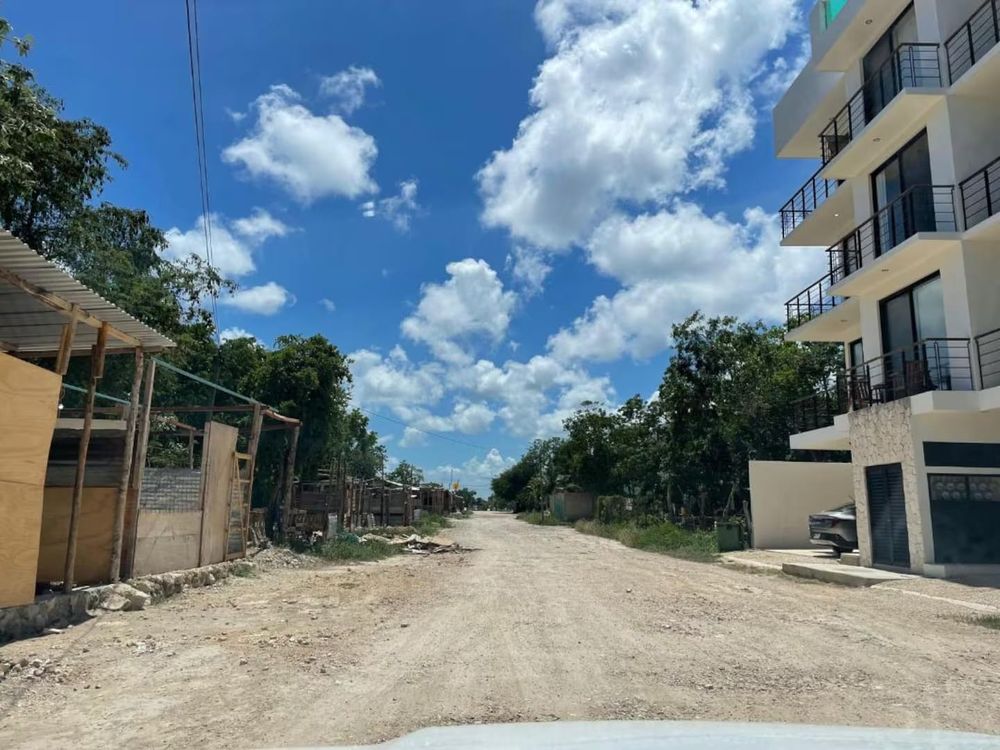
Residents describe how supposed local leaders have taken over parts of the Juanek Street corridor, a key route connecting Tulum’s two main avenues, Cobá and Kukulkán. These individuals are reportedly selling or renting plots inside public areas, blocking passage and restricting access to one of the town’s busiest roads. The encroachment has become a symbol of disorder in a place that relies on tourism and mobility to sustain its economy.
Allegations of inaction and complicity
Neighbors say the occupation has continued since March of this year. Despite multiple complaints, they argue that municipal authorities, led by Mayor Diego Castañón of the Morena party, have not acted to reclaim the public space. The case is already part of a legal demand, but the absence of visible enforcement has deepened suspicions of corruption.
Several residents accuse local and possibly state officials of protecting those responsible. “The invasion of the Juanek Street represents insecurity, a brake on urban development, and a terrible signal for investors. Who would invest in a place where streets can be taken without consequence?” said one of the affected neighbors.
Their words capture the frustration of a community that sees public spaces, once shared and essential for movement, being transformed into private markets with no accountability.
A pattern beyond one street
What happens on Juanek Street is not an isolated case. According to citizen reports, at least six similar incidents have been documented across Tulum. In several of them, public servants from the same administration allegedly play a role, directly or indirectly.
The lack of a coherent response has become a key concern for residents, real estate investors, and tourism operators. Illegal land use can distort urban planning, reduce safety, and weaken the town’s appeal as a destination. In a place where infrastructure is already under pressure from rapid growth, the spread of land invasions signals deeper structural problems in how public authority is exercised.
Official warnings and the scale of the problem
Authorities at the state level recognize that these incidents are part of a wider trend across Quintana Roo. José Alberto Alonso Ovando, Secretary of Sustainable Urban Territorial Development, has publicly stated that between 450 and 500 land invasions have been identified in the state. These include federal, municipal, and private properties. Many involve people deceived by false leaders who promise ownership or rent of land they do not control.
Such practices are not only illegal but also destabilize property rights and generate long-term urban risks. They can lead to disputes, unregulated settlements, and environmental degradation. In Tulum, a municipality with limited land availability and intense development pressure, every case intensifies tensions between growth and governance.
Residents call for leadership and accountability
Those affected by the occupation in Juanek Street have demanded immediate action from Mayor Diego Castañón, Governor Mara Lezama, and municipal secretary Johnny Monsreal. They argue that their silence or slow response damages not just mobility but also Tulum’s international reputation. The affected area sits at the heart of the town’s commercial and residential zone, where any disruption affects transport, business activity, and tourism flow.
In a local context where tourism is the backbone of the economy, the perception of impunity could have serious consequences. Investors often look for legal certainty, transparent land records, and functioning public institutions. When public roads become bargaining grounds, confidence declines.
“The invasion issue exposes the limits of Tulum’s growth model,” said one resident who has witnessed the area’s transformation over the past decade. “Everyone talks about development, but when land is occupied illegally and no one acts, it shows how fragile that development really is.”
The intersection of law, politics, and growth
Tulum’s rise as a global tourism hotspot has brought prosperity but also disorder. Rapid population growth, real estate speculation, and administrative fragmentation have created conditions for irregular land practices to flourish. Many of these conflicts arise from overlapping claims, weak enforcement, and political tolerance toward local power brokers.
Urban planners in Quintana Roo have long warned that when city planning fails to keep pace with expansion, illegal land use tends to fill the gaps. In Tulum, that pattern is visible in informal settlements, unauthorized constructions, and now, the seizure of public roads.
This situation raises a broader question: how can a municipality attract international investment while struggling to enforce its own land regulations?
Legal actions are underway, but confidence remains low
While residents confirm that legal proceedings are in progress, there is skepticism about their outcome. Cases involving land disputes often move slowly through administrative and judicial channels. Without firm intervention, temporary occupations can become permanent, reshaping the urban layout and creating new conflicts.
The Tulum Times verified that complaints have been filed and acknowledged by the municipal government. However, no public information has been released about enforcement measures or recovery plans for the affected areas. The absence of official statements has further eroded trust.
What is at stake for Tulum and Quintana Roo
The persistence of illegal land invasions could define the next phase of Tulum’s urban trajectory. Beyond immediate disruption, the issue touches on the integrity of local governance and the rule of law. If authorities fail to respond decisively, the message to residents and investors alike will be that property boundaries and public rights are negotiable.
For Quintana Roo, where hundreds of similar cases are under review, the outcome in Tulum could set a precedent. The state’s credibility in managing urban growth depends on its ability to balance development with transparency and enforcement.
Illegal land occupation may seem like a local conflict, but its implications reach the foundations of how Tulum envisions its future.
Tulum’s illegal land invasions reveal the urgent need for stronger governance, consistent enforcement, and a renewed public commitment to lawful development.
We’d love to hear your thoughts. Join the conversation on The Tulum Times’ social media.
Do you believe local authorities will act to reclaim Tulum’s public spaces before the damage becomes irreversible?