
The sun might rise the same over Tulum’s turquoise waters, but for many locals, getting to the beach now feels like breaking and entering.
This week, after a tense three-hour meeting between frustrated residents and government representatives, a fragile but historic pact was inked, or at least promised on paper. The goal? Free, unrestricted access to the beaches of Tulum, a right locals say has been slowly fenced off, paved over, and sold to the highest bidder.
At the table were some of the heaviest hitters: Tulum’s municipal president Diego Castañón Trejo, Quintana Roo’s Secretary of Government Cristina Torres, and Juan Carlos Toledo from the National Commission of Natural Protected Areas (Conanp). For once, everyone seemed to be on the same page, at least rhetorically. The result: a promise to legalize the fight. A written agreement that would serve as a formal commitment to restoring public access.
But here’s the catch, promises are cheap. Paper, even cheaper.
A Line in the Sand, Literally
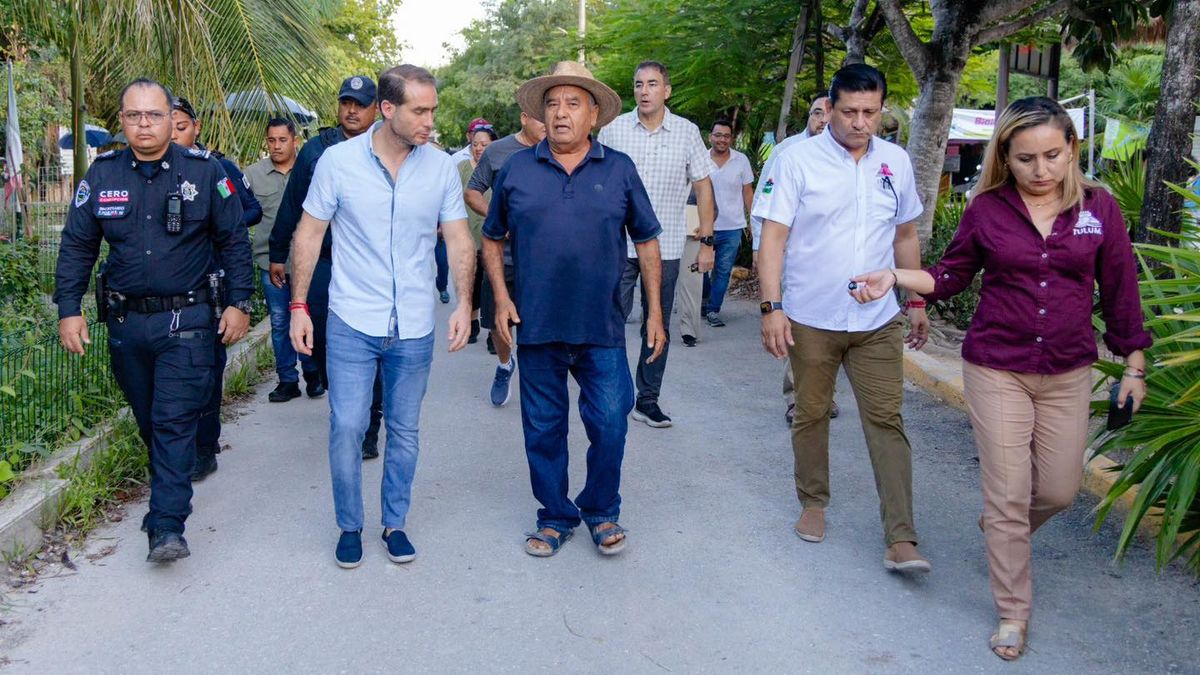
The center of the controversy is a newly opened route from the southern access point to Playa Mangle. On paper, it’s public. On the ground, it feels like a detour through a bureaucratic jungle. Locals and officials have agreed to walk it together, literally, to map it out and make sure everyone understands what “public” actually means.
This isn’t just a stroll. It’s a symbolic march for a right that’s been eroded by development, gated communities, and mega-projects like the Jaguar Park, spearheaded by Grupo Mundo Maya. What was once an open coastline has become a patchwork of private signs, velvet ropes, and soft threats.
“People want to feel the sand under their feet without being told where they can or can’t go,” said one Tulum resident, who asked not to be named for fear of retaliation. “This is about dignity. About home.”

The Longest Blockade
Just 24 hours before the meeting, the town saw its longest beach access blockade to date. Locals gathered under the blistering September sun, holding signs, water jugs, and each other. The protest wasn’t just loud, it was emotional.
It was the kind of gathering that can’t be dismissed as “activism.” It was a community telling its own story, resisting in sandals and sarongs.
One man, maybe in his 60s, stood silent near the edge of the group. “I used to fish here when I was a boy,” he whispered. “Now I have to ask for permission.”
That moment says more than any press release.
Legal Tango or Genuine Progress?
Cristina Torres, Quintana Roo’s Secretary of Government, positioned herself squarely with the people, or at least, that’s how she framed it.
“We’re on the same side,” she told the crowd. “We want free beaches, just order. We’re not doing this behind your backs, we’re doing it face-forward.”
Her words rang strong, maybe even social-media-ready.
But here’s the editorial whisper between the lines: when someone says “order,” it usually means conditions. And in Tulum, “conditions” tend to favor investors, not barefoot families.
Still, to her credit, Torres laid out a legal pathway. A formal request to Conanp is being drafted to secure additional easements, public paths that might open new routes to the sea. Conanp has already identified one such access, which, according to officials, will be available year-round with no fees.
It’s something. But is it enough?

Riviera Maya, Uneven Shorelines
The situation in Tulum is hardly unique. Across the Riviera Maya, from Playa del Carmen to the edges of Cancún, beach privatization has quietly crept in under the guise of “development.” Quintana Roo, a global magnet for luxury tourism, has seen its natural assets rebranded as premium experiences.
But unlike Cancún’s hotel zone or Playa’s club-lined beaches, Tulum has always traded on a different currency: authenticity. Jungle vibes, wellness retreats, barefoot chic. It’s ironic, then, that the very soul of Tulum is being contested by the same forces it once claimed to resist.
The Tulum Times has covered this growing tension for months, documenting how the once-open coast is now checkered with guarded gates and quiet exclusion. Residents aren’t just angry. They’re tired of being told to walk around their own home.
What’s at Stake Now?
The next key date is September 5, when parties reconvene to advance the legal formalization. Whether this is the first page of a new chapter or just more red tape remains to be seen.
But one thing is certain: people are watching. And walking. And blocking roads if they must.
At the heart of it, this isn’t just about beach access. It’s about what kind of place Tulum wants to be. Who gets to live here, who gets to visit, and who gets to touch the sea without paying a premium.
As one protester scrawled on a cardboard sign: “El mar no se vende.”
Let that be the headline.
We’d love to hear your thoughts. Join the conversation on The Tulum Times’ social media.
What does true public access mean to you, and who should decide it?