
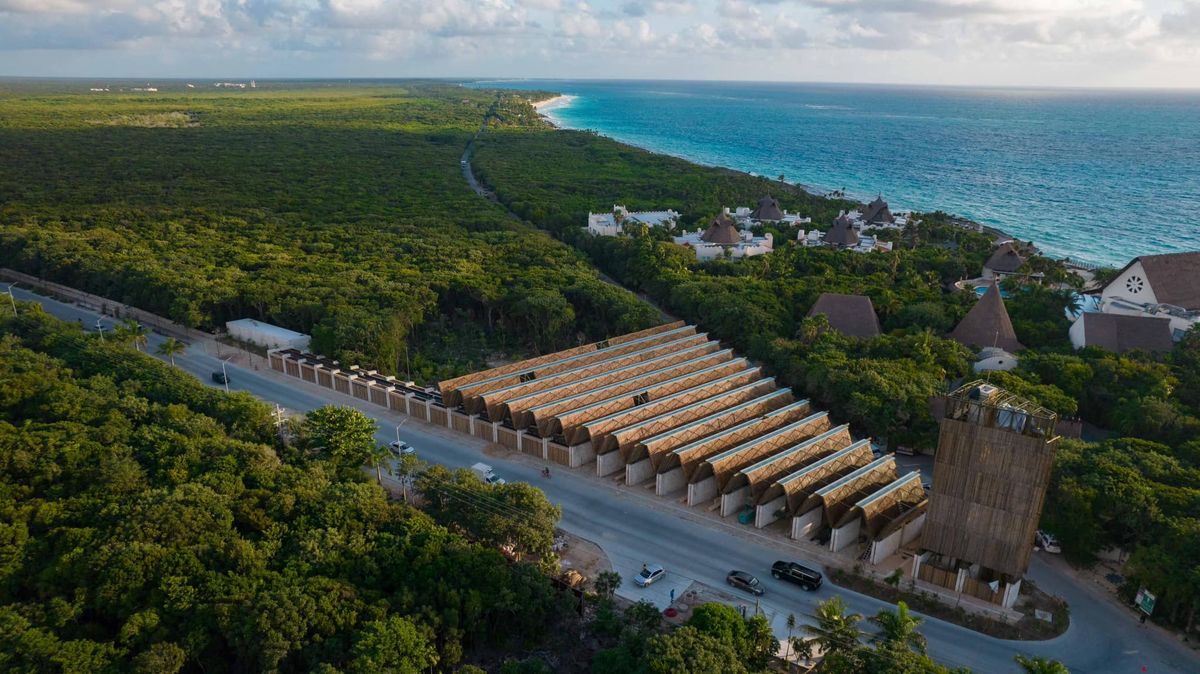
They say every great idea has a price. At Jaguar Park, that price begins at 12,344 pesos per month, and that’s just the start. This July, the ambitious eco-tourism venture nestled in the Yucatán Peninsula stirs to life with the opening of its first three commercial spots. Restaurants and a boutique shop will flicker to life inside the Visitor Attention Center, hoping to be more than just early tenants. They’re pioneers staking their claim in a dream that’s equal parts opportunity and gamble.
Jaguar Park’s First Tenants Step In
The curtain lifts with modest fanfare: two eateries and one boutique occupy the first three of twelve planned units. Half of these units sit in the park’s so-called “smoke kitchen,” a culinary corridor designed to serve up traditional fare with a side of heritage. The other half lines a commercial strip threading through the park’s landscape, a promenade that wants to be more than a shopping lane; it wants to tell a story.
The goal is immersive, almost poetic: wrap the visitor in nature’s wild tapestry, lace it with culture, and season it with the convenience of curated services. But beneath the surface of this vision, something simmers.
A Price Tag That Feels Personal
Talk to locals, and you’ll hear it, a whisper turning into a murmur. Rent for the smallest unit, barely larger than a walk-in closet at 14.4 square meters, runs north of 12,000 pesos a month. Toss in VAT, and the number creeps higher. But that’s just the prologue.
There’s the 45,000 peso deposit. The 10 percent monthly maintenance fee. The 6 percent cut of gross monthly sales. And let’s not forget the fine print: one-year minimum contract, plus a monthly inventory report. For small business owners, these aren’t just terms, they’re commitments wrapped in risk.
One vendor, speaking off-record, compared it to “walking a tightrope with a stone backpack.” They want to be part of something bigger, but wonder if the toll will crush them before they reach the other side.
Betting on Foot Traffic and Fortune
Still, three entrepreneurs have stepped forward, wagering that Jaguar Park’s allure will draw crowds thick enough to make the math work. They’re banking on the park’s promise, a fusion of eco-tourism, local flavor, and cultural depth, to turn curiosity into commerce.
Their success, or lack of it, will set the tone. If they thrive, they could light the path for others, transforming a fledgling idea into a regional economic engine. If they falter, the park may struggle to convince others to follow.
In places like this, where ambition meets ancestral soil, the stakes always feel higher. Jaguar Park isn’t just a park. It’s a proposition, one that asks both visitors and vendors to believe in the power of place.
We’d love to hear your thoughts, join the conversation on The Tulum Times’ social media.