
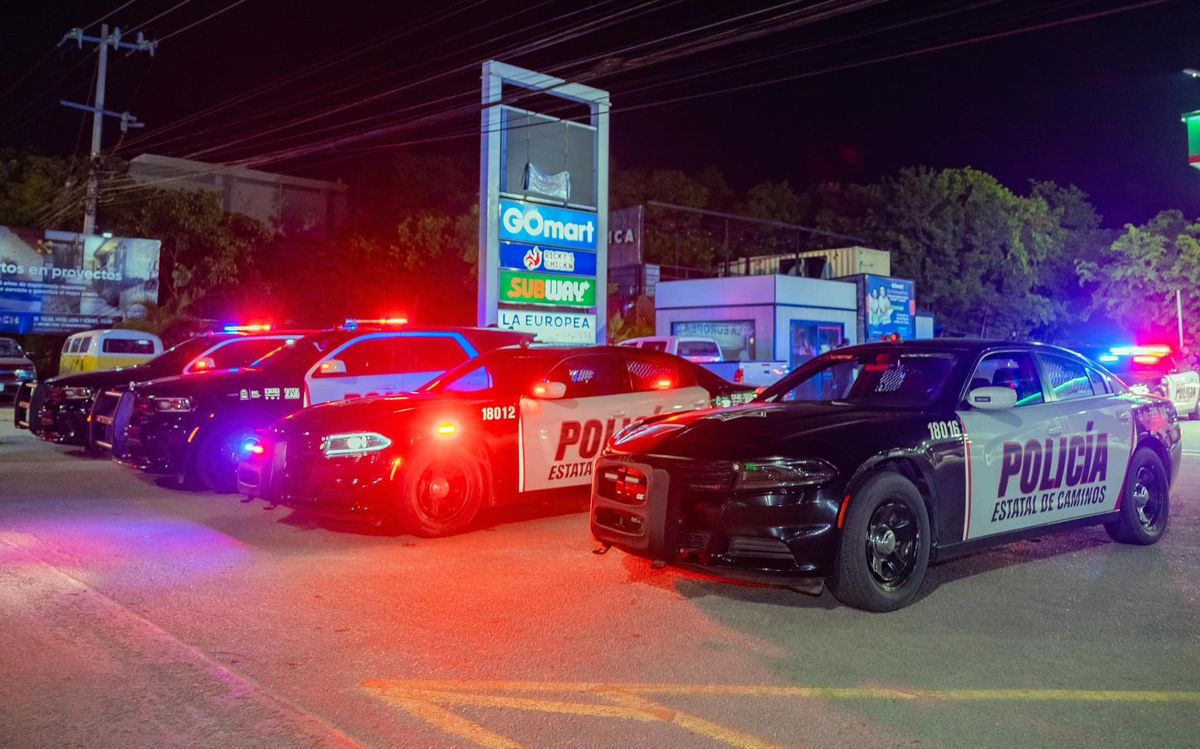
Some say the town is getting safer. That “Tulum’s homicide rate is down in early 2025,” according to local officials. That the tide is turning. That progress is being made. And maybe on paper, it is.
But statistics are strange things. They tidy up what real life leaves messy. They clip the jagged edges off grief and fear, off the thousand tiny ways that violence doesn’t stop just because fewer people are dying.
Talk to people in Tulum, not the spokespeople or press officers, but the shopkeepers, taxi drivers, and parents walking their kids to school. What you’ll hear isn’t a celebration. It’s fatigue. It’s frustration. It’s a kind of cautious numbness that comes from seeing too much and hoping too often.

In January, Tulum recorded six homicides. Fewer than usual. That’s what José Roberto Rodríguez Bautista, the now-late Secretary of Security and Citizen Protection, called a “drop in the average.” He shared the figure just weeks before he would become one more statistic, ambushed on March 24 in La Veleta, shot in broad daylight, pronounced dead hours later in a hospital in Playa del Carmen.
His murder wasn’t just another violent death. It sent a message. If the man in charge of safety could be executed so easily, then what is safety? Who holds it? Who loses it? And who decides?
The week before his killing, on March 21, three alleged sicarios were arrested in town: Julio César, William Alexander, known as “Chiquis” and “Flaco”, and Fernando Camilo. Authorities say they were connected to at least five murders, including those of two local taxi drivers. That’s not unusual anymore. That’s part of the rhythm of things. Arrests come, names surface. Charges are filed, or not. And people keep dying.

Then on April 2, another headline: two more men, Bryan Augusto and Daniel Adelfain, picked up by police, caught with guns and weed on Avenida Ágata. Members of the CJNG, said the press release. Another blow to organized crime. Another public win in a long and exhausting war.
But something doesn’t sit right. Because even as significant arrests continue to come in, small things also happen, things that chip away at the everyday sense of security.
On May 28, around 2 a.m., a man approached a local ice cream shop. It was closed, locked up for the night. He tugged at the metal gate, pulled on the padlock, tried for a minute, maybe two. And then he just… walked away. No rush. No fear. As if he knew no one would stop him. As if he were testing the town’s boundaries, and finding none.
The footage was shared on social media before morning. A grainy, silent, eerie video. It wasn’t the violence of the act that shocked people; it was the aftermath. It was the indifference. The calm. The quiet realization that in some corners of this growing town, there’s no one watching.

And that’s what people are talking about, more than numbers or press conferences: the feeling. The way fear hangs in the air. Not loud, but steady. The way some neighborhoods are empty by nightfall, the way locals text each other when they hear sirens, the way mothers change routes to school without really knowing why.
There’s no denying that Tulum is changing. Fast. Luxury condos rise where jungle once stood. New cafes open every week. Tourists still come, drawn by beauty, by mystery, by the promise of peace. But the undercurrent hasn’t left. It just runs quieter now.
The fight against organized crime here isn’t linear. It’s like trying to trap smoke with bare hands. For every arrest, there’s another name waiting. For every small win, a retaliation. The cartels don’t vanish; they shift, adapt, and band together more deeply. And for those living here, the cost isn’t just measured in lives lost. It’s measured in sleep lost, in plans canceled, in the slow erosion of everyday life.

Rodríguez Bautista knew that. His position wasn’t ceremonial. He was in the trenches. And whatever led to his death, retaliation, political betrayal, cartel vendetta, it was a brutal reminder: this place, this job, this fight is never safe.
Still, people stay. Still, they build. They open businesses, fall in love, and raise children. Still, they believe, or want to believe, that things can be better.
That’s the paradox of Tulum, a paradise touched by shadows. A town growing faster than its protections. A community stretched between hope and brutal truth.
Is it getting safer?
Some days, it feels like yes. Others, not at all. And perhaps the better question is: what does ‘safe’ even mean now?
We’d like to hear what you think. Join the conversation on The Tulum Times’ social media and share your thoughts with us.