

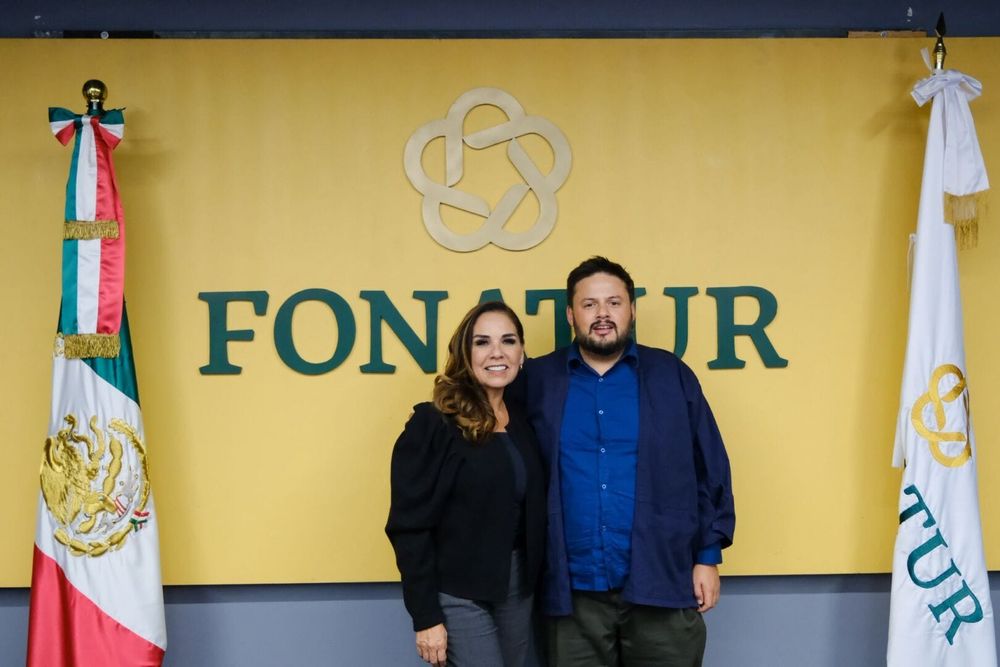
Quintana Roo Governor Mara Lezama Espinosa held a working meeting with Sebastián Ramírez Mendoza, director general of Fondo Nacional de Fomento al Turismo, to reinforce coordination between the federal government and the state on projects aimed at improving public welfare across Quintana Roo. The meeting focused on aligning priorities to advance initiatives that could deliver tangible benefits to local communities while supporting a more orderly and sustainable development model.
According to information shared by state authorities, the discussion centered on strengthening institutional collaboration to ensure that federal and state efforts move in the same direction. Both sides emphasized that closer coordination is essential to advance projects that address social needs while also reinforcing the state’s position as a leading tourism destination.
Public spaces and community benefit
One of the priority topics addressed during the meeting was the recovery and rehabilitation of public spaces for community use. State officials indicated that improving parks, recreational areas, and shared urban spaces is seen as a key component of broader social policy, as these areas play a direct role in quality of life, social cohesion, and local well-being.
The governor highlighted that public space recovery is not limited to physical improvements but is also tied to safety, accessibility, and long-term maintenance. These factors are considered critical to ensuring that investments translate into lasting benefits for residents rather than short-term cosmetic upgrades.
From the federal perspective, Fonatur’s participation in such projects reflects a broader approach that links tourism development with social impact. While the agency is widely known for its role in large-scale tourism infrastructure, recent strategies have placed greater emphasis on community-oriented initiatives that complement destination growth.
Fonatur joins the Tulum recovery strategy
A central outcome of the meeting was the incorporation of Fonatur into the comprehensive recovery strategy for Tulum. This strategy is being implemented in coordination with the Government of Mexico and is led by the state government under the direction of the governor.
The recovery plan aims to address structural challenges that have emerged alongside rapid growth, including pressure on public services, urban organization, and community infrastructure. By integrating Fonatur into this framework, state authorities seek to align tourism-related planning with broader territorial and social objectives.
Officials involved in the talks indicated that Fonatur’s technical capacity and experience in destination planning could contribute to a more coherent implementation of recovery measures. This includes coordinating timelines, defining priorities, and ensuring that projects respond to both local needs and national development goals.

Institutional coordination as a development tool
During the meeting, both parties agreed on the importance of strengthening institutional coordination as a means to consolidate orderly and sustainable development with a social justice perspective. This approach reflects a shift away from fragmented decision-making toward a more integrated model that brings together different levels of government.
State representatives noted that such coordination is particularly relevant in destinations experiencing rapid change, where isolated projects can sometimes generate unintended consequences. By aligning federal and state actions, authorities aim to reduce duplication, improve resource allocation, and increase the overall impact of public investment.
The emphasis on social justice was also a key element of the discussion. Officials stressed that development policies should prioritize community well-being, ensuring that economic growth is accompanied by improvements in living conditions for residents across the state.
Balancing tourism strength and local needs
Quintana Roo’s economy is deeply linked to tourism, and strengthening the state’s destinations remains a central objective of public policy. However, the meeting underscored that tourism growth must be balanced with the needs of local communities to remain viable over the long term.
By focusing on public spaces and urban recovery, authorities aim to address some of the pressures associated with sustained visitor demand. Improved infrastructure and community facilities are seen as essential to maintaining social stability and supporting a destination image that goes beyond short-term appeal.
As The Tulum Times has reported in previous coverage, state officials have increasingly framed tourism policy as part of a broader social development agenda rather than a standalone economic strategy. The involvement of Fonatur in the Tulum recovery plan reflects this evolving approach.
What remains ahead for the recovery agenda
While the meeting established a framework for closer collaboration, specific project timelines and funding details were not disclosed. Authorities indicated that further technical work will be required to translate strategic alignment into concrete actions on the ground.
The success of the Tulum recovery strategy will depend on sustained coordination, transparent implementation, and the ability to adapt plans as conditions evolve. What is at stake is not only the physical improvement of public spaces but also public confidence in development policies that promise social benefit alongside economic strength.
As coordination between the state government and Fonatur moves forward, the effectiveness of the Tulum recovery strategy will be measured by its capacity to improve daily life for residents while reinforcing Quintana Roo’s long-term development path. We’d love to hear your thoughts. Join the conversation on The Tulum Times’ social media. What should be the top priority for the next phase of the Tulum recovery strategy?