
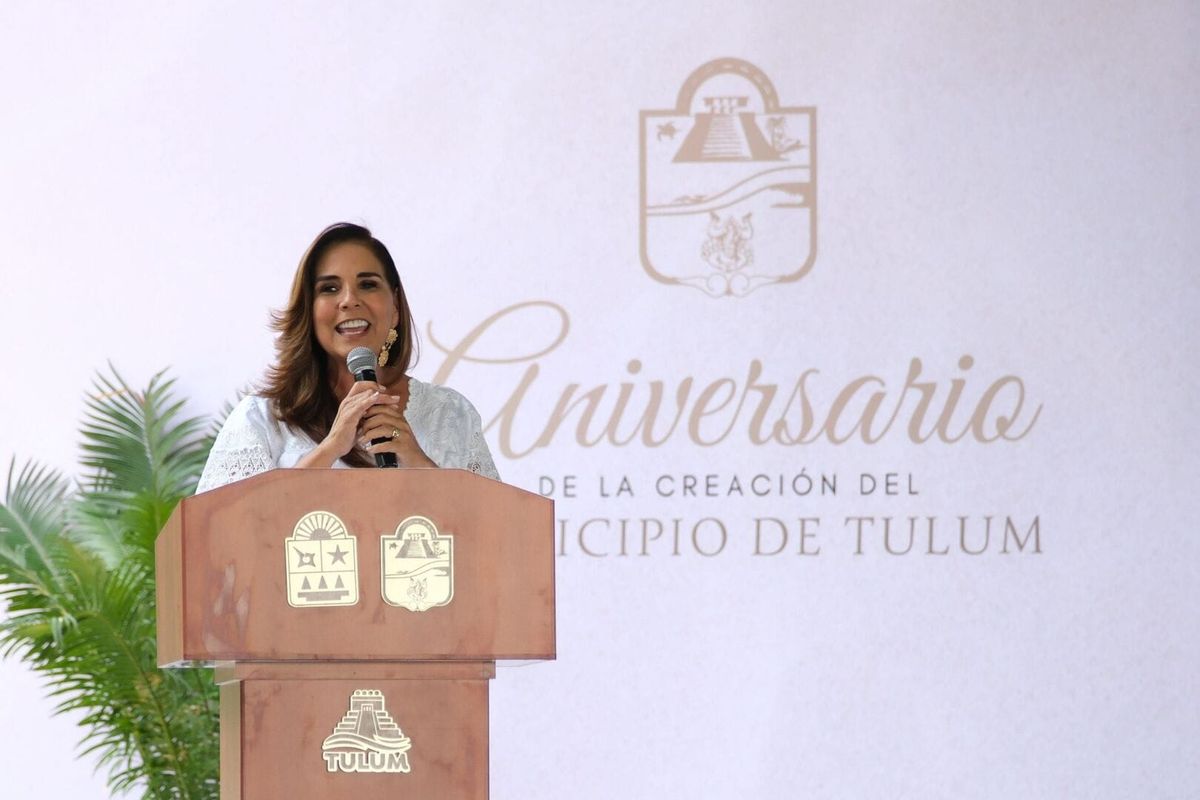
In a moment of reflection and resolve, Tulum marked its 17th anniversary with a solemn session led by municipal and state leaders who voiced a shared commitment to a more just, inclusive, and dignified future for the region. The ceremony, attended by representatives of all three branches of government, underscored not only the symbolic importance of the date but the evolving vision for Tulum’s role in the broader story of Quintana Roo.
Governor Mara Lezama Espinosa took the occasion to affirm what she described as a “new chapter” for the state, one built through coordinated efforts between municipalities and the state government, grounded in respect for autonomy but unified in purpose. “Together, we are writing a new story,” she said. “A story where social justice isn’t just an ideal, but a daily goal, and where shared prosperity reaches every table, no matter how modest.”

That spirit of collaboration was echoed by Diego Castañón, Tulum’s municipal president, who acknowledged the efforts of the many hands and hearts that have contributed to the town’s growth. “Tulum is not just a place,” he said, addressing residents directly. “It is a living testament to resilience, vision, and collective work. We have become a beacon for adventure tourism not by chance, but through determination.”
A Promise to Not Leave Anyone Behind
Lezama’s speech emphasized the moral imperative of inclusion, ensuring that prosperity translates into tangible improvements in public education, healthcare, infrastructure, and daily life. Her call was both poetic and political: “This land was born of resistance and hope,” she stated. “It carries the strength of its people and the wisdom of its roots. That is what should guide our path forward.”

She further detailed ongoing efforts to close gaps left by previous administrations, pointing to specific commitments such as the construction of 1,109 school domes across the state. These domes, she noted, are not luxuries but basic rights, spaces that protect and dignify the lives of children.
In her address, Lezama reiterated her administration’s stance: a human-centered, feminist approach to governance, where public service is shaped by integrity and a rejection of corruption. “When corruption is eradicated, resources go further,” she said, referencing the transparency-driven initiatives that have characterized her tenure.
The Second Floor of Transformation
Beyond symbolic language, the event served as a reaffirmation of the “second floor” of the Cuarta Transformación, the political and social movement that has shaped much of Mexico’s recent trajectory. But in Tulum, this second level is imagined not as bureaucracy, but as results: more classrooms, stronger clinics, and safer communities.

It was clear from the mood in the room that this was more than ceremony. It was a declaration of shared responsibility between leaders and citizens, and a moment to pause, not to celebrate an end, but to recognize a beginning. The 17th anniversary is less a marker of age than a milestone in evolution.
Unity in Diversity
The underlying tone of the commemoration was one of unity, not just in government, but in the broader community of Tulum, which includes long-time residents, recent settlers, and visitors from around the world. It was a reminder that Tulum’s future depends on everyone pulling in the same direction, even when perspectives differ.

As the municipality stands at a crossroads, facing challenges of rapid development, social inequality, and environmental pressures, its leadership appears focused on the long game: shaping a town that honors its past while rising to meet its future with courage and care.
In a time where cynicism often overshadows idealism, this anniversary message offered something rare: a blend of political accountability and hope.
We invite you to join the conversation on our social media platforms. What does shared prosperity in Tulum mean to you? Let your voice be part of the dialogue.