
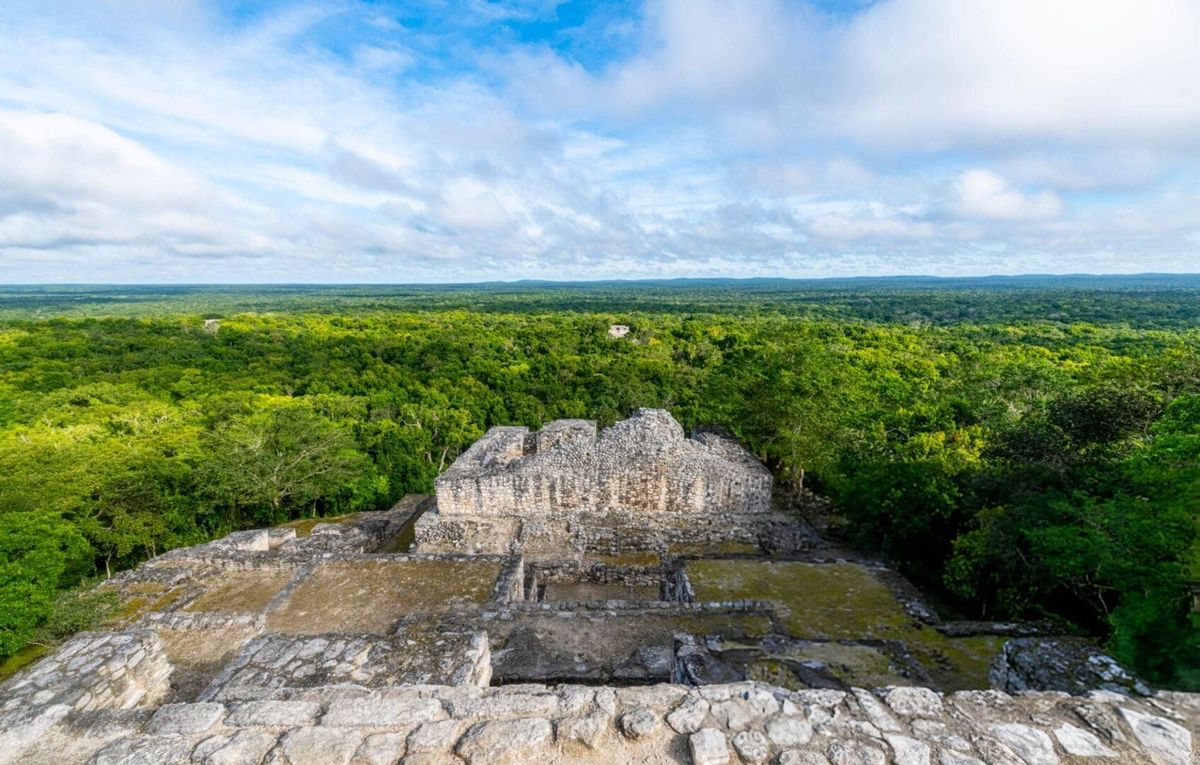
In the quiet hush of dawn, somewhere between the dense lowlands of Quintana Roo and the misty rainforests of Petén, howler monkeys announce another day in the second-largest tropical jungle of the Americas. But beneath that canopy of green, a silent crisis has been unfolding for decades, illegal logging, land invasions, climate stress, and a disappearing cultural legacy.
Now, a pact aims to fight back. And not just with policies, but with coordination.
In a rare show of regional unity, Mexico, Guatemala, and Belize have signed an agreement to protect more than 5.7 million hectares of the Gran Selva Maya, a move that could safeguard not only an irreplaceable ecosystem but also the deeply rooted cultures and communities that call it home.
“The forests were already protected in each country,” said Edwin Castellanos, Guatemala’s Vice Minister of Natural Resources and Climate Change, “but now, with a transnational corridor, we’re finally able to work together in a way that borders never allowed.” The initiative will link 11 reserves in Belize, 27 in Guatemala, and 12 in Mexico, stitching them into a living, breathing corridor of conservation.

A Lungs-of-the-Continent Kind of Story
The Gran Selva Maya, often overshadowed by the Amazon in global headlines, is no less critical. Spanning thousands of square kilometers across three nations, this forest filters carbon, regulates rainfall, and hosts some 7,000 species, including jaguars, toucans, and endangered amphibians. More than 200 species are at risk, not just from ecological threats, but from indifference.
One of the corridor’s goals? To curb carbon emissions sequestered within the jungle’s biomass. “Climate change doesn’t care about borders,” Castellanos noted. “Neither should we, if we want to fight it.”
But this agreement isn’t just about trees and wildlife. It’s about people, roughly two million of them. From indigenous Maya communities in Calakmul to small farming villages in Toledo District, these are the stewards of the land. And too often, they’ve been left out of the equation.

Fire, Chainsaws, and Hidden Airstrips
Let’s not romanticize it. These forests aren’t untouched Edens. They’ve been hunted, mined, burned, and, in many places, overrun by illegal activities, from logging to narcotrafficking.
“In Guatemala,” Castellanos admitted, “there are areas under illegal occupation. Some still host narco operations. It’s a huge territory, and we’re not naïve about the security challenges.”
Part of the new pact includes shared technology, data, and joint training on fire management and deforestation. The jungle has seen an uptick in forest fires, some sparked by slash-and-burn agriculture, others by criminal groups looking to clear land.
This cooperation might be the region’s best shot at finally regulating not just conservation, but law enforcement in a space that has long slipped through the cracks.

The Hidden Currency of Culture
Yet what may set this initiative apart from others is what Castellanos called its “biocultural” approach.
It’s not only about protecting archaeological ruins, though there are plenty, from buried Mayan cities in Campeche to jungle temples in Lamanai. It’s about preserving living cultures: indigenous knowledge, Afro-descendant heritage, and local identity that have evolved alongside this forest for millennia.
There’s something almost subversive in acknowledging that conservation must go beyond biology. That saving the forest means honoring its people.
“This isn’t just a nature story,” said one local guide in Tulum, who has seen tourism shift over the years from spiritual retreats to mass-market beach parties. “It’s about who we are, and who we’re going to be.”
The Train, the Tracks, and the Tension
No story in the Mexican southeast escapes the long shadow of the Tren Maya. And yes, it’s part of this one too.
As part of the agreement, Castellanos revealed that Guatemala and Belize have held preliminary meetings about extending the controversial rail project into their own territories, connecting cultural heritage sites and bringing sustainable tourism to communities often cut off from economic flows.
But here, optimism must wrestle with reality. The train, while promising development, has raised environmental alarms. Deforestation, displaced fauna, and habitat fragmentation are not hypothetical, they’re happening.
To their credit, officials insist the extension would follow a low-impact model. Yet for locals in places like Tulum and Playa del Carmen, where the train cuts through caves and cenotes, that promise might ring hollow.
Still, if done right, the cross-border rail could become a vein of connectivity, not exploitation. “We want to develop a regional economy that works for everyone,” Castellanos said.

What’s Really at Stake
This isn’t just a story about trees, policies, or even tourism. It’s about whether three countries can coordinate across geography, culture, and politics to protect a shared living legacy.
And the stakes are high. Lose the Gran Selva Maya, and we don’t just lose biodiversity, we lose memory, identity, and opportunity. For Tulum, for Quintana Roo, and for every child growing up with the jungle at their back door.
“This corridor might be our last chance to protect the Maya Forest for future generations,” someone said. It deserves to be a headline. It could be a lifeline.
The Tulum Times will continue following this unfolding story closely, as it cuts across conservation, tourism, and geopolitics in our own backyard.
We’d love to hear your thoughts. Join the conversation on The Tulum Times’ social media.
What do you think, can this forest without borders become a model for the rest of the world?