

This Tuesday, Mexico’s Tourism Commission will weigh a reform that might change that, not just for Tulum, but for every stretch of sand and protected natural space in the country. The draft initiative proposes one simple idea: every person in Mexico should have free access to beaches and protected areas at least one day per week, ideally on weekends when it matters most.
The reform, brought forward by Senator Ricardo Monreal Ávila and backed by Deputy Enrique Vázquez, aims to crack open a conversation many locals feel is long overdue. It would modify two cornerstone laws, the General Law of National Assets and the General Law of Ecological Equilibrium and Environmental Protection, to make good on a promise enshrined in the Constitution: that the nation’s natural treasures belong to its people.
A fight over sand and sovereignty
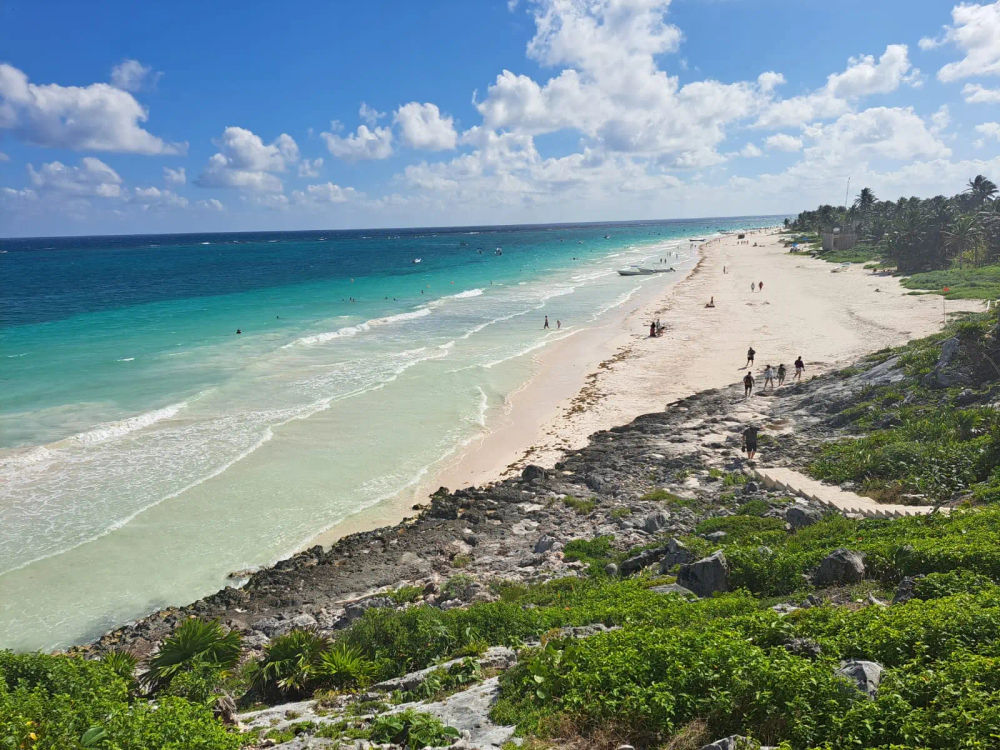
Tulum, Quintana Roo, often romanticized as the bohemian heart of the Riviera Maya, has become a flashpoint in the larger battle over public access to nature. In this town, where entry to some beaches now costs upwards of 58 pesos per person, many feel the gates are closing.
Tourist hotspots like Santa Fe, Pescadores, and Paraíso were placed under fee-based access in December 2024 by a group administered by the Secretariat of National Defense. That move sparked immediate backlash, not only from residents, but from Mayor Diego Castañón himself, who accused federal authorities of violating local agreements.
“We have to defend what is public,” said a Tulum vendor who’s worked Playa Paraíso for more than a decade. “They charge us to walk on land that should be ours.”
The digital barrier: conservation vs. exclusion
Much of the controversy stems from the growing use of mechanisms like the “Digital Conservation Passport” or the colored wristbands issued by CONANP, Mexico’s National Commission of Protected Natural Areas. Ostensibly designed to protect the environment, these tools have drawn criticism for functioning as backdoor privatizations.
The draft reform doesn’t call for the elimination of these programs altogether. Instead, it demands a compromise, that at least one day per week, all people can enjoy these spaces without cost or restriction.
Monreal’s proposal frames the issue not just as economic, but constitutional. Article 4 of the Mexican Constitution guarantees the right to a healthy environment. “When fees become the norm,” the proposal argues, “that right becomes negotiable.”
Tulum responds with action
While national legislators debate legal reform, Tulum’s local government is already making moves. Mayor Castañón has begun opening a new public access point to the coast. It will include basic services and be patrolled by Civil Protection. The site, expected to be ready within three weeks, is meant to restore free access for locals and tourists alike, a small but significant reclamation of public space.
These efforts have become emblematic of a broader tension: the legal status of beaches as public property versus the increasing trend of limited or paid access, especially in high-tourism areas like the Riviera Maya.
The Tulum Times has followed these developments closely, speaking to locals and tracking policy shifts. The response from the community has been vocal, even defiant. In one protest earlier this year, residents held signs reading “La playa no se vende”, the beach is not for sale.

Not all beaches, not all free
Still, the reform is far from absolute. Lawmakers recognize that not all protected natural areas are beaches, and some zones require restrictions to preserve biodiversity. The draft warns of jurisdictional complications and budgetary impacts. Maintaining public facilities comes at a cost, and the initiative calls for a shared responsibility between the federal, state, and municipal governments.
There’s also the question of enforcement. As anyone who’s walked past a private security guard at a “public” beach knows, what the law says and what happens on the ground can be oceans apart.
Yet momentum appears to be building. President Claudia Sheinbaum publicly supported the initiative during her August visit to Chetumal, declaring: “The beaches belong to the people, they belong to the public, and they cannot be privatized.”
That statement, while symbolic, carries weight. With her backing, the proposal is likely to pass through the Tourism Commission this Tuesday and be voted on by the full Chamber of Deputies the next day. Broad approval is expected.

A new legal tide?
If the reform is ratified, it could set a historic precedent. For the first time, the law would explicitly recognize that beach access cannot be limited by financial means or private control. This wouldn’t erase all fees, especially in ecological reserves requiring careful management, but it would carve out space, both literal and symbolic, for free public enjoyment.
The reform might not dismantle every barrier, but it marks a pivot. One that puts people back at the center of the coastline conversation.
As one activist in Tulum told The Tulum Times, “We don’t want to own the beach. We just want to walk on it without asking permission.”
What’s next?
The outcome of Tuesday’s vote could reshape the future of access in tourist regions across Mexico, from Cancún to Puerto Escondido. For places like Tulum, where tourism dollars and local rights often collide, the stakes couldn’t be higher.
We’d love to hear your thoughts. Join the conversation on The Tulum Times’ social media.
Should access to Mexico’s beaches be guaranteed by law, or should conservation concerns take priority?