

Mexico’s luxury tourism is shifting quickly, and the main keyword Mexico luxury tourism now sits at the center of a regional debate. A growing number of high-end travelers are choosing Mexico over the Caribbean, drawn by a mix of cultural depth, personalized service, and evolving infrastructure that appears to redefine what the sector might become in the coming years. The change is not sudden, but its acceleration has become hard to ignore. Who is driving it, what is changing, and why travelers are turning their attention to Tulum, the Riviera Maya, and other corners of Quintana Roo reveals a broader transformation in global travel behavior.
Culture steps forward as the new currency of exclusivity
What sets Mexico apart is not a new hotel or a new marketing strategy but a form of cultural authenticity that appears increasingly rare in mature resort destinations. For decades, many Caribbean islands relied on large-scale, standardized resorts that offered comfort but often limited exposure to local identity. Mexico, by contrast, has placed culture at the center of the luxury experience. Travelers who arrive in Tulum or across the Riviera Maya encounter Maya heritage woven into architecture, food, ceremonies, and daily interactions.
A couple from Toronto recently shared a micro-story that captures the trend. They expected beaches and amenities, but what stayed with them was a private evening inside a cenote, guided by a local expert who explained the site’s cultural significance. That sense of connection could be the differentiator that keeps pulling global travelers toward Mexico.
“Luxury now feels less about price and more about meaning,” a visitor said, in a quote that has since circulated on social media.
But meaning is not abstract in this context. It comes through food traditions carried by local chefs, archaeological access that feels intimate rather than crowded, and natural formations such as cenotes that do not exist in the Caribbean. The Tulum Times has observed that these elements now serve as the unofficial language of premium travel in the region.
Villas redefine how high-end travelers want to stay
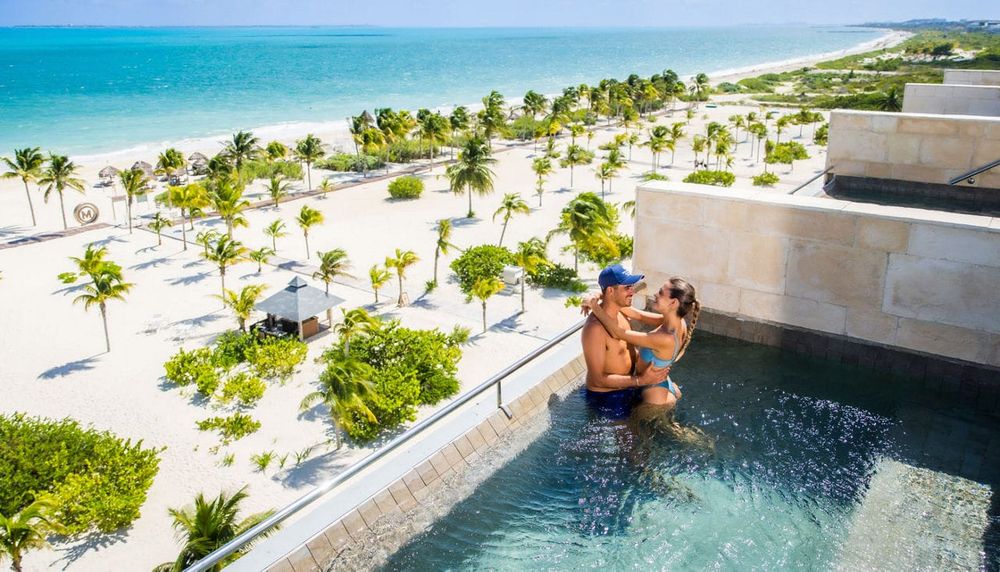
A shift is also taking place in how visitors choose to stay. For years, the Caribbean relied heavily on large resorts offering predefined packages. Mexico, on the other hand, has seen the rise of private villas as a preferred choice for those seeking exclusivity.
This model changes the relationship between the guest and the destination. Companies such as Private Villas Mexico have helped lead that evolution, offering beachfront homes with full privacy, dedicated concierge service, and tailored experiences ranging from in-villa spa programs to curated culinary events. Their team notes that personalized stays could double guest satisfaction because travelers shape the experience rather than receive a uniform product.
One villa manager explained that guests often request dinners prepared with regional ingredients sourced that same afternoon. It is a level of customization that rarely fits into the structure of mass resorts. Short paragraphs like this reflect the rhythm of an evolving market.
Mexico’s approach appears to give travelers control over their own narrative. Instead of blending into a large property, they inhabit a temporary home that highlights flavor, culture, and place.

Economic and logistical advantages reshape decision-making
Affordability is not the first word people associate with luxury, yet value plays a significant role in destination choice. Mexico’s proximity to major North American markets reduces travel time and cost, making weekend escapes more feasible for high-income travelers in cities like Los Angeles, Miami, Chicago, and Dallas. When paired with a favorable exchange rate, high-end services become comparatively more accessible without losing quality.
The recently opened Tulum International Airport adds another layer to the equation. It provides direct access to Quintana Roo’s luxury corridors, minimizing transfers and allowing visitors to reach villas or boutique resorts within minutes. Infrastructure improvements of this scale could change long-term travel patterns as private aviation companies and commercial airlines increase their Tulum-bound operations.
Mexican tourism officials argue that improved connectivity might strengthen the country’s position in the luxury market over the next decade. Whether that materializes remains to be seen, but early data from local operators suggests a rise in demand since the airport began operations.

Sustainability becomes a decisive factor in traveler choice
Another dimension influencing visitor behavior is sustainability. Many Caribbean destinations face environmental pressures that complicate development planning. Mexico, however, has invested in conservation and low-impact architecture that appeals to travelers conscious of their ecological footprint.
Across the Riviera Maya, marine conservation programs, community-led reef restoration, and eco-sensitive villa designs are becoming part of the luxury offering. In Tulum, architects frequently incorporate natural ventilation, locally sourced materials, and renewable energy systems. These efforts might not solve every environmental challenge, but they resonate with travelers who prioritize responsible tourism.
One subtle reflection emerges here. Sustainability, once seen as an optional feature, now appears to function as an indicator of long-term destination credibility. High-end travelers tend to project value forward, and regions perceived as environmentally responsible gain an edge.
How Mexico’s cultural depth reshapes luxury expectations
When comparing Mexico to the Caribbean, the conversation goes beyond beaches. It extends to the textures of experience. Guests do not simply consume a destination; they participate in it. That active engagement might explain why luxury travelers increasingly describe Mexico as a place with emotional weight.
Chefs transform traditional ingredients into modern interpretations without losing their roots. Guides frame archaeological visits as personal history lessons rather than tours. Artisans invite travelers into their workshops to observe techniques that have endured for generations. These encounters create a sense of place that mass tourism models often dilute.
And this is where Mexico could be redefining the concept of exclusivity. Luxury no longer depends solely on isolation or opulence. It now includes access to heritage, people, and stories that exist only in specific communities.

What the rise of Mexico luxury tourism means for the region
The competition between Mexico and the Caribbean is not a zero-sum contest. Both regions will continue to attract travelers, but they may do so for different reasons. Yet the momentum suggests that Mexico, especially in areas such as Tulum and the Riviera Maya, has tapped into evolving traveler psychology. Personalized service, cultural resonance, and sustainability appear to align with global expectations for premium travel.
What remains uncertain is how the industry will scale these offerings without losing the very qualities that make them appealing. Growth could bring pressure, and maintaining authenticity in the face of increased demand might be Mexico’s next challenge.
Still, the current shift signals a broader redefinition of travel values. The closing question is not only whether Mexico can sustain this trajectory, but how travelers themselves might continue shaping the future of luxury tourism.
Mexican luxury tourism is now part of a global conversation about meaning, identity, and responsibility in travel. We’d love to hear your thoughts. Join the conversation on The Tulum Times’ social media.
How do you think cultural authenticity will influence future luxury destinations?