
On August 12, the U.S. Department of State updated its travel advisory for Quintana Roo, raising the region to Tier 2. The message arrived with the subtle thud of bureaucratic caution, yet it echoed through hotel lobbies, municipal offices, and digital threads stretching across Mexico’s Caribbean coast. The core advice was simple: exercise increased caution. The reasons? Crime, certainly. But now, surprisingly, terrorism.
That word, usually reserved for conflict zones and intelligence briefings, now finds itself nestled among palm trees and poolside margaritas. For the first time, “terrorism” appears in the U.S. travel guidance for this part of Mexico. It stands beside more familiar alerts: organized crime, the limits of consular aid, and the perennial specter of kidnapping.
Yet this isn’t a red flag. Nor is it a flaming orange one. Tier 2 status is also held by countries such as France and the United Kingdom. Still, in a place where tourism is the beating heart of the economy, perception can bruise deeper than reality.

Local Leaders Push Back Against Panic
Ana Paty Peralta, mayor of Benito Juárez, the municipality that includes Cancún, responded swiftly. In a calm but resolute voice, she spoke directly to both locals and tourists, urging everyone not to mistake the advisory for a condemnation of Mexico, but rather to view it as a prompt for thoughtful vigilance.
“It’s a warning, not a conviction,” Peralta said, framed by palm trees and a forest of microphones. “Other nations with robust security systems are in the same category. Cancún remains safe. Incidents involving tourists are less than 1 percent.”
Her message was more than rhetoric. It was part of a broader, coordinated effort with Governor Mara Lezama and state security forces. Their aim is clear: intensify patrols, secure tourist areas, and keep organized crime on the margins, all without letting fear define the region’s identity.
And what an identity it is. Tourism in Quintana Roo isn’t a mere industry; it’s the lifeblood. It sustains the waiter feeding a family of five, the dive instructor chasing a better life, the taxi driver who remembers when the Hotel Zone was just dunes and ocean. To undermine tourism is to strike at the soul of the region.

What the Advisory Actually Says
The advisory doesn’t urge Americans to cancel their trips. It doesn’t shout “Danger.” It whispers, “Be careful.” Quintana Roo is now grouped with other major global destinations facing their own internal challenges. The message advises travelers to stay alert, particularly in crowded areas or during large events.
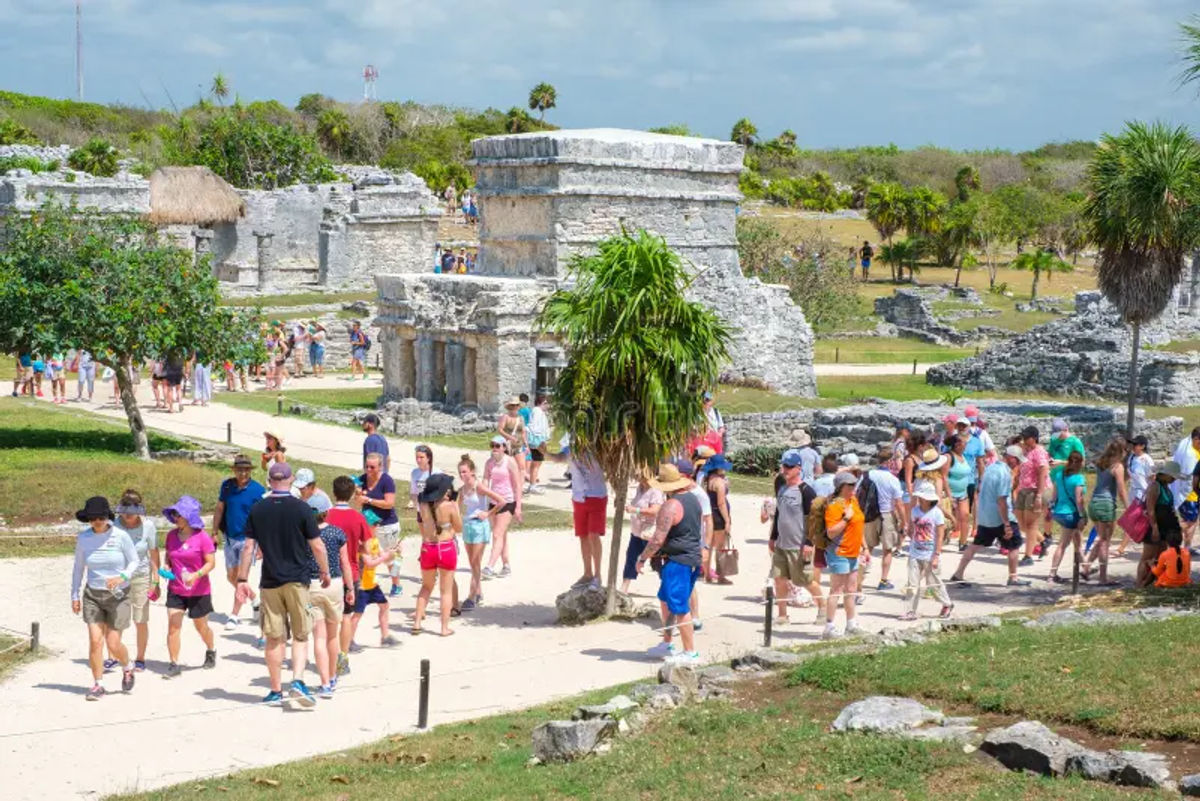
Names like Cancún, Tulum, Playa del Carmen, and Cozumel are all included. They’re favorites among Americans, Canadians, and Europeans. And they’re still drawing tourists in droves. According to the latest data, foot traffic and flight arrivals remain strong, despite the shadow cast by the advisory.
The most eyebrow-raising addition is the mention of terrorism. No specific threats or incidents are cited. Instead, it feels like a preemptive clause, a legal footnote inserted into a sun-drenched narrative. It’s a bit like placing a “Slippery When Wet” sign on a dry, well-swept floor. Safe? Yes. Necessary? Debatable. But it changes how people move.

Common-Sense Precautions Still Reign
Federal and local authorities continue to repeat the same well-worn mantras: stick to lit, populated areas after dark. Use registered taxis. Avoid drugs and any nightlife situations that could spiral.
To longtime residents, these are old rules. For cautious tourists, they’re traveling common sense. Yet when those tips are wrapped around a new term like “terrorism,” they can suddenly feel much heavier.
The sting of this advisory lies not just in its content, but in its timing. Quintana Roo has poured resources into improving safety: boosting surveillance, increasing interagency cooperation, and deploying AI-enhanced monitoring systems. Police presence has expanded in Tulum’s beach zones. Cancún’s hotel areas are more closely watched than ever. The results? A sustained drop in violent crime across tourist hubs.
This is not a region asleep at the wheel. It’s a place actively trying to steer itself toward safety, even as external perceptions swerve unpredictably.

Tourism Numbers Tell a Different Story
If the goal of the advisory was to cool off travel enthusiasm, it hasn’t worked. Airports in Cancún and Cozumel remain bustling. Hotel bookings show no major dips. International visitors, especially from the U.S. and Europe, continue to land with sandals and suitcases in tow.
The Riviera Maya’s pull is stubbornly strong. For some, it’s the lure of crystal waters and coral reefs. For others, the mystique of jungle-wrapped cenotes or early morning yoga on the sand. And for many, it’s simply a second home, familiar, welcoming, and statistically, still very safe.
Risk, after all, is relative. And if bookings are any indication, most travelers are assessing the advisory and choosing to visit anyway.
Between Perception and Reality
Travel advisories are imperfect tools. They function as public warnings, legal buffers, and sometimes, political gestures. But they carry weight. A single word, terrorism, can echo through planning conversations, change a family’s decision, or reroute a corporate retreat.
Still, Quintana Roo is not in crisis. It is navigating a complex, evolving security landscape, much like the rest of the world. The issues are real, but so are the responses.
This moment is not about danger alone. It’s about narrative. Who shapes it. Who resists it. Who lives under its influence.
The Tulum Times will continue to report on these developments with depth, context, and clarity. Because when the stories are this important, silence is not an option.