
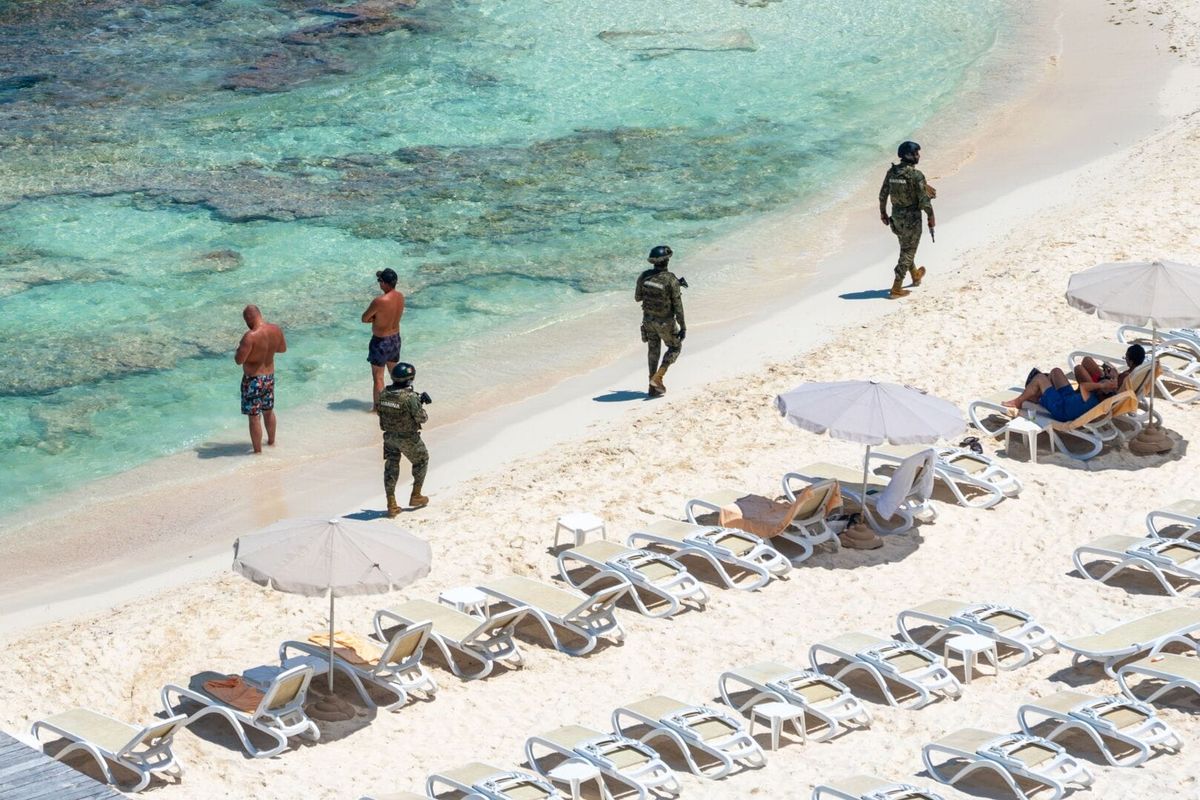
That is the unsettling question echoing through Quintana Roo after the United States Department of State updated its travel advisory for Mexico. The advisory cited crime and even terrorism as reasons for American citizens to reconsider, or outright avoid, visiting much of the country. Quintana Roo, the sun-kissed jewel of international tourism, did not escape the scrutiny.
And now, lawmakers in Mexico are scrambling to respond.
A Wake-Up Call from Washington
Senator Anahí González, representing Quintana Roo in Mexico’s upper house, didn’t sugarcoat the issue. She called the U.S. travel warning “something we have to work on.” As the legislative session resumes on September 1, González confirmed that the alert will be addressed promptly by the relevant congressional commission.
“We’ll put it on the table,” she stated, emphasizing the urgent need to evaluate whether this latest advisory could dent tourist arrivals and, consequently, the state’s economy.
The concern is more than rhetorical. In Quintana Roo, tourism is not just an industry; it is the lifeblood. From the powdery beaches of Tulum to the neon-lit nights of Cancún, visitors bring in billions. Any disruption to that flow can feel like an earthquake beneath the surface.
Inside the U.S. Advisory: A Map of Caution
The latest travel advisory by the U.S. Department of State places nearly all of Mexico under varying levels of risk. Six states, Colima, Guerrero, Michoacán, Sinaloa, Tamaulipas, and Zacatecas, have received the starkest warning: do not travel. These regions, according to the advisory, suffer from soaring rates of violence, including kidnappings and homicides.
In the next tier, Americans are advised to “reconsider travel” to states such as Baja California, Guanajuato, Jalisco, and Sonora. Chiapas, once seen as lower risk, now also finds itself in this category, raising eyebrows across diplomatic and tourism sectors.
Quintana Roo, for its part, falls into the “exercise increased caution” category. It is not considered off-limits, but travelers are now being urged to tread carefully. The cited reasons include crimes like robbery, extortion, and, in certain areas, cartel activity. Though vague, the warning casts a long shadow over the Riviera Maya’s idyllic image.
What makes this year’s advisory particularly unnerving is the inclusion of a word rarely seen in such contexts: terrorism. Even if loosely applied, that term carries weight, especially when it comes from a U.S. government document. It sends a cold breeze through the vacation dreams of potential tourists.
Tulum, Cancún, and Playa del Carmen in the Crosshairs
Businesses in tourist hotspots like Tulum, Cancún, and Playa del Carmen are reacting with alarm. Hoteliers, tour operators, and local entrepreneurs, many still reeling from the financial blow dealt by the COVID-19 pandemic, fear a cascade effect. Bookings could decline. Investment may falter. And the long-cultivated image of the Riviera Maya as a safe and carefree haven could suffer lasting damage.
The advisory, crucially, fails to distinguish between isolated events and widespread threats. In a state where tourist areas typically operate under robust security measures, the lack of nuance in the warning is glaring. And when it comes to perception, nuance rarely stands a chance.
“We hope it doesn’t affect Quintana Roo’s numbers,” said Senator González. But hope, unfortunately, isn’t a tourism strategy.
Is Legislative Action on the Horizon?
While no specific policy responses have been disclosed, Senator González confirmed that legislative follow-up is expected. “We’ll evaluate preventive measures,” she said, though details remain scarce.
Potential next steps could include enhanced coordination with law enforcement to bolster security in tourism corridors. Another likely route is direct engagement with U.S. consular officials, aimed at providing updated safety data from the region’s most visited zones. A media campaign highlighting the high-security standards of places like Cancún, complete with international-level airport safety and a visible police presence, is also on the table.
But a more complex question looms. Can Mexico, and particularly states like Quintana Roo, chart their own economic destiny while still beholden to the pen of Washington bureaucrats?
The Bigger Picture: Safety, Sovereignty, and Perception
This is not the first time the U.S. government has rattled Mexico’s tourism sector with a travel advisory. It likely won’t be the last. But something about this one feels different. The tone is more somber. The scope, far-reaching. Thirty of Mexico’s 32 federal entities are named in the advisory.
Critics argue that it paints with an excessively broad brush. A single violent incident in a remote area becomes a data point. A cautionary label. A potential death sentence for small businesses dependent on foreign foot traffic.
And yet, no one, least of all Mexican officials, is denying that crime exists. The real debate lies in how that risk is framed. How do you recognize the existence of danger without amplifying it into panic or stoking the flames of economic ruin?
In that sense, the U.S. travel alert serves less as a directive and more as a mirror. A harsh reflection of the country’s internal security struggles, and the heavy price of letting such perceptions harden.
Whether this sparks meaningful reform or devolves into political theater remains uncertain. But one thing is clear: the message, though blurred by diplomacy and media spin, has landed.
Tourism in Quintana Roo is not dead. But it is holding its breath.
And The Tulum Times will be here, chronicling every inhale.