
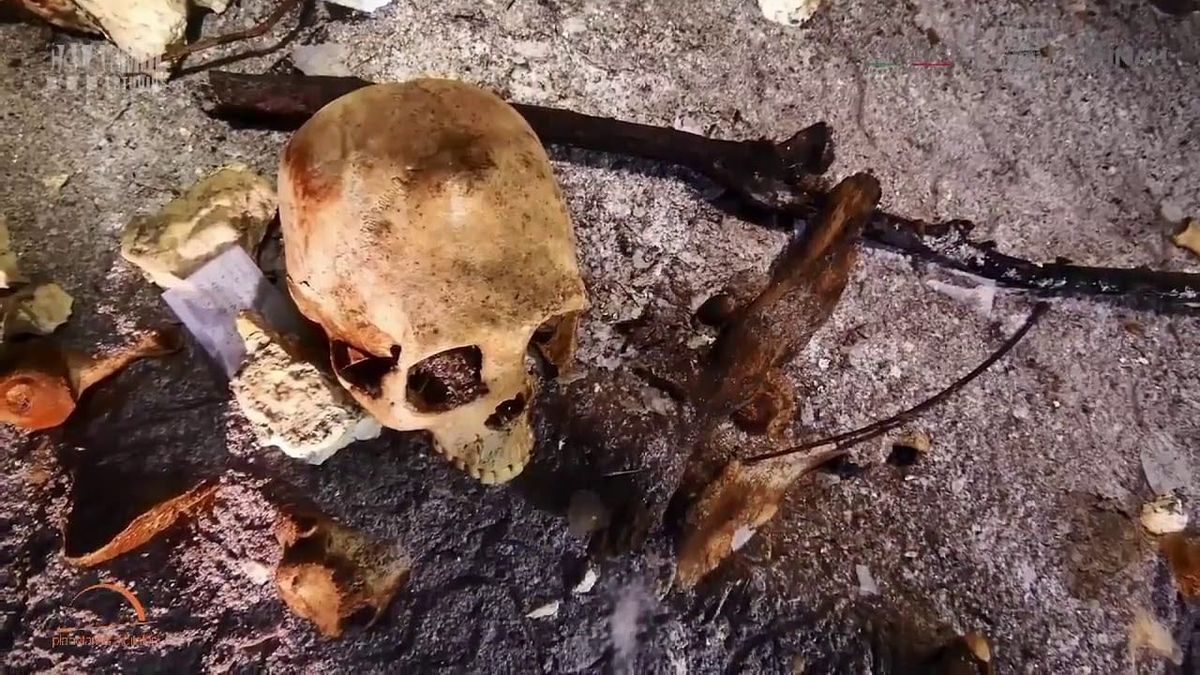
Eight meters beneath the surface, surrounded by the silence of a submerged labyrinth, the latest piece of North American prehistory rested on a sediment dune. Located 200 meters from the cavern’s entrance in a narrow passage, its deliberate placement suggests it was part of a funerary ritual performed by a community that walked these lands before the ice melted.
This newly discovered prehistoric skeleton, recovered in late 2025, belonged to someone who inhabited the Mexican Caribbean coast at least 8,000 years ago, back when the intricate system of caves and cenotes was still dry. Today, these subterranean networks between Tulum and Playa del Carmen safeguard the secrets of the continent’s earliest inhabitants.
The ancient fossil joins ten others found in the same area over the past three decades, some dating back more than 13,000 years. Currently, access to these sites is strictly limited to expert divers equipped with specialized technology.

A Window into Early American Migration
The skeleton is currently undergoing exhaustive scientific analysis. Octavio del Río, an underwater archaeologist collaborating with the National Institute of Anthropology and History (INAH), explained to The Associated Press that the depth of the discovery confirms its age, as the body could only have been placed there before the end of the last glaciation.
The recovery of this eleventh fossil has reignited scientific imagination. According to del Río, despite three decades of research, such discoveries still make specialists’ hearts race. “You can scream underwater, too. Bubbles came out everywhere,” he recalled with a smile, referring to his first major discovery in 2002.
Through these remains, researchers are attempting to reconstruct the prehistoric context of the Yucatan Peninsula. Luis Alberto Martos, director of archaeological studies at INAH, notes that these discoveries are crucial for understanding how nomadic groups survived and interacted with their environment during an era when Quintana Roo was a dry plain bordered by cliffs.
Over the years, the cenote beds have also revealed the remains of Pleistocene fauna, including bears, pumas, giant sloths, and saber-toothed cats. DNA analysis from previously discovered human remains reinforces the theory of migration from Asia across the Bering Strait, though the hypothesis of an alternative South American route remains under consideration.

Toward the Protection of the Karst Subsurface
The discovery underscores the fragility of Quintana Roo’s subterranean ecosystem, which is seriously threatened by unplanned urban development. The underground river systems have suffered considerable deterioration in recent years, exacerbated by megaprojects like the Maya Train during the administration of former President Andrés Manuel López Obrador, environmental impacts that the current federal administration is now attempting to mitigate.
Given this situation, Mexican authorities are showing a renewed willingness to protect the region. The Secretariat of Environment and Natural Resources (SEMARNAT) confirmed in a statement that it aims to declare the entire expanse of cenotes and cavern networks on the peninsula a protected natural area in 2026.
For local environmental movements and scientists, this designation is a race against time. Factors such as rapid urbanization, the deforestation of the Maya jungle, and rising temperatures in the groundwater continue to alter the fragile balance of this limestone shelf.
Beyond its biological value, INAH is advancing parallel arguments for the cenotes to receive protection as cultural heritage. Experts like Martos believe these formations are not merely geological windows into the Ice Age but also historical time capsules preserving everything from pre-Hispanic Maya offerings to nineteenth-century military artifacts. Meanwhile, in the deep aquatic gloom, more fossils wait to be rescued.