
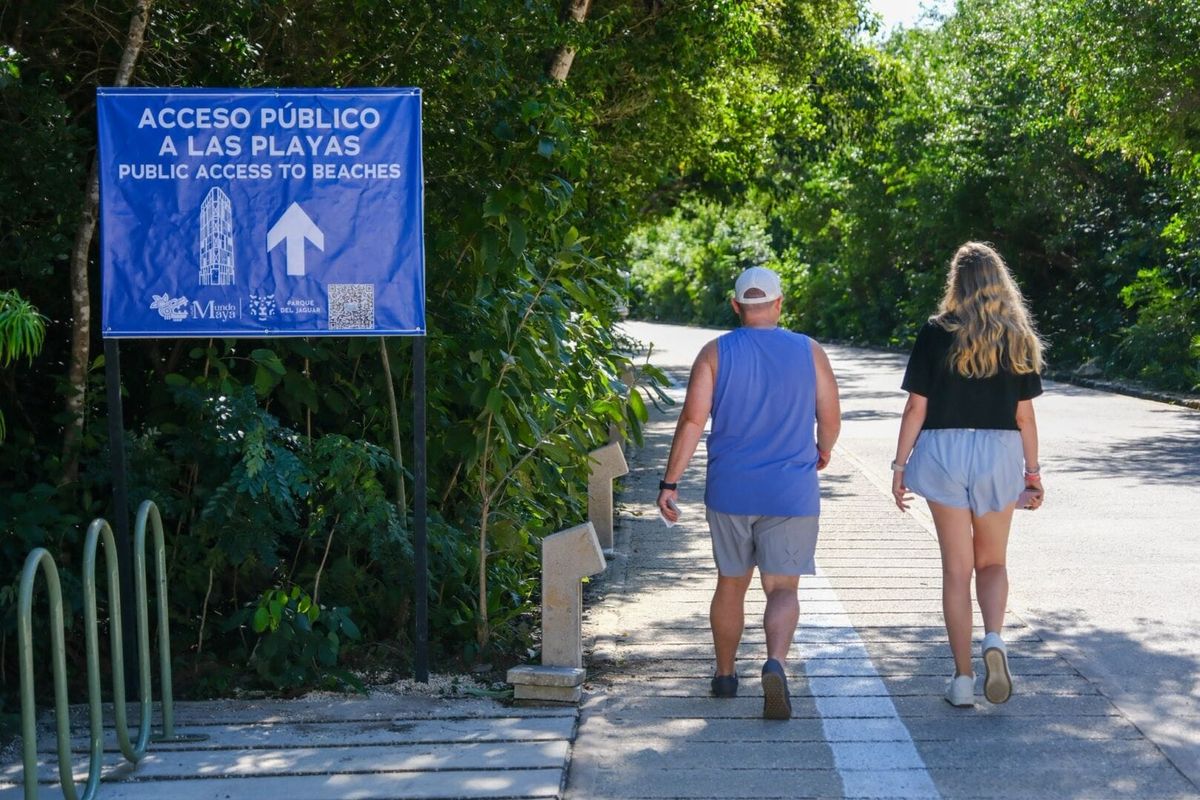
The announcement of new accesos libres a las playas de Tulum came with a clear message from officials in Quintana Roo. Residents, visitors, and artisans will now have two guaranteed corridors to reach the shoreline inside the Parque del Jaguar every day of the year. The measure, delivered by Governor Mara Lezama and federal Tourism Secretary Josefina Rodríguez, marked a turning point in a debate that has shaped public sentiment in Tulum for years.
Their visit highlighted what many locals had been asking for. A practical way to reach the sea without obstacles, fees, or uncertainty. And a policy shift that links Tulum’s rapid growth with the rights of people who live and work in the Riviera Maya.
A public promise shaped by community pressure
The announcement took place at the traditional access point that artisans and long-time residents consider crucial to their daily routines. Crowds listened as Secretary Rodríguez said that foreign and national tourists, as well as people who live in Quintana Roo, would be able to enter two public corridors year-round. Her statement echoed a broader national policy that aims to expand public access to natural spaces.
Governor Lezama added that the main pathway, the one most requested by tulumnenses, would remain free. She stressed that reaching the beach is a right, not a privilege. That distinction drew attention because access to the shoreline has been a recurring source of tension as Tulum becomes one of the fastest-growing destinations in Mexico.

The message resonated with locals who had watched access points shift or narrow as tourism projects expanded. One vendor said that the ability to reach the sea without complication gives people “a sense of fairness” in a place shaped by competing economic interests. It is a sentence likely to surface in social media debates over the future of public space in the Riviera Maya.
Access options and a new visitor flow
Officials outlined a two-track system. Anyone heading directly to the beach can proceed at no cost through the traditional corridor. Those who want to enter the Parque del Jaguar can choose to buy a ticket, which grants access to attractions inside the protected area.
Adolfo Héctor Tonatiuh Velasco Bernal, director of Grupo Mundo Maya, explained that the park includes a museum, a viewing tower, and a four-kilometer network of trails that can be used on foot, by bicycle, or for running. He also encouraged visitors to enjoy the free beach corridors. The combined model aims to balance conservation goals with economic activity, a frequent challenge in tourism centers across Mexico.
During the visit, the governor, the tourism secretary, municipal president Diego Castañón, and federal officials toured Playa Santa Fe, Playa Pescadores, Playa Maya, and Playa del Mangle. These sites represent the public-facing side of one of Tulum’s most recognizable coastal areas.

How improved signals and safety aim to guide visitors
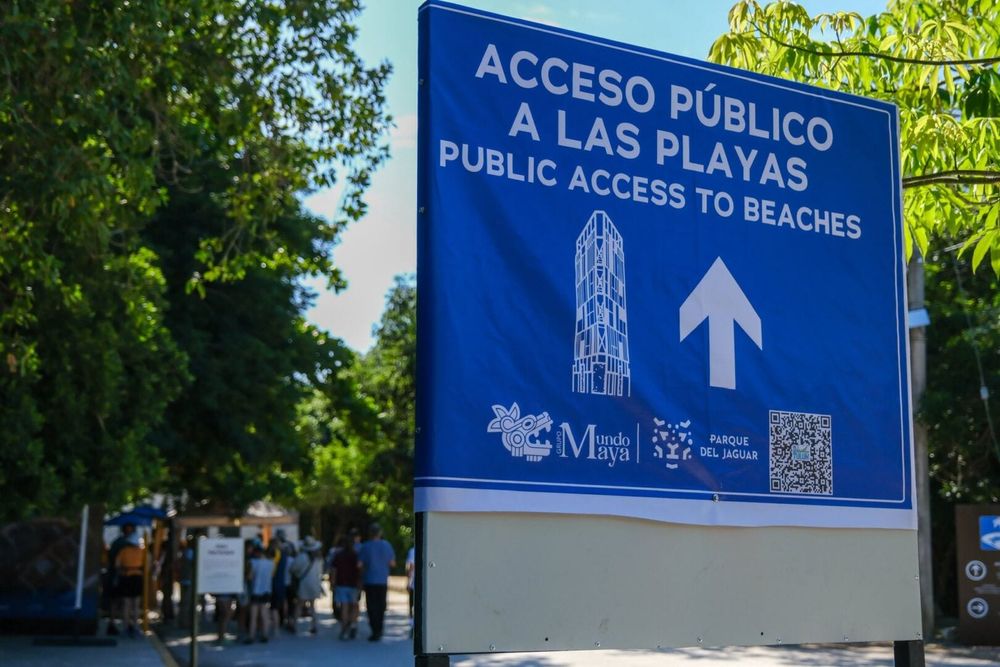
Authorities highlighted upgrades to the traditional access route. The path is now clearer, cleaner, and easier to navigate. The corridor has updated signs from the highway to the shore, along with regular maintenance, surveillance points, and posted guidelines to help visitors understand how to protect the environment.

This approach reflects long-running debates in Quintana Roo about how to manage dense visitor flows without degrading coastal ecosystems. Officials said they expect the measures to help both tourists and residents identify the correct corridors and avoid areas undergoing conservation work.
New signage will show messages such as “public beach access, completely free.” According to Governor Lezama, twenty signs will be placed across the area, including several along Federal Highway 307 and others designed as totems near entry points. The clarity is meant to prevent confusion that had often led people to unintended detours or private paths.
Why public beach access has become a defining policy issue
Beach access disputes in Tulum reflect broader questions about who benefits from tourism growth. As new hotels and infrastructure rise near the shoreline, residents often worry that informal paths or long-used routes will be absorbed by private development. This concern has been raised not only by locals but also by environmental groups, tour operators, and researchers connected to Mexico’s coastal studies programs.
The debate has gained traction as Tulum prepares for rising visitor numbers through the Aeropuerto Internacional de Tulum and the expansion of the Tren Maya. Officials argue that clear and equitable access is needed so that long-term residents do not feel displaced.
The Tulum Times has reported on similar cases in the Riviera Maya where public corridors became contested during periods of construction. This newest measure appears to signal an attempt by local and federal authorities to stabilize the issue before the next high season.
A closer look at the park’s regulatory framework
Federal officials stressed that entering the park requires compliance with environmental rules. Although the beach corridors are free, the larger protected area operates through a conservation framework that limits certain activities. The goal is to preserve dunes, vegetation, and wildlife that form part of Quintana Roo’s coastal system.

Grupo Mundo Maya and the National Institute of Anthropology and History (INAH) continue to coordinate on archaeological and ecological protection. Omar Vázquez Herrera, director of INAH, and representatives from the National Commission of Natural Protected Areas joined the tour to underline this point. According to officials, clear rules will help reduce conflicts, especially during peak tourism periods when misuse of coastal zones is more common.
Why officials believe open access could support local economies
Governor Lezama said that strengthening public corridors may reduce instability for artisans and small vendors who depend on foot traffic. It could also help diversify visitor flows so that income does not concentrate only in upscale hotel zones. The approach aligns with national policy that seeks to widen the social benefits of tourism.
Municipal president Diego Castañón mentioned two additional beaches, Playa Conchita and Playa El Pueblo, which remain available for families. These sites often attract residents who prefer quieter areas, and their inclusion signals an effort to promote alternatives across the municipality.

At the end of the tour, Secretary Rodríguez encouraged tourists to visit Tulum, pointing to recent infrastructure improvements. Her remarks highlighted a trend seen across Mexico. Tourism officials often argue that investment in transportation, protected areas, and public amenities can support both environmental goals and economic stability. But achieving that balance is rarely simple, and Tulum will face ongoing scrutiny over how these new beach corridors function once visitor numbers rise.
How public access might reshape visitor experience
The introduction of new corridors could shift the flow of people toward less congested areas of the shoreline. It might also reduce friction between visitors and security personnel who previously had to redirect tourists unsure of where they could enter. Clearer paths could ease movement to the archaeological zone, especially for those aiming to combine a beach visit with a trip to the ruins.
For long-time residents, the measure marks recognition of a concern raised for years. Many remember when the coastline felt easier to reach and believe this decision acknowledges the importance of local traditions tied to the sea. One elderly artisan told an official, quietly, that open access “lets people feel at home near the water again.” It was a small moment during a structured tour, yet it captured the emotional weight of a policy that might reshape public life in Tulum.
What is at stake as the region grows
As the Riviera Maya expands, access policies could become a defining test of how local governments manage tourism, conservation, and community expectations. The two corridors introduced inside the Parque del Jaguar represent a first step in what could become a broader model for balancing public rights with environmental protection in Mexico’s coastal towns.

The future will depend on enforcement, maintenance, and the response from both residents and visitors. For now, the authorities are betting that clarity, signage, and free access can reduce conflict and support a more orderly visitor experience.
In a place where every meter of coastline carries economic and cultural weight, these accesos libres a las playas de Tulum may determine how Tulum navigates the next stage of its transformation. We’d love to hear your thoughts. Join the conversation on The Tulum Times’ social media.
Do you think free beach corridors can remain sustainable as tourism expands?