

The idea for Divorciados, now playing in cinemas across Mexico, began with a moment that could have easily gone unnoticed. Director Noah Pritzker was at a bachelor party in Tulum when he faced a small but strange dilemma. His father wanted to attend, even though he was not invited. The request was unusual, almost comical, yet it stayed with him. What would have happened if his father had insisted, or worse, shown up? That question became the seed of a film that has traveled from the Riviera Maya to audiences far beyond Mexico.
The comedy appears light on the surface, but its foundation is rooted in the delicate, sometimes messy ties that hold families together. And Pritzker insists this story, although sparked by a personal moment, is not autobiographical. It simply asked a question he could not let go.
How an awkward moment in Tulum grew into a screenplay
Pritzker started shaping the screenplay shortly after releasing his debut film, Quitters. What began as a humorous thought experiment developed into a story about divorce, identity, and the stunning unpredictability of adult relationships. The director said that the imagined scenario in Tulum kept growing in complexity. It turned into something more than a joke. It became a lens through which he examined how parents and children try to understand one another.
The film first appeared at the Morelia International Film Festival two years ago. Its commercial release was delayed by pandemic disruptions, a setback shared by many independent productions. It finally reached U.S. theaters earlier this year before arriving in Mexico, where Tulum’s presence on screen might resonate strongly with viewers familiar with the region’s evolving cultural identity.
One sentence in the film captures its emotional aim: “Sometimes we learn who we are by watching the people we came from.”
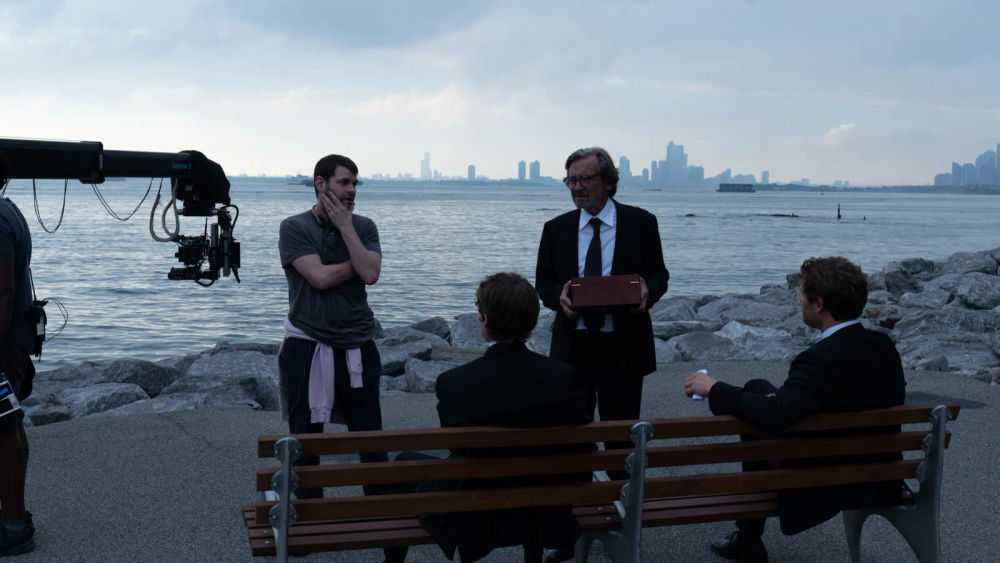
A cast shaped by experience, identity, and generational tension
Pritzker assembled a cast that could navigate both comedy and emotional weight. Veteran actor Griffin Dunne plays the father, a man confronting the end of his marriage while trying to remain present in the lives of his adult sons. James Norton and Miles Heizer portray the eldest and youngest sons. The story follows them through a period when marriages begin, marriages end, and family roles shift in unexpected directions.
The film opens with Dunne’s character finalizing a divorce. At the same time, the oldest son prepares for his wedding, and the youngest son, played by Heizer, faces his own coming-of-age moment as a gay man navigating family conversations that often remain unspoken in cinema.
Dunne said one of the reasons he accepted the role was the way the script depicted fatherhood. He noticed moments on the page that he had rarely encountered in film, especially a scene in which the father earnestly tries to understand his gay son without judgment or discomfort. “He approaches him as he would any son,” Dunne explained. “There is no performance of acceptance. It is simply there.”
That intention aligns with Heizer’s personal story. The actor has spoken publicly about the challenges he faced when coming out to his own family. Seeing a version of that experience reflected on screen, he said, felt unexpectedly therapeutic. Many LGBTQ+ stories portray tension, rejection, or confrontation. Divorciados instead leans into curiosity, humor, and the desire for connection. In a world where many queer individuals face isolation, Heizer said the portrayal “felt like something I wish more people could see.”
Why Tulum remains more than a backdrop
The film was shot in Tulum, a decision that Pritzker said emerged naturally from the story’s origin. The Riviera Maya setting becomes a character of its own. The location highlights the contrast between a place associated with celebration and escape and the quiet turmoil that the characters experience. Tulum’s beaches appear in scenes of awkward reunions, hopeful reconciliations, and moments when silence reveals more than any argument.
For a region often portrayed through tourism marketing, Divorciados presents Tulum with a different tone. There is humor, but there is also fatigue, relief, and introspection. A bachelor party becomes a metaphor for the threshold between youth and adulthood. The film allows the viewer to see how places shape conversations, even when the characters are too distracted to notice.
The Tulum Times previously reported on the rising number of films choosing Quintana Roo as a location, a trend driven by its cinematic landscapes and growing creative community. Pritzker’s work appears to contribute to that trend, though he approaches it with humility. He simply wanted the story to return to where it began.

When a local story becomes unexpectedly universal
Despite its distinctly American characters, the film has found receptive audiences around the world. Festivals such as San Sebastián and Morelia revealed a surprising pattern. Viewers recognized their own families in the story. Parents saw themselves in the father’s uncertainty. Young adults related to the sons’ attempts to define themselves. And filmgoers across cultures responded to the film’s central question: How do we remain connected when life pulls us in different directions?
Pritzker said this global reaction caught the team off guard. They had expected a modest response. Instead, they found that themes of divorce, adult children, and shifting identities resonated widely. The setting in Mexico added texture to the narrative, but the emotional core appears universal.
One might argue that the film succeeds because it avoids tidy resolutions. Families rarely work that way, and Divorciados refuses to pretend otherwise. The humor comes from recognition. The pain comes from truth. The pleasure comes from watching characters try, fail, and try again.
What the film suggests about parenthood and adulthood today
At its heart, Divorciados examines how adulthood continues long after one becomes an adult. Dunne’s character relearns who he is after a major life change. Norton’s character questions what marriage should represent. Heizer’s character navigates honesty, identity, and the hope for acceptance. Each one enters a different emotional season, yet their arcs overlap in ways that make the film cohesive.
A micro-story in the film illustrates this overlap. During a tense conversation, the father attempts to offer advice to his youngest son. The advice is awkward, imprecise, and slightly outdated. But the intention is clear. He wants to help, even if he does not know how. The moment is uncomfortable, yet it hints at a broader truth: families communicate imperfectly, and sometimes imperfection is enough.
As Pritzker observed, the comedy becomes a bridge. Laughter softens difficult subjects. And the film challenges audiences to consider their own relationships. How much do we really understand about the people closest to us? How much remains unspoken until life forces the conversation?
A delayed release meets a shifting film landscape
The pandemic delayed many independent films, and Divorciados was no exception. Those delays might have influenced how the film is being received today. Audiences appear more drawn to personal stories, especially ones that reveal family dynamics with subtlety rather than spectacle. In Mexico and the United States, smaller films increasingly rely on word-of-mouth rather than large marketing campaigns. Pritzker’s work could benefit from this moment, when viewers are looking for stories that reflect everyday contradictions.
In Quintana Roo, local cinemas continue to diversify their programming. Smaller productions, especially those featuring the region, have gained traction among both residents and tourists. Divorciados enters this environment with a story that connects Tulum to broader questions about identity and belonging.
What is at stake for Divorciados as audiences discover it
As Divorciados reaches more theaters, its challenge will be to sustain attention in a crowded market. Yet its strengths could carry it farther than expected. The film blends humor with sincerity, a combination that appeals to audiences across cultures. And its Tulum origin injects a layer of curiosity for viewers familiar with the Riviera Maya’s ongoing transformation.
The main keyword, Divorciados, signals not only a title but a theme that affects millions of families. The film reminds us that endings and beginnings often unfold at the same time, sometimes in the same room, sometimes in the same conversation.
We’d love to hear your thoughts. Join the conversation on The Tulum Times’ social media.
What part of the family story behind Divorciados resonates most with you?