
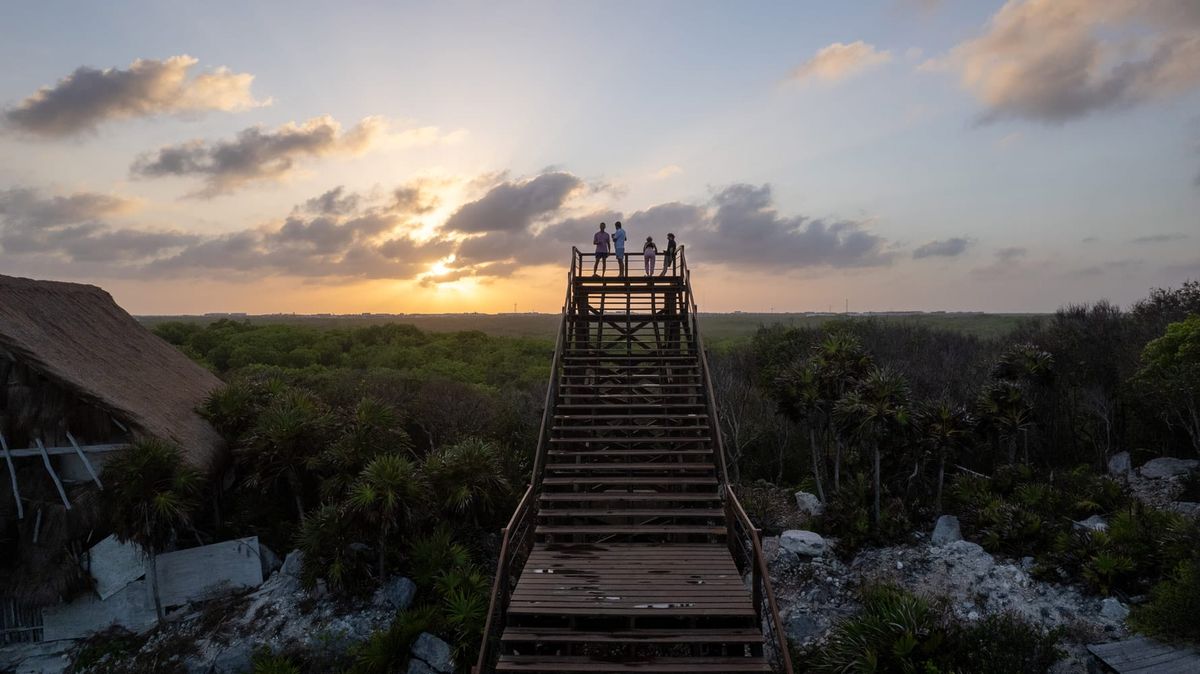
Five workers gone. Dozens more expected. A quiet storm is brewing inside one of Tulum’s most ambitious, and most questioned, tourism projects: the Parque del Jaguar.
Sources close to the federally-backed Mundo Maya company confirmed that at least five employees have already been dismissed from their roles in hotel maintenance and park operations. But that’s just the surface. Internal voices warn the total number of layoffs could exceed 40 in the coming weeks, signaling not only a human toll but a deeper breakdown in what was promised as a cornerstone of eco-tourism in the Riviera Maya.
And the reasons? They’re as complex as they are familiar in this region: deserted facilities, a collapsing tourist appeal, rising prices, and whispers of silent beach privatization.
The promise of a park now emptied
When the Parque del Jaguar was unveiled, it was pitched as a visionary project, a protected natural reserve infused with cultural, environmental, and economic vitality. It was to be a model of sustainable tourism, part of Mexico’s broader strategy to invigorate areas surrounding the Tren Maya and balance ecological preservation with development.
But walk through it today, and you may not see tourists. You’ll see silence.
Former employees describe a park with “deserted installations” and “no international visitor interest.” One of them, who asked to remain anonymous for fear of retaliation, said, “We kept showing up, cleaning, maintaining, waiting for visitors who never came. Eventually, they just let us go without notice.”
That desertion has a price. And it’s falling hardest on the workers who once kept the dream alive.
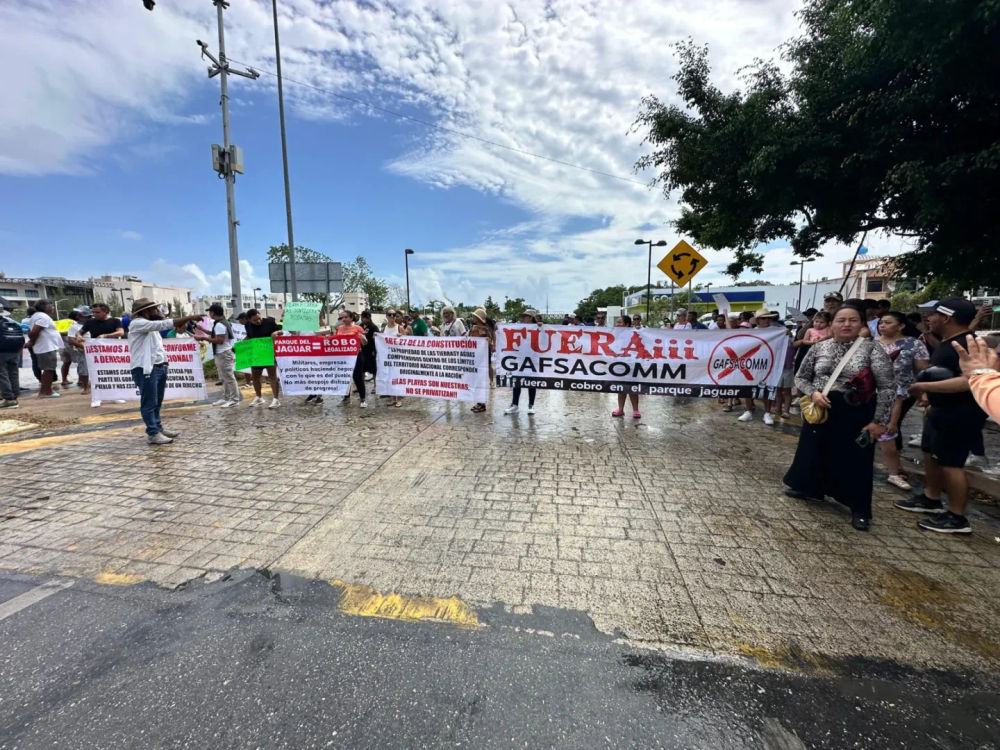
Layoffs without warning, dignity, or answers
Those recently dismissed say they were not given prior notification, nor were their labor rights respected. Several are preparing legal action for what they call “unjustified dismissal”, raising the stakes from quiet discontent to a potential legal confrontation.
“We found out through whispers. Some of us just got a message saying not to return,” shared another former staff member. “Meanwhile, the upper levels, those with military connections, are untouchable.”
That’s not just frustration talking. Multiple sources pointed to a pattern where key administrative positions inside the park are held by relatives of military personnel. The result? A sense of impunity.
“They laugh at the press reports,” said one ex-worker. “They believe nothing will happen to them. And so far, they’re right.”

A barrier instead of a sanctuary
Parque del Jaguar passes from being a nature sanctuary to becoming a tourism barrier. Despite a joint announcement by federal, state, and municipal authorities guaranteeing free access to Tulum’s beaches for both locals and foreigners, reports of improper fees, mistreatment, and restrictions continue, especially in the southern zone of the municipality.
The most recent case involves a woman who was forced to get out of her vehicle and pay an entrance fee simply for attempting to reach a restaurant located within the protected area. According to witnesses, the reason given for the charge was blunt: “You’re not from Tulum.”
This contradicts the public policy announced just days earlier, underscoring the gap between official declarations and on-the-ground enforcement. Witnesses also described the staff’s attitude as arrogant and hostile, with one employee reportedly telling the woman, “If you don’t want to pay, leave.”
These episodes have sparked alarm among local business owners and members of the tourism sector, who fear such abuse may further damage Tulum’s image as an open and accessible destination.

What’s driving the collapse?
Several issues appear to be converging. First, there’s the “silent privatization” of beaches within the park’s borders, a recurring complaint in Tulum, where public access to the coast is increasingly restricted or monetized under the radar.
Then there’s the experience tourists actually get. Visitors report being harassed or extorted by security forces in the area, while basic services, transport, food, accommodation, come with elevated prices that clash with the promise of accessible tourism. The result is a destination that repels rather than attracts.
And without the tourists, there’s no revenue. Without revenue, the layoffs start.
The federal mirage and the cost of optics
On paper, Mundo Maya is part of a federal development scheme aimed at uplifting Tulum and the surrounding region. But the disconnect between the paper and the pavement is growing sharper.
Critics argue that the project was never about serving local needs or tourists, but about optics. A ribbon-cutting moment, a drone-shot video, a promise on a podium.
But reality is messier. The workers feel abandoned. Tourists are staying away. The jungle doesn’t lie.
“Projects like Parque del Jaguar are supposed to reflect the future of Mexico’s sustainable tourism,” said a local activist. “But when protection turns into privatization, and development into dismissal, who really benefits?”

A wider pattern across Quintana Roo?
Tulum is not an isolated case. Throughout Quintana Roo, from Cancún to Playa del Carmen, there’s a growing sense that the rush to develop is outpacing the ability to protect. And behind every glossy hotel opening or federal announcement, there’s a quieter human story playing out.
The layoffs at Parque del Jaguar are more than a human resources decision. They are a symptom. Of a vision that may have lost its compass. Of a paradise increasingly fenced off.
And of workers who, after being discarded, are left to fight for recognition in a system that promised sustainability, but delivered silence.
What happens next?
Several former workers have already begun filing labor complaints. Others are speaking to the press, breaking a silence many had feared to challenge. Meanwhile, Mundo Maya has yet to offer a public explanation or confirm the total number of layoffs.
Whether this crisis ends in court or fizzles behind closed doors, it leaves a lasting mark. Not only on those who lost their jobs, but on the credibility of one of Tulum’s flagship projects.
The Tulum Times will continue to follow this story, not just through headlines, but through the lives it affects.
Because this isn’t just about a park. It’s about a promise.
And whether that promise still holds any weight in the Riviera Maya of today.
We’d love to hear your thoughts. Join the conversation on The Tulum Times’ social media.
Do you think the Parque del Jaguar project can still be salvaged, or has public trust already been lost?