
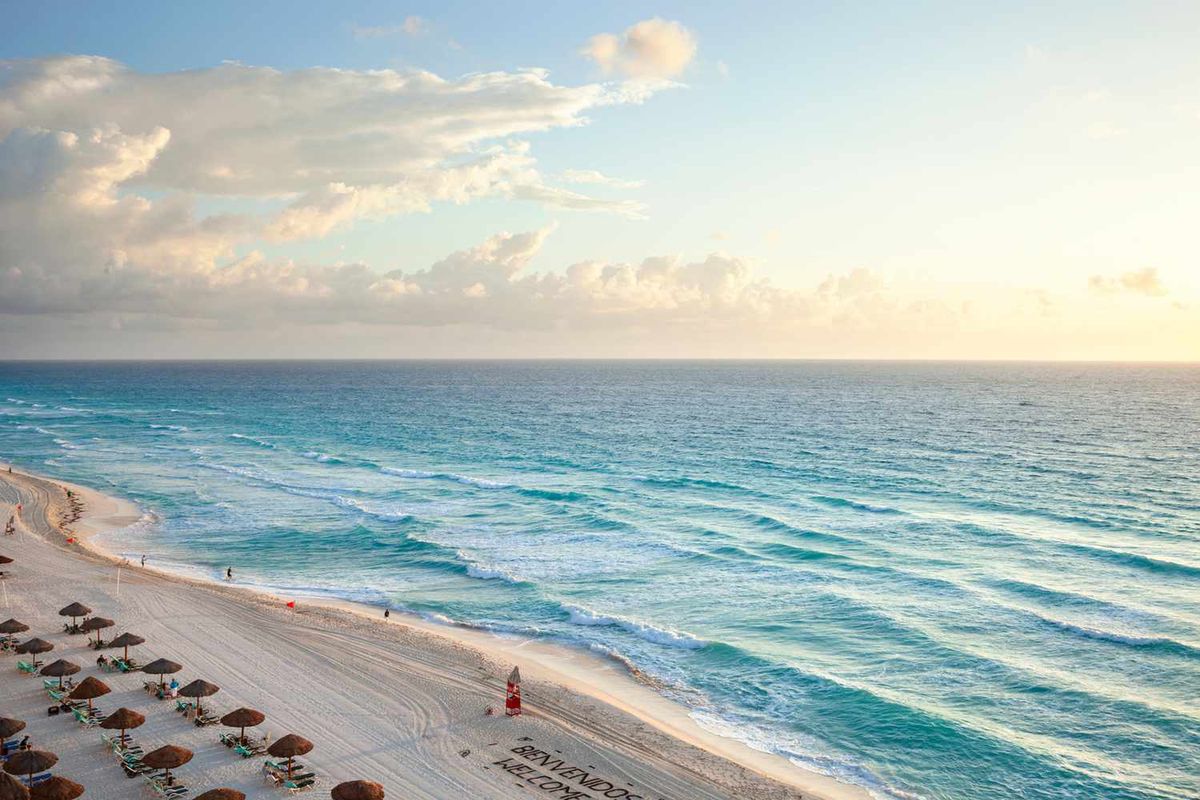
Federal and state authorities in Mexico are evaluating the opening of additional beaches inside Parque Jaguar in Tulum and in Cancún, a move they say could transform the public image of these destinations. The project, currently under joint review by the Secretariat of Tourism of Quintana Roo (Sedetur) and the federal Secretariat of Tourism (Sectur), aims to restore public access and strengthen the tourism offer ahead of the winter season.
According to Bernardo Cueto Riestra, head of Sedetur, the initiative represents one of several actions designed to revitalize the Mexican Caribbean’s competitiveness. “These are coordinated actions among all three levels of government in tourism matters,” Cueto said. “We’re moving forward with several points, especially the opening of beaches in Parque Jaguar and Cancún, which will give a new image to those destinations.”
Expanding access in Tulum’s national park
The plan involves the addition of new entry points to the park, particularly in Tulum’s hotel zone. Sectur Secretary Josefina Rodríguez confirmed that the park’s southern access is already operational, while the traditional entrance is expected to reopen soon. Two additional entryways, Conchitas Beach and Del Pueblo Beach, are set to be incorporated in the coming months, expanding visitor access to previously restricted coastal areas.
Officials say the strategy aligns with broader tourism development programs in Quintana Roo, emphasizing infrastructure improvement, security coordination, and responsible promotion. The reopening of beaches is part of a wider federal effort to position Tulum and Cancún as accessible, high-quality destinations amid growing international scrutiny over beach privatization and environmental management.
Political momentum behind public access
The initiative gained national attention after President Claudia Sheinbaum reaffirmed that hotels, businesses, and private properties must comply with existing laws guaranteeing free access to beaches. “There must be public access to beaches, as established by law, and this must be fulfilled,” Sheinbaum said. “In areas where hotels, businesses, or private spaces have blocked access for years, entrances must be opened. That is what the law says, and that is how it should be.”
Her statement reinforced a long-standing demand among residents and visitors in Tulum, where beach privatization has fueled tensions between tourism investors and local communities. The president’s remarks also give legal and political backing to the actions underway in Parque Jaguar Tulum, a natural reserve managed under federal jurisdiction.
Mara Lezama pushes a coordinated approach
Governor Mara Lezama, who has made tourism reform a central theme of her administration, is coordinating with federal and municipal governments to advance the beach reopening process. She views the initiative as a symbolic step toward transparency and inclusivity in the region’s tourism model. According to Sedetur, Lezama’s administration expects a positive impact on visitor numbers during the upcoming winter period, traditionally one of the strongest seasons for Quintana Roo.
In addition to boosting access, the governor has emphasized the need for new tourism narratives focused on sustainability and community benefit. Her office has repeatedly argued that Tulum’s long-term success depends on balancing ecological preservation with the right to public enjoyment of its coastline.
The tourism economy at stake
For local businesses, easier access to the beaches could increase foot traffic and diversify visitor spending beyond high-end resorts. Economists note that while Tulum has seen rapid growth, much of the revenue remains concentrated within private developments, limiting wider economic distribution. The reopening of public beaches could alter that dynamic.
Industry analysts also highlight the potential reputational benefit for Quintana Roo’s brand. In recent years, international headlines about restricted beach access and overdevelopment in the Riviera Maya have challenged Mexico’s image as a destination committed to inclusivity and environmental care. By contrast, opening new beaches under a coordinated government framework could serve as a demonstration of accountability.
As one local tourism operator in Tulum told The Tulum Times, “When the government opens beaches instead of closing them, it sends a message to the world that public space still matters.”
Managing expectations and ecological balance
Still, questions remain about how the expansion will be managed on the ground. Parque Jaguar sits within a delicate ecological zone that includes mangroves, protected dunes, and sea turtle nesting areas. Conservation groups have cautioned that increased access, if not carefully regulated, could lead to further strain on the ecosystem.
Officials insist that all new entry points will comply with environmental standards and that park management plans are being updated to ensure sustainable use. The success of the initiative may depend on transparent coordination between the National Commission of Natural Protected Areas (Conanp), the Tulum municipality, and private stakeholders.
Toward a new image for Tulum and Cancún
The government’s message is clear: improving access to public beaches is not only a legal obligation but also a strategy to modernize the image of Mexico’s top tourist destinations. For the federal administration, Tulum and Cancún are showcase cities for a new phase of tourism policy, one that highlights accessibility, environmental care, and community integration.
The reopening of beaches in Parque Jaguar Tulum may appear symbolic, but it carries real political and economic weight. If implemented effectively, it could help redefine the balance between public and private interests along the Caribbean coast.
What happens in Tulum could set a precedent for the rest of the Riviera Maya, where similar tensions over beach access continue to unfold.
We’d love to hear your thoughts. Join the conversation on The Tulum Times’ social media.
Do you think reopening public beaches can truly balance tourism growth and environmental protection in Mexico’s most visited coastlines?