
**The Sargazo Scourge: A Tale of Two Coasts**
The contrast is stark, almost unbelievable. While news reports paint a bleak picture of beaches choked with decaying seaweed, of tourist dollars evaporating like sea foam, there’s a glimmer of hope, a beacon of effective action: Puerto Morelos. This Quintana Roo municipality, in sharp contrast to its neighbors grappling with the relentless onslaught of sargazo, has seemingly cracked the code. Their success story offers both a solution to the **Puerto Morelos Sargazo Solution** and a damning indictment of failed efforts elsewhere along the Mexican Caribbean coastline.
**A Barrier Against the Tide**
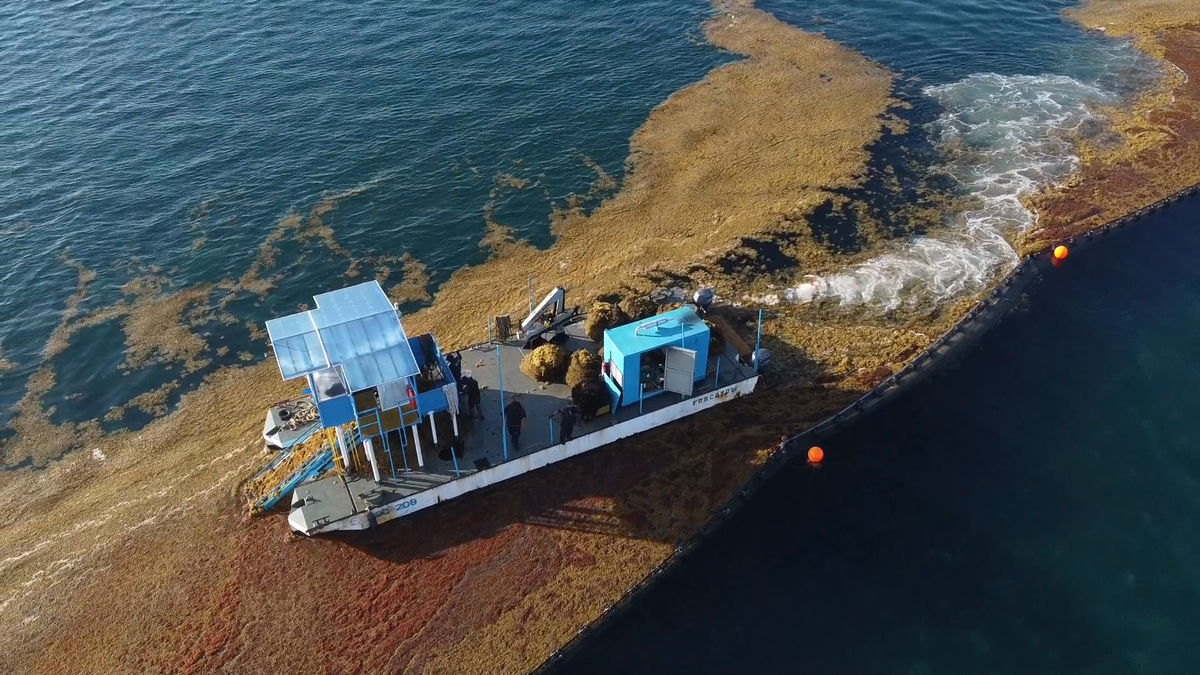
The key to Puerto Morelos’s triumph lies in a simple yet ingenious approach: a physical barrier. Positioned approximately 200 meters offshore, a two-kilometer-long structure intercepts the unwelcome seaweed before it reaches the shore. This barrier, secured to the ocean floor with strategically placed anchors and buoys, effectively keeps the sargazo at bay, preserving the pristine beauty that draws visitors to the region. It’s a clear demonstration that intelligent resource allocation and a commitment to proactive measures can yield dividends.
The success in Puerto Morelos underscores the failures of neighboring areas. Playa del Carmen and Tulum, once paradise destinations, are now struggling with the economic and environmental consequences of ineffective sargazo management. The deployment of costly, yet non-functional sargassum harvesting vessels, specifically designed to gather the invasive seaweed, and a lack of foresight in implementing proven mitigation strategies has made these destinations suffer severely. The contrast between Puerto Morelos’s clear waters and the “sea of mud” experienced in other areas is a stark reminder of the critical need for decisive action.
**Failed Strategies and Lost Opportunities**
The situation in the Riviera Maya is not merely a natural disaster. It is aggravated by factors of corruption and ineffective governance, particularly around the handling of the proliferation of sargassum. As the article cited points out, millions of dollars allocated to combating the sargazo crisis haven’t produced any meaningful results. The investment in ineffective solutions has led to significant financial losses, while hindering the tourism industry and local communities. Authorities had implemented multiple strategies, including the creation of “sargaceros,” specially designed sargazo harvesting boats; however, the strategies were not effective, and the boats were not operational.
**Looking Ahead**
The story of Puerto Morelos sends a clear message: the challenges posed by the sargazo crisis are not insurmountable. By learning from Puerto Morelos, by deploying proven methods, and by investing responsibly, the entire coast of Quintana Roo can reclaim its beaches. As the situation evolves, the spotlight must pivot to the strategic replication of Puerto Morelos’s approach, making the transition from a problem to a model of environmental stewardship, restoring both the beauty and economic vitality of this cherished region.
We’d love to hear your thoughts, join the conversation on The Tulum Times’ social media.