On any given Wednesday evening or Saturday morning in Tulum, a familiar scene begins to unfold. Dozens, and sometimes hundreds, of people gather outside a café, a beach club, or a small restaurant somewhere in town. Some are experienced runners. Others are walking. Many are meeting for the first time. Different languages overlap, music plays in the background, and someone climbs onto a ladder to explain the route. Then, they run.
What started as a casual midweek jog between eight people has gradually become something much larger. Today, Run Tulum is no longer just a running club. It has evolved into a social ecosystem, a meeting point for locals and newcomers, and perhaps even a reflection of where Tulum itself may be heading.
As its founders describe it, “It started as an organic group that was designed to keep the community more active… and it’s grown into something that’s not really even a run club anymore, it’s more of a social club.”
That shift says as much about Tulum as it does about the run itself.
From Eight People to a Growing Community
The origin of Run Tulum was simple. There was no formal launch, no business plan, and no marketing strategy. It began with messages sent to friends and workout clients.
Tony remembers those early days clearly. “We were texting everybody all the time… after class, I’d say, ‘Guys, remember we’re running Wednesday at 5:30.’ We’d show up thinking maybe nobody would come, but we said, even if nobody shows up, we’re still running.”
The first run brought together eight people. Soon there were thirty, then forty. Before long, the founders began arriving to meet-ups and finding crowds already waiting for them.
“We showed up, and there were like thirty people standing there,” recalls Elle Madalone. “We were like… what is going on?”
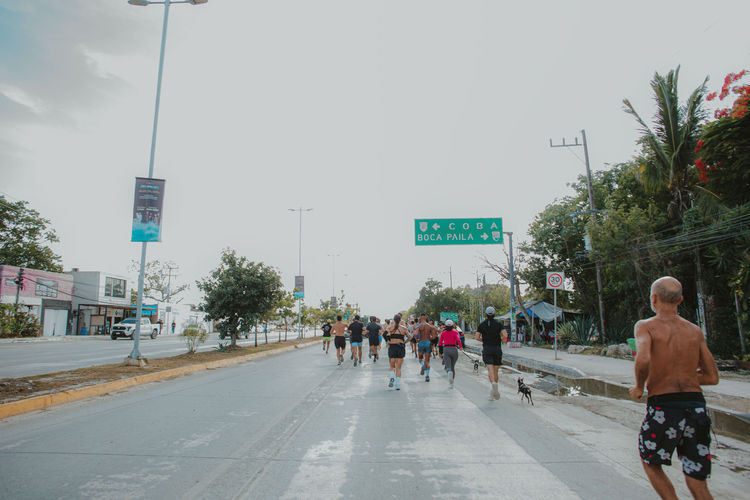
Months later, during an event on Avenida Cobá, the scale of what they had created became impossible to ignore. More than a hundred runners showed up. The sidewalk filled, the street overflowed, and police had to step in to manage traffic.
“That was the first time it felt like, wow… something is actually changing in the city.”
The Ladder That Became a Symbol
Every community develops small rituals that eventually become symbolic. For Run Tulum, that symbol is a ladder.
At first, it served a practical purpose. As the crowd grew, Tony needed a way to be seen and heard before each run. “There were like 60 or 70 people, and I realized I needed to stand on something so everyone could hear the route.”
What began as a necessity soon became part of the club’s identity. The ladder started appearing in announcements, group photos, and videos shared across social media each week. Eventually, it was painted black, branded, and carried from venue to venue.
“Everywhere we went, we kept asking, ‘Do you have a ladder?’” They say, laughing. “Eventually, we just got our own.”
Today, that ladder appears in dozens of participant videos every week, a simple object that accidentally became one of the most recognizable elements of the club.
More Than a Running Club
Ask the founders what Run Tulum really is, and the answer rarely begins with running. It begins with community.
“People are meeting their friends at the run and living life together,” Tony explains. “Sometimes it’s through fitness, sometimes it’s through other things, but they’re meeting their people here.”
Out of the club have come friendships, training groups, cycling teams, sunrise yoga sessions, and new wellness initiatives around town. For some participants, the impact has gone even further.
“People come up to us and say they were going to leave Tulum,” says Elle. “And then they found their community here and decided to stay.”
Tony shares another example that still surprises him. “We’ve had people visit, come to the run, go back home, sell their stuff… and move to Tulum. They tell us, ‘I moved here because of the run.’”
In a destination often defined by constant movement and temporary stays, that kind of social anchor is not common.
Built to Be Inclusive
One of the most deliberate decisions behind Run Tulum has been accessibility. Many running clubs in other cities are centered on performance and can feel intimidating for newcomers. Tony and Elle had experienced that themselves.
“We joined some clubs when we were in Tampa,” Tony says. “And we didn’t feel like we fit in.”
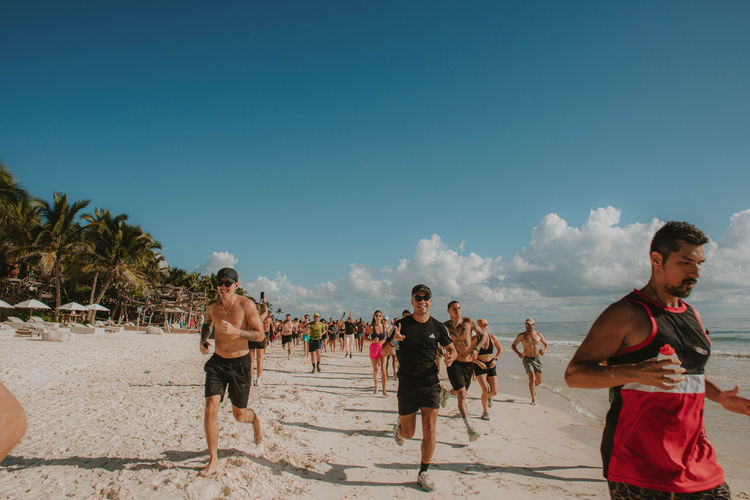
So they built Run Tulum differently. Fast runners, slow runners, walkers, first-timers, and even people who join mainly for the social gathering afterward are all welcome.
The club introduced what they call “Paradise Pace,” a speed slow enough for people to jog or walk comfortably.
“I don’t care if you run a 17-minute pace or a 47-minute pace,” Tony says. “You’re still bettering yourself and building community.”
For Elle, that inclusivity is central to the atmosphere that has made the club so appealing. “Everyone’s at their own level,” she says. “I run very slowly, that’s part of why it feels so inviting.”
Forty Countries, One Route
Tulum has long had an international identity, but Run Tulum makes that diversity visible in a particularly direct way.
During the club’s 100th run, Tony watched a slow-motion video of the crowd and had a striking realization. “I know all these people,” he said. “They’re from the UK, Austria, Poland, Germany… we probably have forty countries represented.”
Unlike larger cities, where anonymity is the norm, Tulum creates an unusual closeness between cultures, languages, and lifestyles.
“Our language is the run,” Tony says.
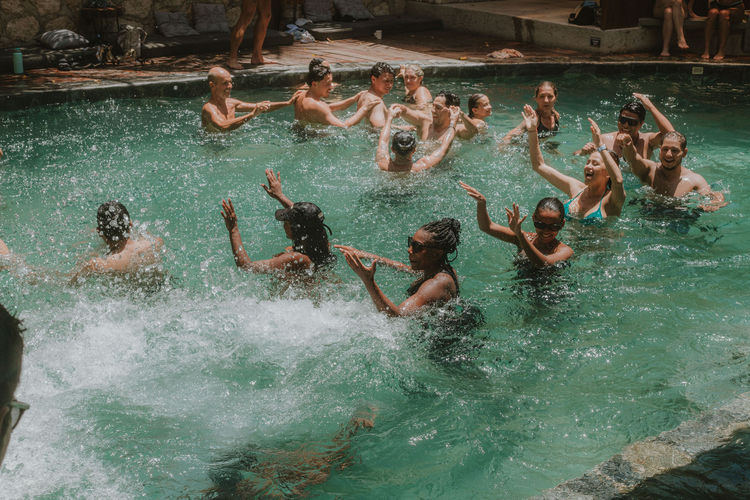
On any given meet-up, it is possible to see a Mexican resident running beside a German digital nomad, an American trainer, and someone visiting from Brazil, all sharing the same route through town.
Mapping the Town Through Movement
Beyond the runners themselves, Run Tulum has also started shaping the way people experience the city.
Each week, the club rotates between venues, including cafés, restaurants, beach clubs, gyms, and wellness spaces. The intention is clear.
“We bounce around town to highlight the places we love,” Tony explains.
One week the run may begin at a gym, the next at a beach venue, and another at a local restaurant. For newcomers spending a few months in Tulum, the club becomes a kind of informal map of the town.
“If you come to fifteen runs, you’ve seen fifteen different places,” Tony says. “You see the city in a way you wouldn’t on your own.”
For local businesses, the club has also become a source of energy during a period when Tulum’s online reputation has often been shaped by criticism.
“A lot of venues just want to be part of the community,” Tony notes. “It’s not even about revenue; they want to be involved.”
The Work Behind the Experience
What participants see each Wednesday and Saturday, the music, the route briefing, and the social atmosphere, is only part of the story. Behind each event is a substantial amount of planning.
“We’re usually planning eight to ten weeks out,” Tony explains.
At any given time, the team may be coordinating with multiple venues, organizing routes, arranging DJs, managing partnerships, preparing content for social media, and responding to hundreds of messages from participants.
The result may look spontaneous, but the infrastructure behind it is anything but casual.
Growing Without Losing the Culture
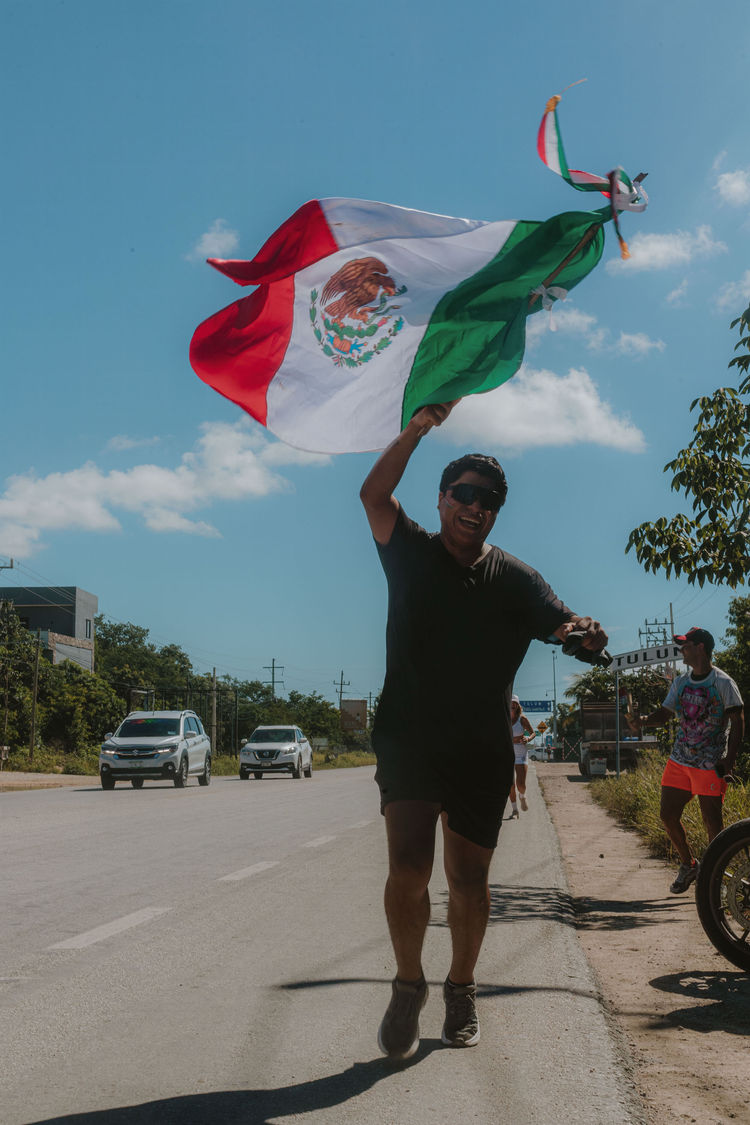
As attendance continues to grow, the founders now face a different kind of challenge. The issue is no longer how to attract more people. It is how to grow without losing the culture that made the club meaningful in the first place.
“It’s not about numbers anymore,” Tony says. “It’s about protecting the vibe.”
That concern is not minor. Communities often lose their closeness as they scale. According to the founders, the next chapter of Run Tulum depends on preserving that balance.
“We know this is positive for the community,” Tony says. “We just want to make sure it stays that way.”
Is Tulum Becoming a Fitness Town?
Part of what makes Run Tulum resonate so strongly is that it aligns with a broader transformation already taking place in the destination.
In the early 2000s, Tulum was widely seen as a rustic eco-escape. Later, it became associated with yoga retreats, spiritual ceremonies, and wellness tourism. Then came the international festival era.
Now another layer seems to be taking shape: gyms, functional training studios, cycling groups, cold plunges, and running clubs.
Tony sees that evolution clearly. “When I first moved here, Tulum was very spiritual and yoga-focused,” he says. “But there wasn’t much accountability or structured fitness.”
He now imagines a broader future for the town. “My dream is that Tulum becomes one of the best places in the world to stay healthy and fit.” Not only in aesthetic terms, but as a way of life.
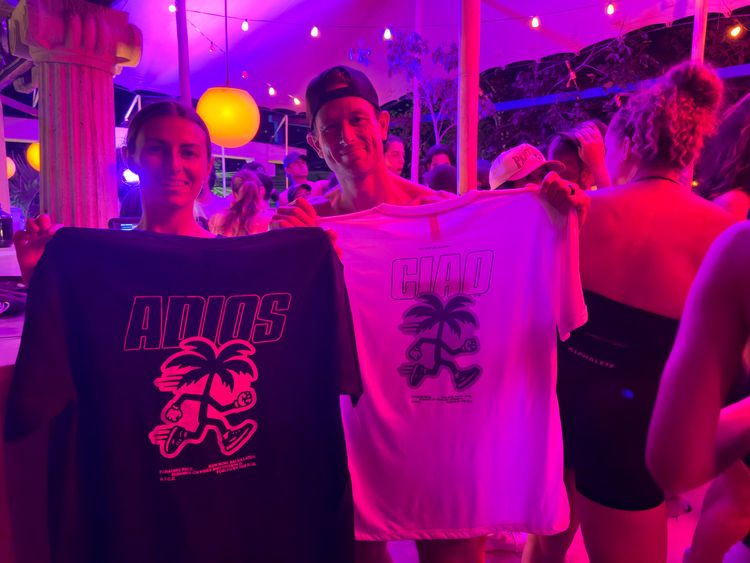
The Emotional Core of the Movement
When asked what it feels like to watch the runs unfold every week, Elle’s answer is unexpectedly personal.
“I feel like a proud mom,” she says with a laugh. “Watching everyone meeting friends and being nice to each other.”
For her, the real measure of success is not the turnout. It is the atmosphere.
“Even if I’m having a bad day, I leave feeling completely different. The people are just… good.”
That may be the most important part of the story.
Toward the end of the conversation, Tony shares a message that sounds less like a business objective and more like a statement of civic commitment.
“We are in a very unique position here,” he says. “We have the best weather, healthy food, and an amazing community. This is one of the most unique places on the planet.”
Then he pauses before finishing the thought.
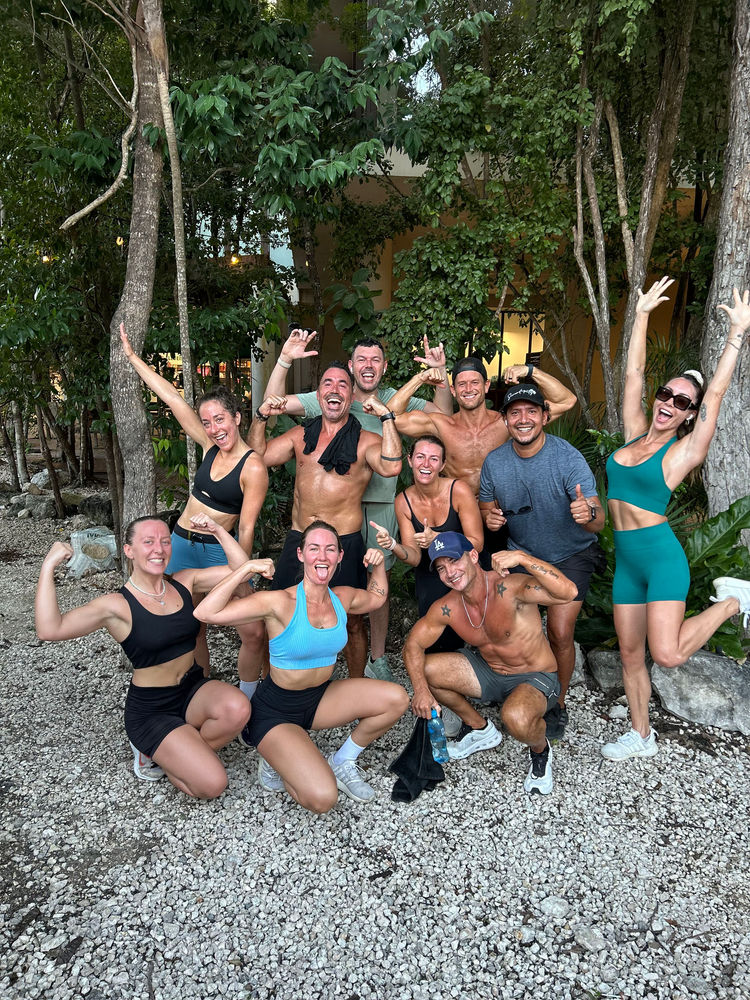
“If you love this place, invest in making it better. This is our home. We believe in Tulum.”
Run Tulum may have started as a simple weekly jog between friends, but today it represents something larger, a reminder that destinations are shaped not only by tourism or development, but by the repeated social rituals that bring people together.
And in Tulum, every Wednesday evening and Saturday morning, that ritual begins the same way: someone climbs onto a ladder, a crowd gathers, and the city runs.