

Salma Hayek used a meeting with Mexico’s president, Claudia Sheinbaum, to press for greater control over how the country is portrayed on screen, tying her message to the rollout of a new federal film law and to recent filming work linked to Quintana Roo, including Tulum.
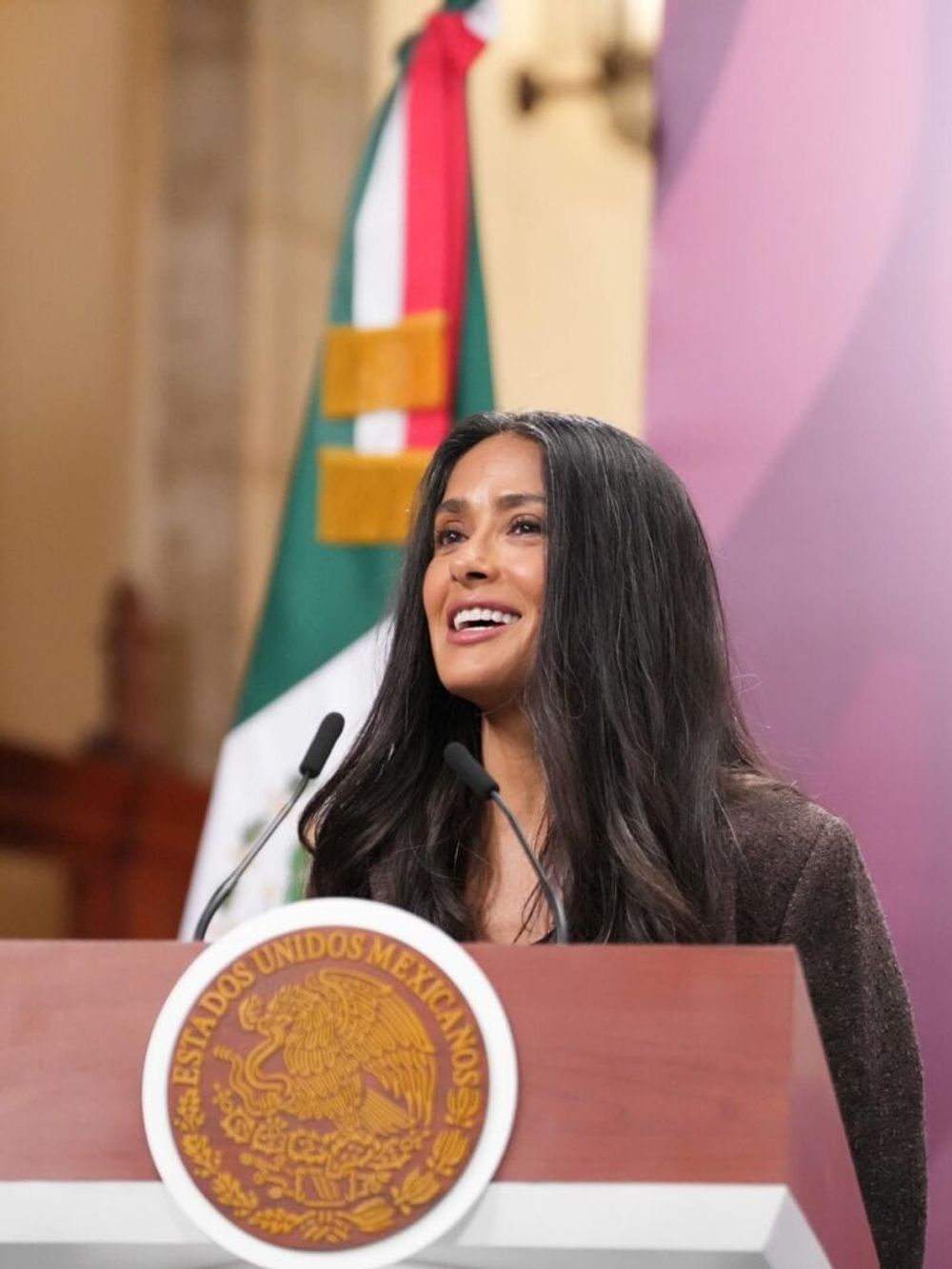
Hayek spoke during the presentation of the new Ley Federal de Cine, described in the event as an initiative intended to strengthen national production and rethink how Mexico presents itself to the world. In remarks that framed cinema as more than entertainment, the actor and producer said storytelling shapes international perceptions and argued Mexico should reclaim its narrative.
“How to tell the stories is extremely important when we are being morally attacked, and our image is being represented in a completely wrong way,” Hayek said. “To be able to take control and say: this is Mexico, not what they are selling you. This is who we are.”
Her appearance connected a federal policy push to local production realities in Quintana Roo, where Hayek has been working on new projects and where she was seen earlier this month in the cenote area of Tulum, according to the base report. The moment also put a spotlight on the role that state governments can play in supporting film shoots, including in places where access and infrastructure are major challenges.
A federal film law framed as a shift in Mexico’s image strategy
The presentation of the Ley Federal de Cine was positioned as a bid to strengthen national film production and to change how the country is shown internationally. Hayek’s comments aligned with that framing, emphasizing that the way stories are constructed can influence how Mexico is understood abroad.
In her remarks, she argued that Mexico’s image is being portrayed incorrectly and that cinematic storytelling offers a way to counter that. Her message was explicit: Mexico should be able to define itself rather than be defined by external narratives.
The appearance also highlighted her continued participation in Mexican cinema even after building a career in the United States. Hayek, known in Mexico for work including “El callejón de los milagros,” said she has never stopped producing in Mexico, and she used the event to underline her connection to the film community where she began.

Support from Quintana Roo and Veracruz is placed at the center
Hayek credited support from two governors as decisive for her current production, naming Quintana Roo Governor Mara Lezama and Veracruz Governor Rocío Nahle. She described both leaders as guides during the project and thanked their states for backing the shoot.
“The two of them educated me, guided me,” Hayek said, adding that she was excited the collaboration is happening now and calling them her “two star governors,” while thanking Quintana Roo and Veracruz for their support.
Her comments placed public support for production in a direct line with what viewers ultimately see on screen. For Quintana Roo, the mention matters because the state has been linked in this report to filming activity that included Tulum, and because state-level coordination is often central when productions rely on specific locations and local access.
What does this mean for Tulum’s film activity?
Hayek’s presence at a federal event about film policy, combined with references to filming in Quintana Roo and being seen in the cenote area of Tulum in early February 2026, reinforces the idea that the region remains in the orbit of high-profile productions.
For Tulum, that has practical implications even when details of a project are not publicly laid out in the base text. Filming in the cenote zone can involve logistical planning and coordination with local personnel, as well as decisions about where and how crews operate. The base report does not provide specifics about the production itself, but it does tie Hayek’s ongoing work to Quintana Roo and to the Tulum area.
It also frames the current moment as one where federal policy signals, state support, and on-the-ground production realities are intersecting. If the stated goal of the new law is to strengthen national production, the presence of filming activity in Quintana Roo makes the region a tangible reference point for what “strengthening production” looks like in practice.
A shoot in Veracruz that required building access
Hayek described the challenges of filming in Veracruz as a reminder that production support can go far beyond permits. She said the crew worked in a location that was effectively inaccessible, requiring the construction of infrastructure to make filming possible.
“We were filming in Veracruz in a place that was unfilmable, you couldn’t get in,” she said. “So we had to make all the infrastructure, from the road, all the infrastructure to reach this mountain.”
The statement offered a concrete example of what it can take to bring a production to life in Mexico, and why public coordination and local backing can shape whether a shoot succeeds. While her example came from Veracruz, the underlying point applies broadly: locations may be visually compelling but operationally difficult, and production support can determine whether those places can realistically be used.
Sheinbaum’s message highlights Hayek’s advocacy abroad
President Sheinbaum publicly thanked Hayek during an announcement from the National Palace that also referenced incentives for the film industry, according to the base text. Sheinbaum pointed to Hayek’s work in both Mexican and U.S. cinema and praised her for using her international platform to defend Mexicans living abroad, particularly in the United States.
“We all admire Salma a lot,” Sheinbaum said, adding that she especially admires that Hayek “has always defended Mexican women and Mexican men in the United States.”
Sheinbaum also cited Hayek’s work as a producer and actor, including her role connected to the film “Frida” (2002), in the context of the recognition.
Hayek’s long-running ties to Mexico’s film community
During the same public moment, Hayek described the importance of being surrounded by the people who helped shape her career. She said her community, including collaborators and mentors from early in her trajectory, was present and remains part of her work.
“It’s all my community here, the people I started with and the people who inspired me, who taught me, who I keep working with,” she said. “Because even though I went abroad, I have never stopped producing in Mexico.”
That message reinforced a central theme of the event: that national production capacity is not only about laws or incentives, but about sustaining creative and professional networks that can carry projects from development to filming and release.
A subtle reality sits beneath the ceremonial language of such announcements. Film policy can set ambitions, but the industry’s daily work still hinges on relationships, logistics, and the ability to film in real places under real conditions.
What changes from now on for local crews and locations
The base text frames the new Ley Federal de Cine as an effort to strengthen Mexican production and rethink national representation. It does not detail implementation, timelines, or specific provisions. Still, the event’s public messaging signals that film policy is being discussed at the highest levels of government and in direct conversation with working producers.
For Quintana Roo, and for Tulum specifically, the immediate takeaway is visibility: Hayek tied her current work to the state and referenced filming linked to Tulum’s cenote area in early February 2026. That kind of mention can matter to local workers, service providers, and communities accustomed to film activity, because it underscores that major productions continue to view the region as a viable setting.
For Mexico’s broader image abroad, Hayek’s message was that storytelling is not neutral. In her view, who tells the story and how affects how Mexico is seen. If federal initiatives and state support expand production capacity, she suggested, that could translate into more Mexican-led narratives reaching global audiences.
The stakes are both cultural and practical: how Mexico is represented, and where production resources flow. What changes next will depend on how the Ley Federal de Cine is put into practice and how consistently states like Quintana Roo and Veracruz continue to support filming on the ground, including in places such as Tulum, where location work can be central to a project’s identity.
At stake is who shapes the stories that travel beyond Mexico’s borders, and what opportunities follow for productions working in Quintana Roo, including Tulum, under the Ley Federal de Cine.
We’d love to hear your thoughts. Join the conversation on The Tulum Times’ social media.
How should film policy balance national image goals with local impacts?