
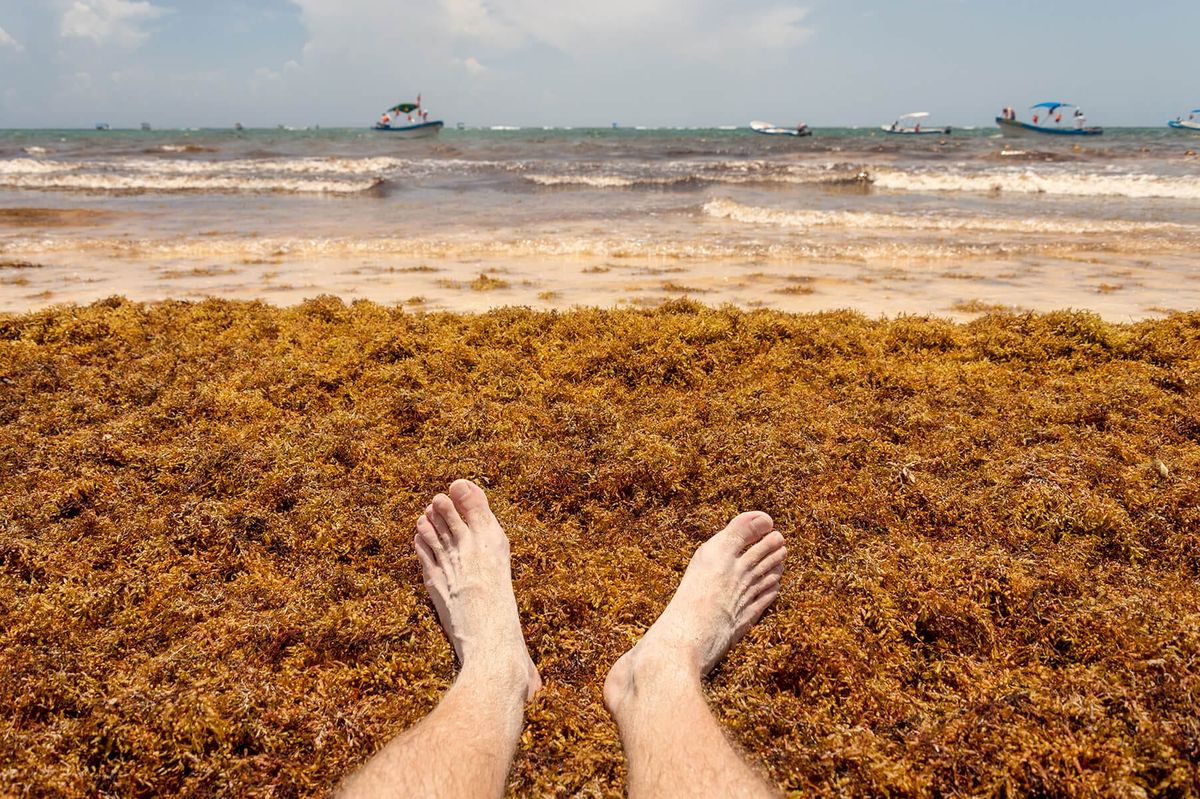
The stench hits you first, a sulfuric assault on the senses that clings to the humid air. Then you see it: a vast, brown tide, an unyielding carpet of sargassum in Cancun that chokes the once-pristine turquoise waters. This isn’t just an ecological nuisance; it’s a gut punch to the livelihoods of thousands, a silent scream from the very heart of Mexico’s Riviera Maya. The luxury resorts, once bastions of carefree escape, now stand as battlegrounds against an invader that arrives by the ton, every single day. And the fight, say those on the front lines, is a lonely one.
## The Brown Scourge and its Cost
For years, the arrival of sargassum was a seasonal inconvenience, a minor cleanup operation. Now, it is a year-round siege, a relentless, suffocating blanket that threatens to smother the region’s primary industry. Hoteliers, residents, and local workers watch in dismay as their dreams, built on promises of sun-drenched beaches and crystal-clear seas, dissolve into a murky, putrid reality. Is this what paradise has become?
The economic fallout is immediate and catastrophic. Tourists, lured by images of idyllic shores, arrive only to find mountains of rotting seaweed, its odor permeating lobbies and beachfront restaurants. Cancellations surge. Bookings plummet. One hotelier, Guillermo del Valle, manager of the Hotel Dos Playas by Faranda, speaks of a 70% drop in occupancy at some properties, a chilling statistic that echoes across the Quintana Roo coast. This isn’t just about profit margins; it’s about families unable to pay rent, waitstaff watching their tips vanish, and tour operators seeing their boats sit idle.
## Sargassum in Cancun: A Battle Waged Alone
The federal government’s response, or lack thereof, casts a long shadow over the crisis. Hotels, desperate to save their season, have poured millions of pesos into sargassum collection efforts. They hire local workers, deploy specialized machinery, and erect barriers, all at their own considerable expense. An estimated 300 million pesos had been invested by businesses as of late 2024, a staggering sum for a problem that they argue demands governmental intervention. Del Valle’s frustration is palpable: “We are forgotten,” he states, the words heavy with a sense of abandonment. Businesses shoulder the burden, clearing beaches every day, yet the sheer volume of sargassum makes it a Sisyphean task. Just as quickly as one stretch of sand is cleared, another brown wave rolls in, obliterating the effort.
The Navy, tasked with deploying sargassum barriers, has faced criticism for the limited reach of its efforts. While some barriers exist, they are often insufficient, leaving vast swathes of coastline exposed to the relentless influx. Hoteliers point to a bureaucratic quagmire, a disconnect between the urgent needs on the ground and the slow churn of governmental processes. Where is the comprehensive strategy? Where are the resources promised?
## The Echoes of Disappointment
The sentiment of neglect is not new. Similar pleas for assistance were raised during previous administrations. Local businesses recall unfulfilled promises, a pattern of perceived indifference from Mexico City. When the lifeblood of an entire region depends on its natural beauty, and that beauty is under assault, the call for help becomes a desperate cry. It’s like watching your house burn down while the fire department debates which hose to use.
The sheer scale of the problem demands a coordinated, multi-faceted approach. Environmental agencies, local governments, and the federal administration must work in concert, developing long-term solutions that go beyond merely scooping up seaweed from the shore. This includes researching the causes of the sargassum boom, investing in more effective collection methods, and perhaps most critically, acknowledging the profound economic and social impact this ecological phenomenon has on the people of Quintana Roo. The clock is ticking, and with each passing day, more sargassum washes ashore, bringing with it a deeper sense of despair. The pristine beaches of Cancun, once a global allure, are slowly disappearing beneath a tide of neglect and a blanket of brown.
We’d love to hear your thoughts, join the conversation on The Tulum Times’ social media.