
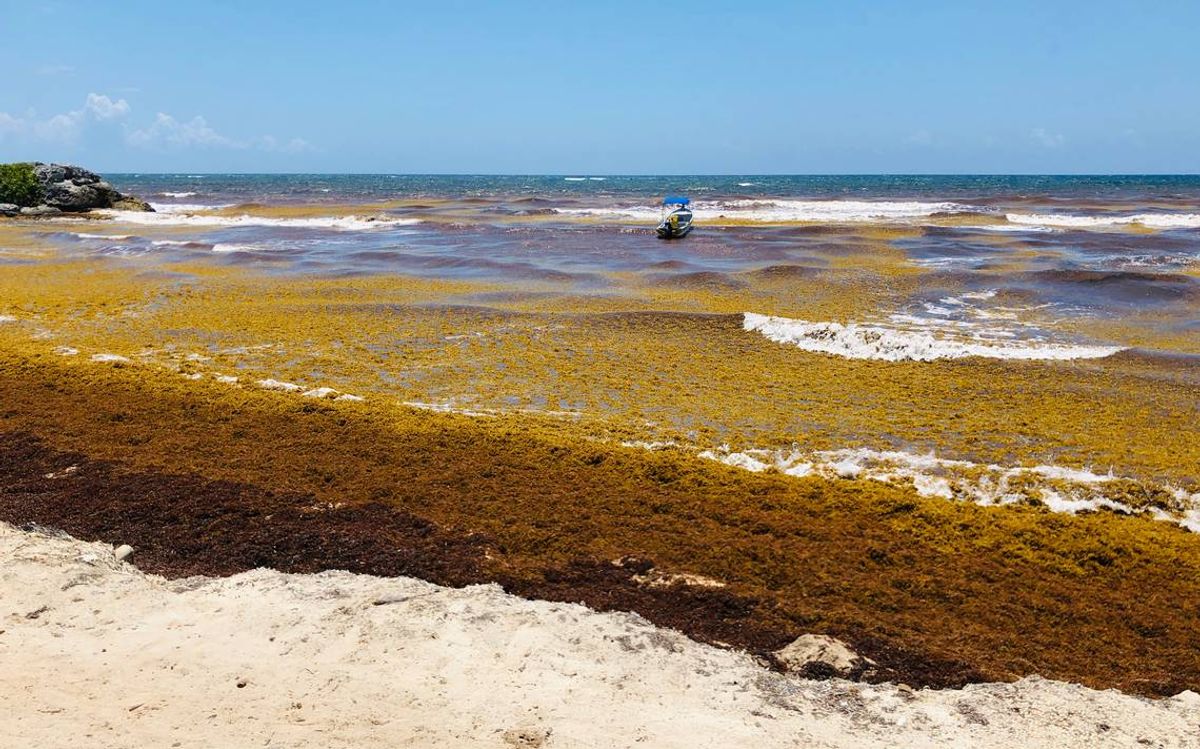
The battle against sargassum never truly ends. It just changes rhythm, like the tide itself. And right now, that rhythm is quickening again. About 40 additional workers are preparing to join the front lines of Tulum’s eternal cleanup mission. No headlines, no hashtags, just rakes, wheelbarrows, sunburns, and a quiet kind of determination.
This latest update comes from Juan Antonio Garza, head of ZOFEMAT (Zona Federal Marítimo Terrestre), who spoke from Chetumal with the calm resolve of someone who’s seen this fight before.
More Boots in the Sand to Defend the Beaches
Garza didn’t dress things up. “We’re still in the thick of the vacation season,” he stated plainly, “and the beaches need to stay clean.” That simple fact is driving a call for reinforcements. The current team, 35 workers strong, supported by the steady presence of Mexico’s Navy, is set to double.
Temporary contracts are on the table: three months of labor, 11,000 pesos a month, and the chance to join a struggle that’s part survival, part service. It may not come with applause, but it does come with purpose. And sand in your boots.
Fighting Sargassum With Shovels, Not Silence
A Daily Grind Under a Merciless Sun
August isn’t easing up. Garza forecasts more of the same: thick mats of seaweed arriving with the punctuality of high tide. And the cleanup? It’s not occasional. It’s relentless. Seven days a week, crews work the shorelines like human metronomes, the rhythm of their labor dictated by the sea’s unruly deliveries.
This isn’t poetic, it’s physical. In July alone, 1,064 metric tons of sargassum were hauled away from local beaches. That’s between 40 and 80 tons per day, depending on the whim of the wind and water.
What the Cleanup Really Looks Like
Imagine a chain of workers stretched along the coast, their backs bowed, arms in motion. They sweep, they haul, they repeat, sunburnt, sweat-soaked, and silent. It’s less “tropical escape” and more like a slow-motion assembly line built on grit.
Tourist Dollars and an Algae Crisis
The High Stakes for Tulum’s Hotel Industry
For Tulum’s beachfront hotels, clean sand isn’t optional, it’s existential. According to Garza, local businesses have stepped up in coordination with the authorities. It’s a fragile coalition, held together by tourist expectations, economic urgency, and the unspoken fear of cancelled bookings.
The numbers tell the story: Tulum has invested between 25 and 30 million pesos in the anti-sargassum campaign. Is that excessive? Not if your entire economy floats on turquoise water and Instagram fantasies. A beach marred by rotting seaweed doesn’t trend well.
Work, Sweat, and the Scent of Salt
Temporary Jobs, Lasting Impact
Inside ZOFEMAT’s offices, the air hums with talk of opportunity. Not life-altering, but life-sustaining. These are jobs that pay rent, cover groceries, and maybe buy a new backpack before school starts. People walk in, sign up, and head straight for the sun-soaked shoreline, rakes in hand.
There’s dignity in that, quiet, unadorned, and deeply rooted. And urgency, too. Because this isn’t just about algae. It’s about showing up when the tide turns rough.
Have a perspective to share? Join the conversation on The Tulum Times’ social channels and let your voice be part of the story.