
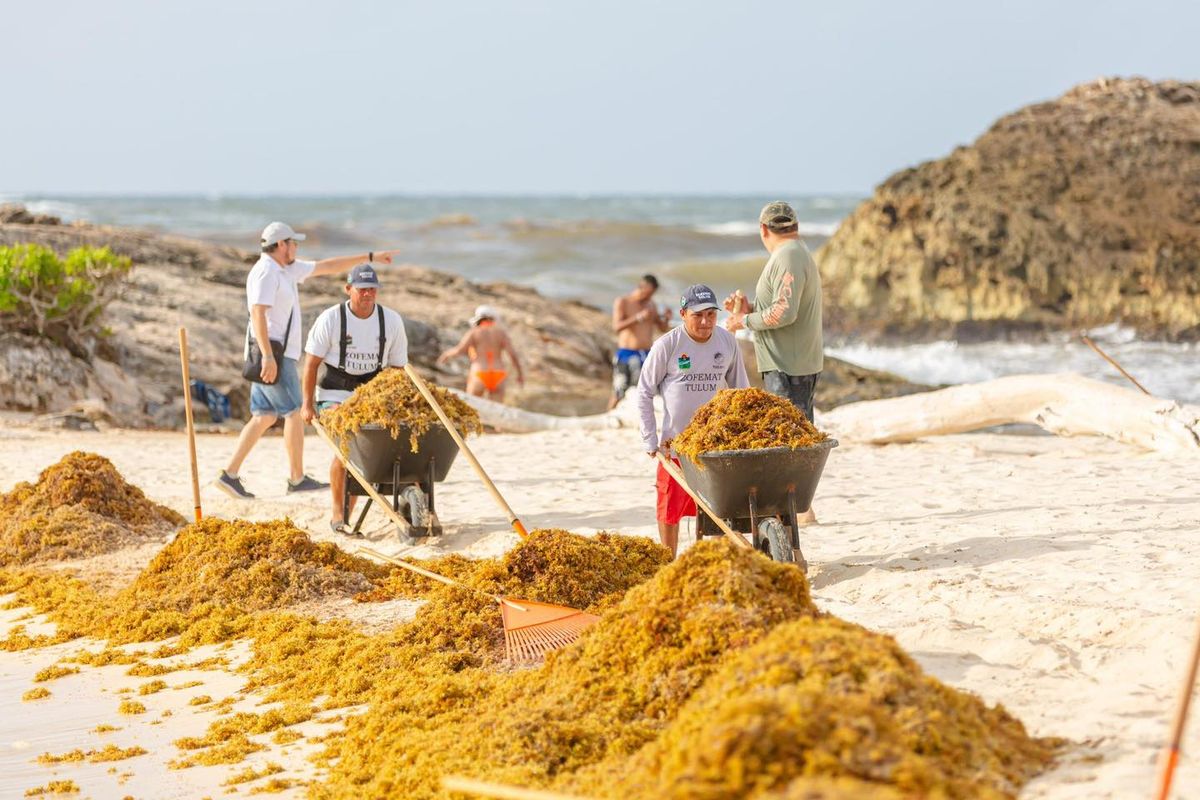
It’s not the kind of headline that sells dreams in glossy travel magazines, but along Tulum’s iconic coastline, the sargassum invasion has become a harsh seasonal truth, almost as expected as high tide or hurricane warnings. Yet this July, the scale of the problem reached an all-time high. Over 3,074 tons of sargassum have already been cleared from local beaches, setting a grim new record and confirming a growing reality: the seaweed isn’t just arriving, it’s embedding itself into the very rhythm of daily life.
A Record-Breaking July and a Workforce Under Strain
The Numbers Behind the Crisis
Juan Antonio Garza Pérez, head of Tulum’s Federal Maritime Terrestrial Zone (Zofemat), didn’t mince words. July alone accounted for more than 1,000 tons of algae collected, nearly matching the total from the first six months of the year. For perspective: that’s already more than the entire annual haul in 2022.
This isn’t just a seasonal spike. It’s a structural shift.

A Sudden Naval Withdrawal
Instead of celebrating a cleanup milestone, Garza Pérez dropped a second piece of news with far-reaching consequences: the Mexican Navy, which had long played a central role in sargassum removal efforts, quietly withdrew from operations last Saturday. The vacuum left behind was immediate and glaring.
In response, Zofemat is launching a temporary employment program aimed at mobilizing local labor to step into the breach.
“It’s not the first time this town has had to muscle through,” Garza Pérez stated during the weekly municipal briefing, his tone both steady and determined. “The difference now is that we’ll do it with our own people, through local labor, through this program.”

Mapping the Crisis: Where the Seaweed Hits Hardest
Visible Progress in Key Tourist Zones
Despite the staggering numbers, local authorities point to visible improvements. Sections of beach along Tulum’s northern and southern hotel zones, as well as the Tulum National Park, are beginning to look cleaner. The turnaround is thanks to a mix of:
- Active manual cleanup
- Effective deployment of anti-sargassum barriers
- Favorable winds are pushing new blooms back to sea
These are fragile victories, however, more ceasefire than resolution.
Hotspots Like Akumal Sur are Still Under Siege
In contrast, areas like Akumal Sur remain embattled. Garza Pérez emphasized the need for vigilance, hinting at more tactical deployment strategies in the coming weeks. Cleanup in Tulum has started to resemble a kind of environmental trench warfare: tide by tide, shovel by shovel.
And the real threat might still lie ahead.

The Looming Canícula Effect
August brings the canícula, the hottest stretch of summer, when ocean temperatures rise and conditions become ideal for another wave of sargassum to form and drift ashore. If July felt like a battle, August could be the ambush.
Local Labor, Local Solutions: Inside Tulum’s Employment Plan
A Grassroots Response to a Federal Retreat
The upcoming employment initiative, set for full announcement in the coming days, might do more than just fill a labor gap. It could mark a pivotal moment in how coastal communities respond when federal support fades.
This is more than bureaucratic triage. It’s a potential case study in community-driven resilience.
There’s a growing belief, quiet but resolute, that the solution may not come from outside anymore. It may already be here, living among the very people who have watched the tides for generations.

Seaweed, Sweat, and Something Deeper
Cleaning seaweed may not sound like nation-building, but in Tulum, it’s become an act of preservation. Not just for tourism, but for the dignity of a town that lives in constant negotiation with the sea.
“This is our work, and we’ll keep doing it,” Garza Pérez said. “If nature helps, great. If not, we’re ready.”
The seaweed crisis may not always make headlines abroad, but it’s reshaping life here on the Riviera Maya. We want to hear from you: share your thoughts, photos, and stories with us on The Tulum Times social media channels.