
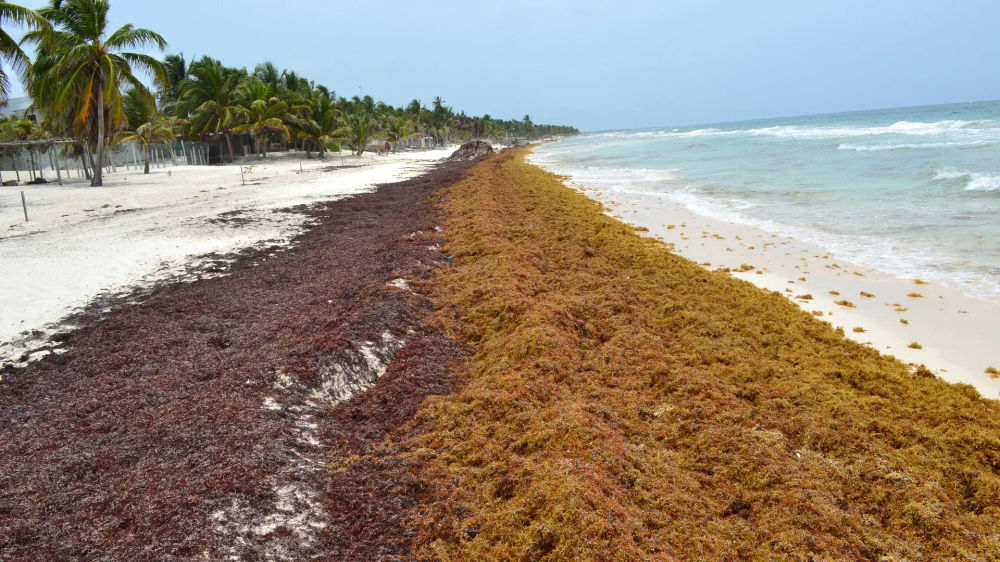
The slap of salt-heavy waves, the whir of trucks reversing into the sand, and the quiet grumble of men with rakes and shovels slashing through the tide line. By the time most tourists sip their first iced espresso, Tulum’s beach crews have already cleared tons, literally tons, of sargassum from the shore.
And still, it keeps coming.
Over 2,000 metric tons of the stubborn, rotting seaweed have piled up on Tulum’s coast between January and June of 2025. That’s more than double the volume collected in the same stretch of 2024. An unwelcome record, according to Juan Antonio Garza, the municipal director of the Zona Federal Marítimo Terrestre, or Zofemat. “Es un incremento muy importante,” he said. Very important, yes, but also exhausting.

When Nature Doesn’t Let Up
What’s remarkable isn’t just the biomass, but the rhythm of it, constant, unyielding, tidal. One day, it’s a quiet strip of white sand. The next, it’s as if the sea got sick and vomited out a brown mass of brine and sulfur. Local crews are out there daily, scratching back the advance, always falling slightly behind. It’s like trying to shovel snow in a blizzard, only the snow smells like decomposing fish and stains your skin.
“We’ve been working every single day,” Garza said. “Different points along the coast, from early morning, with the entire beach-cleaning team.”
He’s not exaggerating. Walk the beach at 6 a.m. and you’ll see them, boots in the foam, sleeves rolled, sweating under the Caribbean dawn. There’s no rest for a coastline under siege.
The Bigger Picture: Sargazo Beyond Tulum
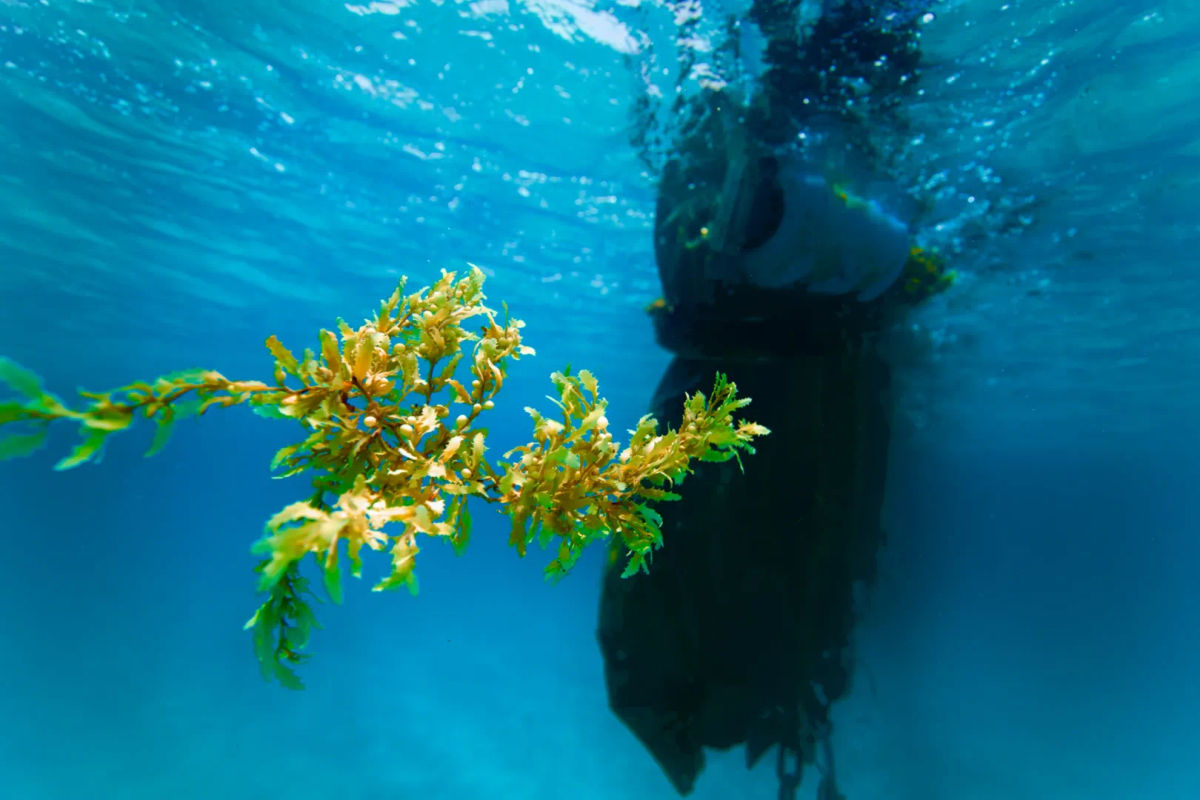
And Tulum isn’t alone. This isn’t some local nuisance, the kind that fades once the season passes. This is regional, hemispheric. Sargazo, that drifting, pelagic brown algae, has become the unwelcome guest haunting much of the Caribbean. From Cancun to Cartagena, beaches once hailed as paradises now smell faintly of rot and abandonment.
Garza, to his credit, asks for patience, from locals, from tourists, from anyone scrolling dreamy travel reels on social media and wondering why the beach doesn’t look like the photos anymore.
Because here’s the thing: sargazo isn’t just ugly. It chokes coral reefs, alters pH levels, and suffocates marine life when it piles up. And once ashore, it’s a public health puzzle, loaded with bacteria, heavy metals, and gases that, in sufficient quantities, could turn a dreamy honeymoon into a respiratory nightmare.
Where Does It All Go?
So what happens to the mountains of muck once it’s scraped from the sand? That’s a question that’s raised more than one eyebrow.
Garza insists the final disposal center still has room. “No hay preocupación por la saturación,” he said, there’s no concern about it reaching capacity. For now. The waste is handled, treated, moved, coordinated with the Secretaría de Ecología y Medio Ambiente. But ask anyone in waste logistics: 2,000 tons in six months is a freight train of a problem, not a bump in the road.
And while the workers strain against the tide, the real concern might not be what washes up, but what seeps down.

Beneath the Surface: Sargazo Meets Sewage
Just weeks ago, The Tulum Times obtained a confidential report from a respected oceanographic institute. The findings? Troubling. The cenotes, those sacred limestone sinkholes that dot the Tulum region and once served as lifelines for the Maya, are now tainted. The source: wastewater, traced back to high-end hotels and luxury developments sprouting like weeds across the Riviera Maya.
Imagine that. While the surface drowns in sargazo, the aquifer beneath whispers of human negligence, of sewage leaking through stone, of paradise poisoned from both above and below. It’s a double exposure, a warning written in algae and effluent.
Garza says the municipality is doing all it can, that resources, human and technical, are being deployed to protect both the ecosystem and the tourism engine it powers. But there’s a limit to what brooms and trucks can do when the tide, both literal and metaphorical, keeps rising.
What’s truly unnerving isn’t the weight of the seaweed. It’s the sense that something has shifted, that the very balance Tulum once struck between wild beauty and human touch has tipped. And once tipped, it’s damn hard to right.
We’d love to hear your thoughts, join the conversation on The Tulum Times’ social media.