
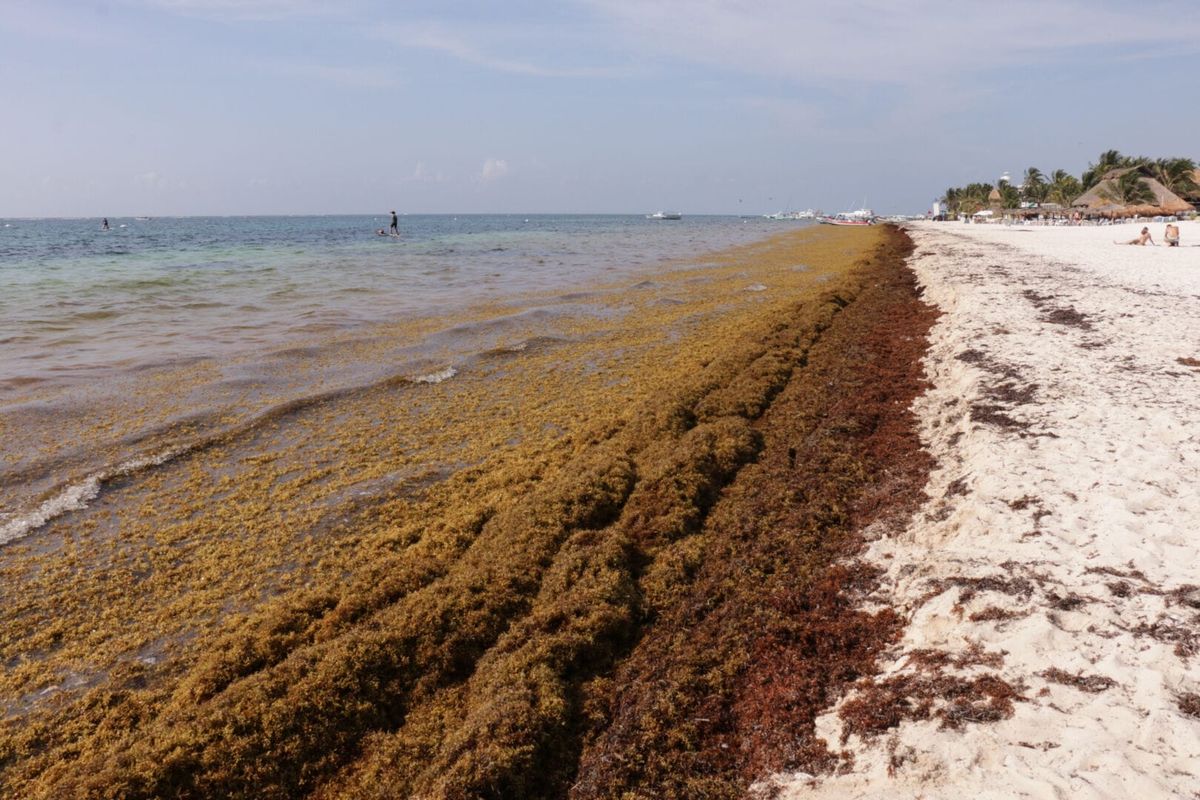
Every summer, the turquoise waters of Tulum meet an unexpected guest. Not tourists, they’re always expected, but thick, brown mats of sargassum that roll in like an uninvited tide. It smells. It suffocates marine life. It chokes the beaches that once seemed untouched.
Now imagine this: in the face of thousands of tons of this invasive algae washing ashore, the local authorities have announced a new plan. A team of 30 to 35 people will be hired this July to clean it up.
That’s not a typo. Thirty-five.
The Scale of the Sargassum Problem in Tulum
Let’s ground this in numbers. Between January and June 2025, Tulum alone has collected more than 1,900 tons of sargassum. Meanwhile, the Mexican Navy, working across the Caribbean coast, has cleared over 44,000 tons this year. And it’s still coming. Relentless. Sticky. Heavy.
Against that kind of backdrop, hiring 35 workers feels like sending a lifeguard to stop a tsunami.
But here we are. Juan Antonio Garza, the head of Zofemat (the Federal Maritime-Terrestrial Zone in Tulum), explained that this hiring is part of a broader effort to address both the environmental crisis and local unemployment. It’s meant to help families and slow the flood of algae at the same time.
The intention is admirable. The execution? Let’s just say it’s… modest.
Can a Small Team Make a Real Difference?
The 30-person team already working along the coast is out there every morning, armed with rakes, shovels, and wheelbarrows. They’re doing honest, physical labor under a sun that does not negotiate. The beaches look better because of them, for a few hours, at least.
But let’s be real. This is a manual response to a problem that’s mechanical in scale.
Sargassum doesn’t wash up politely. It assaults the shore in waves measured by the ton. And even if you clear it in the morning, the tide brings more in the afternoon. It’s like trying to mop the ocean while the faucet’s still on.
What Tulum Really Needs to Fight Sargassum
Cleaning crews are part of the solution. But they are not the solution.
Tulum needs industrial muscle. Floating barriers that keep the sargassum offshore. Boats, specially built, to collect the algae before it hits the sand. Processing plants that turn this nuisance into compost, fuel, bricks, or anything useful. There are working prototypes across the region, but they need funding and scale.
This is not a seasonal hiccup anymore. It’s a structural issue affecting marine biodiversity, public health, and the economy. Tourists might tolerate one bad beach day. But weeks of rotting algae? That’s another story.
If Tulum wants to protect its most precious asset, its coastline, it needs to move from reaction to strategy. That means coordination between local and federal governments. That means private investment. That means treating sargassum not as a beach-cleaning problem, but as a national environmental emergency.
The Effort Is Real. But So Is the Ocean.
None of this is meant to diminish the work of those 35 people. They’re doing what they can, and what they’re doing matters, to the businesses, to the tourists, to the sea turtles who need clean sand to nest.
But admiration shouldn’t blind us to proportion. You don’t fight a wildfire with a garden hose. And you don’t battle thousands of tons of algae with a couple of dozen rakes.
So yes, let’s recognize the effort. But let’s also raise the bar. Tulum deserves better than a short-term patch for a long-term problem.
Because the sea isn’t waiting.